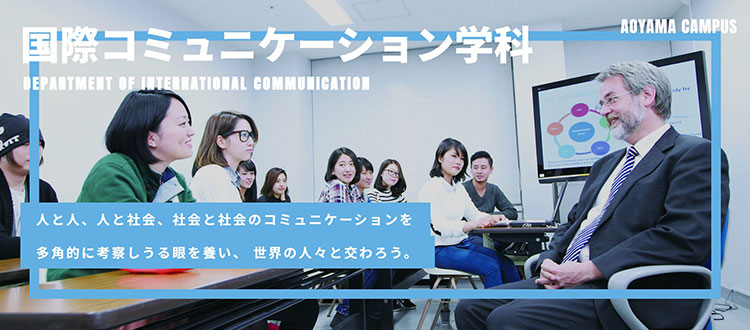
Teachers speak
"Department of International Communication"
The charm of
July 17, 2025
Views from different windows
A view of Department of International Communication
Department of International Communication School of International Politics, Economics and Communication at our university is engaged in interdisciplinary education and research with "communication" as its keyword. In this interview, moderated by Professor Junko Saruhashi (specializing in sociolinguistics), Chief the department, we asked the three professors about their thoughts on the appeal of studying in Department of International Communication and how they study.

INDEX
▼ Faculty roundtable discussion
■What is “International Communication Studies”?
■ "How to Walk" in Department of International Communication
■The future as seen through Department of International Communication
▼ Seminar introduction (AGU LiFE)
▼ Voices of current students and graduates (AGU LiFE)
▼ Research Introduction (AGU RESEARCH)
 Faculty roundtable discussion
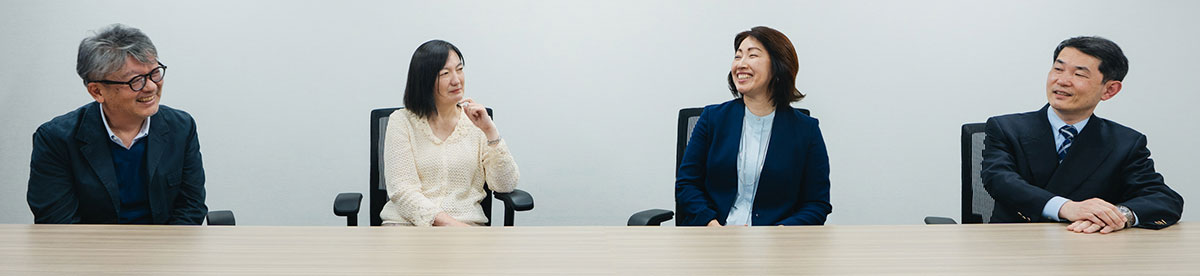
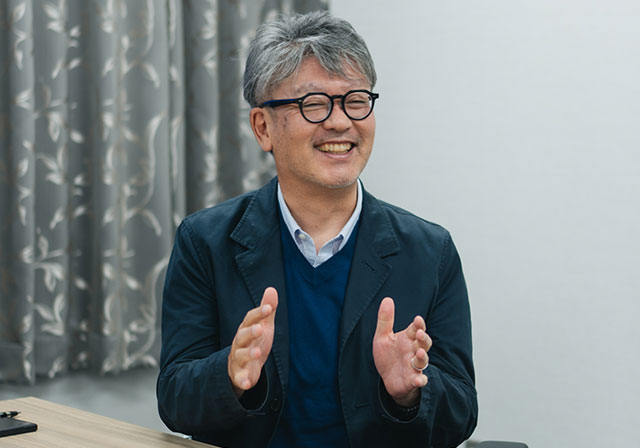
[Moderator (Chief Department of International Communication)]
Professor, Department of International Communication School of International Politics, Economics and Communication
Junko Saruhashi
PhD in International Communication. Completed the doctoral program in Department of International Communication Aoyama Gakuin University Graduate School Graduate Graduate School of International Politics, Economics and Communication. His areas of expertise and related fields are sociolinguistics, language policy research, discourse studies, and qualitative research methods. In 2009, he became an associate professor Department of International Communication, School School of International Politics, Economics and Communication, and in 2015, he became a professor in the same department.
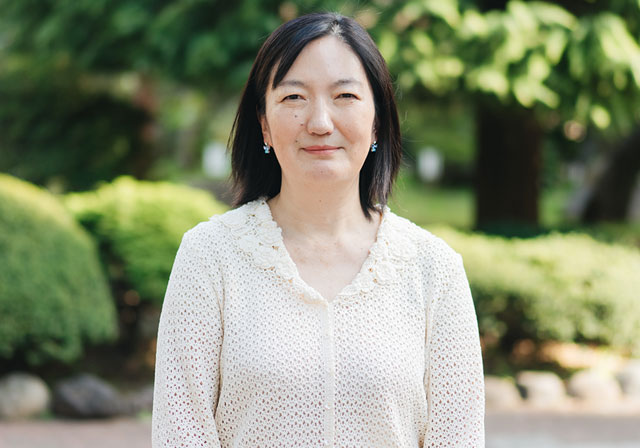
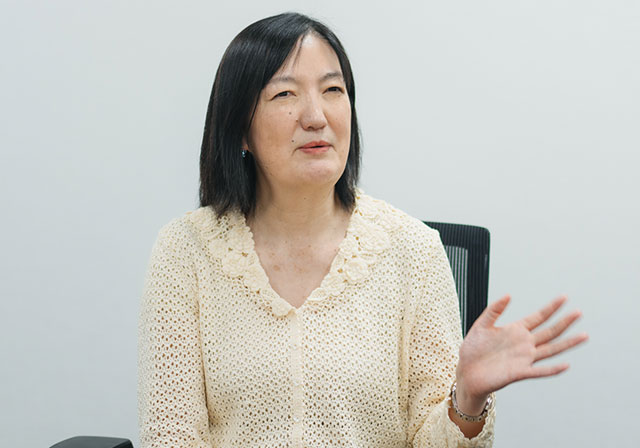
Professor, Department of International Communication School of International Politics, Economics and Communication
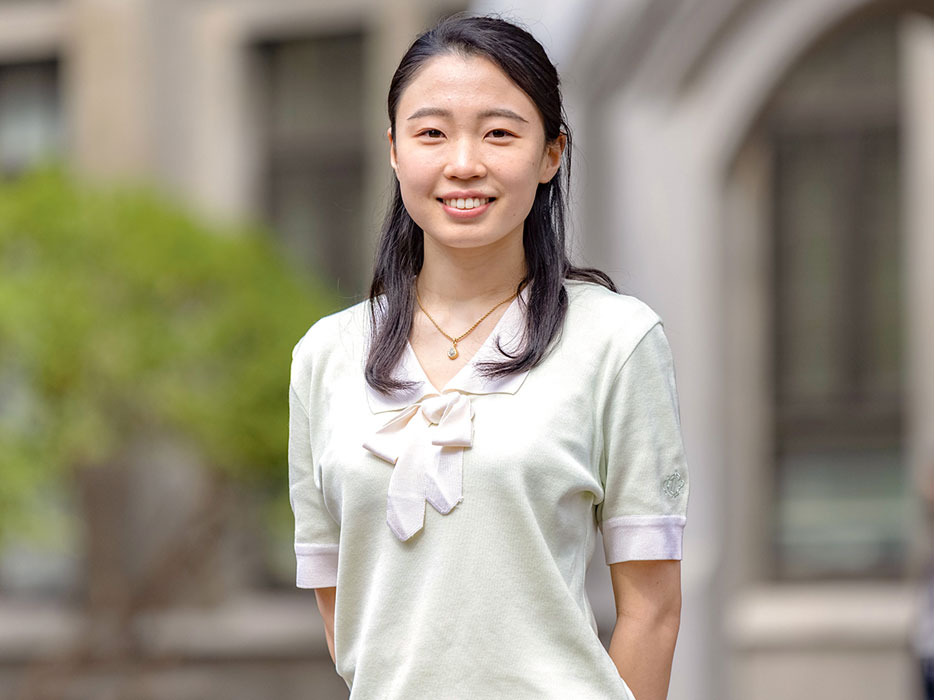
Eriko Katsumata
Ph.D. (Education). Completed the joint doctoral program at Claremont Graduate University and San Diego State University University's Graduate School of Education. His areas of expertise and related fields are higher education, international educational research, intercultural communication, intercultural training, and collaborative online international learning (COIL). In 2014, he became an assistant professor Department of International Communication, School of School of International Politics, Economics and Communication at ICU, and in 2016, he became an associate professor in the same department. In 2023, he became a professor in the same department.
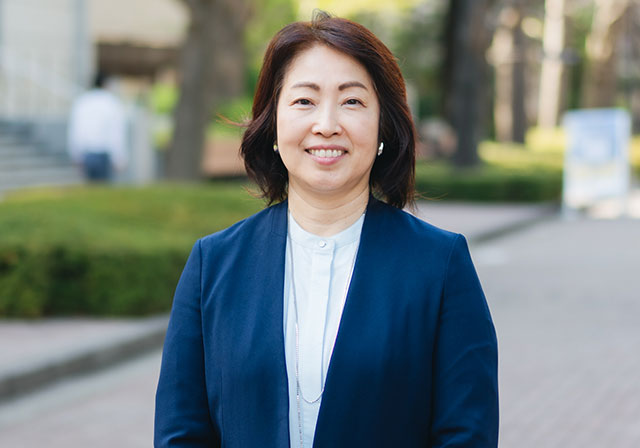
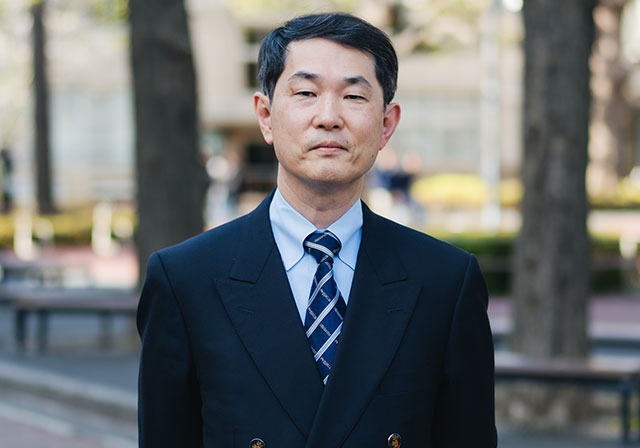
Professor, Department of International Communication School of International Politics, Economics and Communication
Katsuya Tasaki
Ph.D. (Educational Psychology). Completed doctoral studies at the University of Hawaii Graduate School of Educational Psychology. Specializes in (comparative) cultural psychology, interpersonal and intercultural communication, psychological statistics, and social psychology. In 2009, he became an associate professor Department of International Communication, School School of International Politics, Economics and Communication, and in 2012, a professor in the same department. In 2024, he became Chief Department of International Communication in the Graduate Graduate School of International Politics, Economics and Communication.
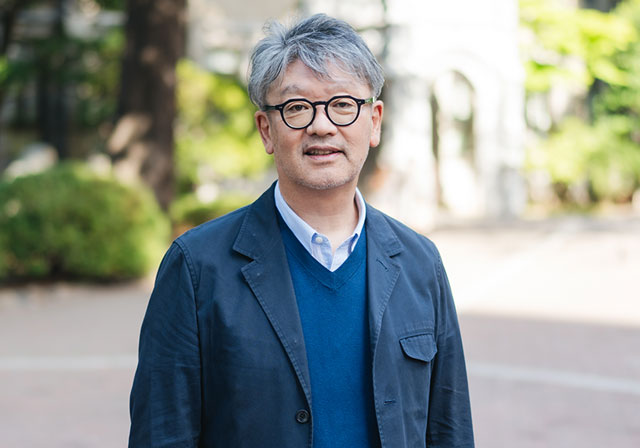
Associate Professor, Department of International Communication School of International Politics, Economics and Communication
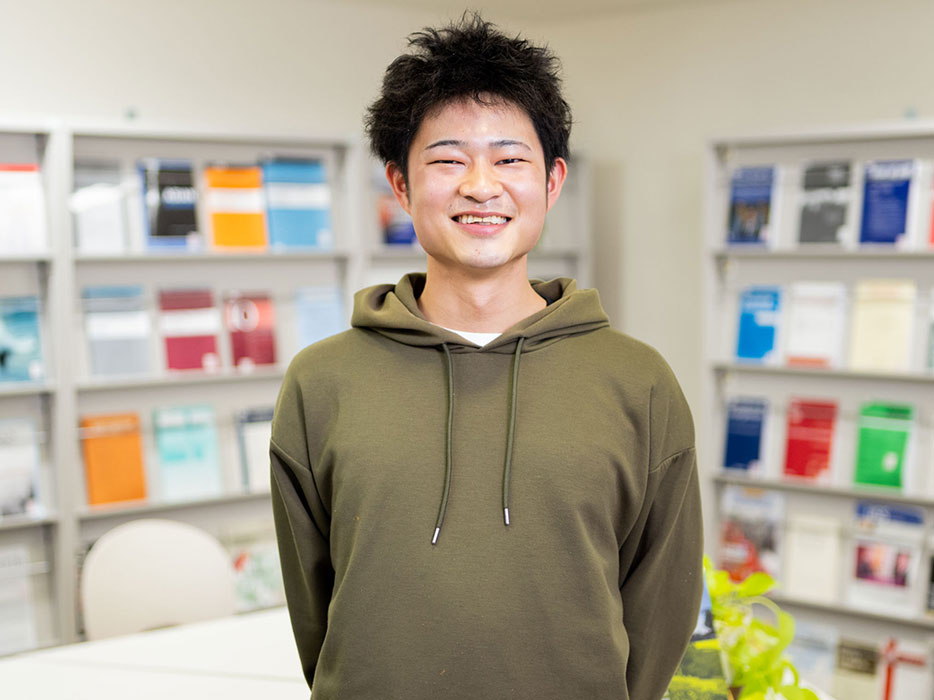
Hiroshi Ichiki
PhD in History from Gakushuin University. Graduated from the Graduate School of Humanities, majoring Department of History, after completing the required credits. His areas of expertise and related fields are the history of the Wei, Jin, and Northern and Southern Dynasties in China, and Chinese historical geography. He served as an assistant and part-time lecturer College of Literature at Gakushuin University, a Japanese language instructor at the School of Foreign Languages of Shaanxi Normal University in China, and a Japanese language instructor at the School of Foreign Languages of Tongji University in China. He will be appointed Associate Professor Department of International Communication School of International Politics, Economics and Communication at our university in 2024.
■What is “International Communication Studies”?
Saruhashi: First, I'd like to ask you to talk about the learning environment and appeal of Department of International Communication, as well as some advice for newly enrolled students about studying here. The department's curriculum is broadly divided into three areas: Communication Studies, Cultural Studies, and Linguistics, but these are not independent. A major feature is that, based on Communication Studies, students can learn a wide range of subjects in conjunction with Department of International Politics and Department of International Economics. For example, my specialty, sociolinguistics, is a branch of linguistics, but it also deals with content related to both Communication Studies and Politics. Professor Tasaki, you approach Communication Studies from the perspective of a specialist in psychology and statistics. How do you view the department's curriculum?
As Professor Tasaki Saruhashi explained, a major feature of our department is its interdisciplinary and broad-based curriculum. Communication studies itself has a long history, with roots in the oratory of Aristotle and Plato, which flourished in Greece. Presentation skills, popular at American universities, also draw on this tradition, but since the 1970s, communication research has taken a psychological approach. Currently, sociological and critical theory approaches have also been added. Communication studies have developed by drawing on knowledge from a variety of academic fields, and this distinctive interdisciplinarity is reflected in our department's curriculum, expanding the possibilities for students to freely learn in order to achieve self-realization.
Saruhashi: Professor Tasaki, you just mentioned the progress in research and education in communication studies, but you're mainly talking about universities in the United States.
Tasaki: Yes, when I was a university student, it was not possible to study communication studies at Japanese universities. I think it was the same for Professor Katsumata, but for people of our generation, the only option to study communication professionally as an academic field was to study abroad. It was around the time I returned from the United States that research and education in communication studies finally began to take place in Japan.
Katsumata: That's right. I also studied intercultural communication while studying abroad in the United States. What I teach students in my current classes, such as "Intercultural Training" and "Global Studies VI," is based on what I learned there. In the past, foreign language learning and intercultural communication were treated separately at Japanese universities. However, the importance of learning to link the two has now been recognized. Everyone has a background, or culture, in which they grew up, and smooth communication is not possible without taking that culture into consideration. In that sense, our department offers a wealth of opportunities to learn about various languages and cultures, which I believe is a major strength.
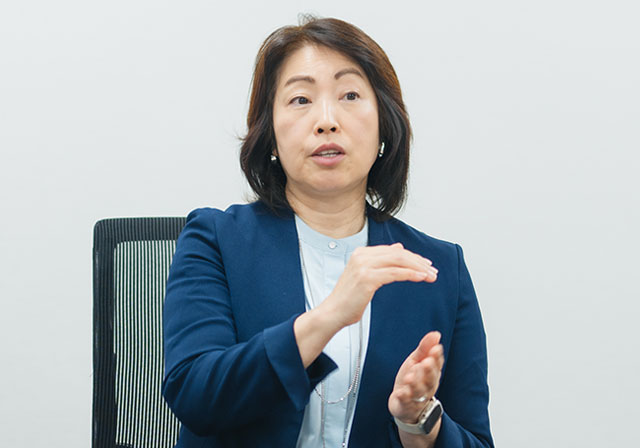
Saruhashi: You're right. In addition to English, our department has professors who teach a variety of foreign languages, but their specialties are not linguistics or language education, but rather researchers of culture and history. When it comes to intercultural communication, attention tends to be focused on English, but our faculty members who teach Chinese, such as Professor Ichiki, as well as Spanish, French, Russian, Korean, and German, all offer cultural studies courses as their specialization.
Ichiki: My specialty is Chinese history, specifically the somewhat niche fields of "Chinese Wei, Jin, and Northern and Southern Dynasties History" and "Chinese Historical Geography." However, I also taught Japanese to students at a Chinese university for over a decade. Through this experience, I truly came to believe that "language is a bundle of culture." Even if you only master Chinese, you won't be able to communicate smoothly unless you understand the way Chinese people think, their ideas, and the nature of their relationships. The Department of International Communication also offers classes on cultures, history, and ideas outside of English-speaking countries, and I feel that it truly provides an environment for cultivating international people. Furthermore, many students in this department have roots overseas or have returned to Japan, and I myself learn a lot from interacting with them.
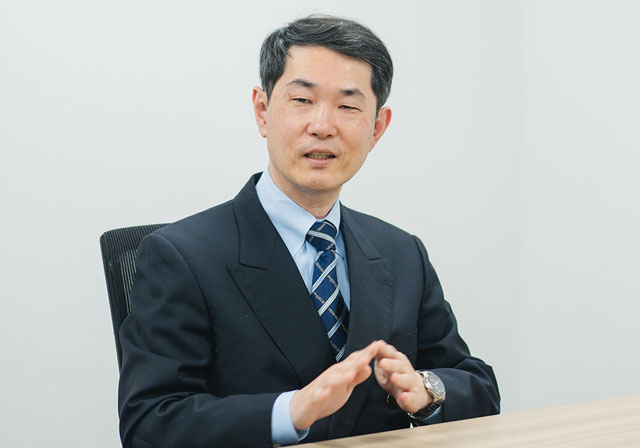
Saruhashi: My specialty, sociolinguistics, and its neighboring field, linguistic anthropology, are based on the idea that "language is a mass of culture." Meanwhile, in linguistics, exploring the characteristics of language itself as a human ability—in other words, the universality of language—is also an important theme. This can be learned in "Introduction to Linguistics I and II," a foundational subject in the field of linguistics. Also, as you pointed out, classrooms are already multilingual and multicultural, and I've personally noticed this trend in recent years. By the way, unlike English, are there many students who start studying Chinese at university in your Chinese classes, Professor Ichiki?
Ichiki: That's right. Almost all students in my "Chinese I (B)" class, which teaches basic pronunciation and grammar, are learning Chinese from scratch. In language learning, if you don't master pronunciation and grammar correctly at the beginning, you'll struggle later, so I pay close attention to this in class. This year, after teaching the basics, I asked students to try giving self-introductions in Chinese, and I was relieved to see that they all performed better than I expected (laughs). Even in new languages, as long as you know the basics, you can get your point across. While continuous effort and ambition are essential to language acquisition, I also believe it's important to give students confidence that their Chinese is understandable. In my "Chinese II (B) -1 & 2" class, students aim to achieve a level of practical conversational ability, but along the way, I encourage them to develop the ability to learn about Chinese culture and society through literature, the internet, and other means. Learning about the culture of others, rather than just learning grammar and vocabulary, will naturally improve their communication skills.
Saruhashi: That's right. And that's why it's important to know languages other than English. The term "global standard" is often used, but understanding that the world is made up of societies with multiple languages, cultures, and each with its own history deepens your understanding of the concept of "global."
Ichiki: Deepening understanding of different cultures will also help to eliminate prejudice and discriminatory feelings, and prevent the worsening "division" in the international community. In the "Introduction to Cultural Studies II/Introduction to Comparative Culture II" classes I teach, I introduce Chinese culture and society based on my own experiences. The actions and behaviors of Chinese people have unique cultural backgrounds and reasons. A major goal of this class is to help students understand this. Fortunately, in our faculty, I rarely see students who have prejudices against people from overseas, including China, from the start. I think that's a wonderful thing.
■ "How to Walk" in Department of International Communication
Saruhashi: What do you think students are looking for when they choose this department?
Katsumata: Many new students enroll with the hope of "using English to interact with people overseas" or "working at an international organization." However, they aren't sure what kind of communication skills they actually need to acquire or what kind of international exchange they want to achieve -- is this how it feels for many students when they enroll?
Saruhashi: It's true that many students like and excel at English. As Professor Ichiki mentioned, quite a few students have experience living abroad before enrolling.
Tasaki: When you first enroll, I think it's enough to have vague ideas like "I want to learn English" or "I want to interact with people from overseas." However, in your first and second year classes, which are important for deciding which seminar to join, I want you to think carefully about what it is you want to do while you study.
Katsumata: That's right. The major feature of our department is that the curriculum is interdisciplinary and offers a high degree of freedom in course selection. Students can study a wide range of fields according to their interests and goals. However, this does require students to always be aware of what they are interested in and what they want to achieve while studying.
Saruhashi: I tell the same thing to new students every year. In the required first-year course, "Introductory Seminar I," students learn about university studies in a small-group seminar format. In "Introductory Seminar II," offered in the second semester, faculty members from the department introduce themselves and highlight the appeal and excitement of their respective fields of expertise. My turn comes in mid-October, right when second-year students are selecting their seminars. While explaining the process, I tell first-year students, "Use this as a starting point and try to determine your direction by the time of seminar selection, which will be held around this time next year." If you're unsure about your direction, please feel free to consult with us. Our department's small student population (74 students per year) makes it easier for us to provide individual attention to each student.
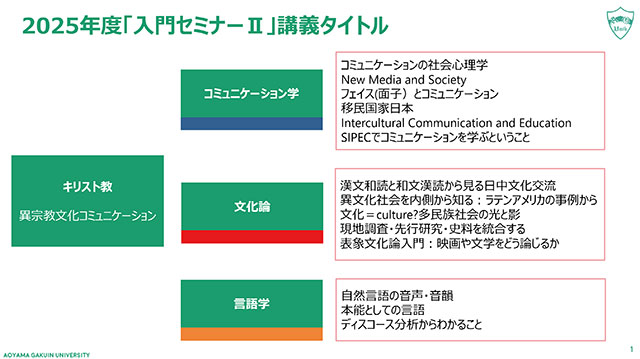 List of lecture titles for the 2025 "Introductory Seminar II"
Tasaki: Because our curriculum is so interdisciplinary and open, there's a risk that students will get lost among the diverse options unless they make a serious effort to find their own path. However, conversely, this department may be a good fit for people who are just vaguely interested in intercultural exchange and communication. After enrolling, there's a good chance that you'll be able to find the path that's right for you from the wide variety of options.
Saruhashi: In our department, all students learn the basics of communication studies through required first-year courses such as "General Introduction to International Communication I and II." Based on this, students can move on to linguistics or cultural studies, depending on their individual interests, or of course continue their studies in communication studies. Students can also study related subjects such as international politics and international economics. We also offer a wide range of research methods courses, and by taking designated courses, including "An Overview of Communication Research Methods," students can even obtain a social researcher qualification. While communication studies is undoubtedly the foundation of our department, I want students to know that there are many directions in which it can develop.
Katsumata: Professor Tasaki and I are conducting research in the field of communication studies, but Professor Saruhashi's specialty is linguistics.
Saruhashi: Yes, the first-year elective course I teach, "Introduction to Sociolinguistics/Sociolinguistics," begins with the question, "What is language?" and delves into questions such as, "How is it that there are more than 7,000 different languages, even though there are only about 200 countries in the world?" and "What process did English go through to become the world's lingua franca?" We also learn about the relationship between gender and social class and language, as well as the history and planning process of language policy. While learning the basics of sociolinguistic theory and research methods, we ask students to consider how best to approach language in a globalizing society.
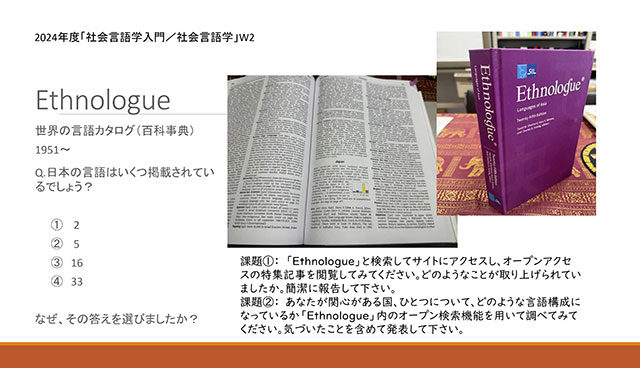 Slides from the 2nd session of the 2024 "Introduction to Sociolinguistics/Sociolinguistics" course
Katsumata: That sounds interesting. I'd like to take that class too!
Tasaki: We've been talking mainly about communication in foreign languages, but if we look at Japanese society, there are many issues related to communication. I would like to point out here that communication research goes beyond the various issues of communication in foreign languages.
SaruhashiPlease continue.
Tasaki: Now, let me tell you about what we're learning in my class, "Communication Theory III." In this class, we examine the role and function of nonverbal communication, such as facial expressions, eye contact, and gestures, in contrast to verbal communication, from the perspective of social and cultural values, based on knowledge from evolutionary psychology. Words aren't the only means of communication.
Saruhashi: Nonverbal communication is also related to how we define language, so it's of great interest in the field of linguistics and is a topic of endless discussion. Professor Tasaki's seminar deals with the theme of "interpersonal communication."
Tasaki: Yes, even though my seminar is in Department of International Communication, we don't emphasize global issues (laughs). Even in our everyday lives in Japan, we face various communication challenges. Recently, social media communication, such as "flaming," has become a frequent issue. Communication between people with different social backgrounds and values, such as differences in values regarding sexuality between generations and LGBTQ people, is also a major challenge in modern society. My seminar aims to have students discuss these issues and gain a theoretical understanding of them. Students find topics that interest them and engage in research. The reason I focus on domestic communication is because I believe that understanding Japanese behavior patterns and gaining objective knowledge of Japanese cultural values through the examination of various issues in modern society will ultimately lead to smoother intercultural communication.
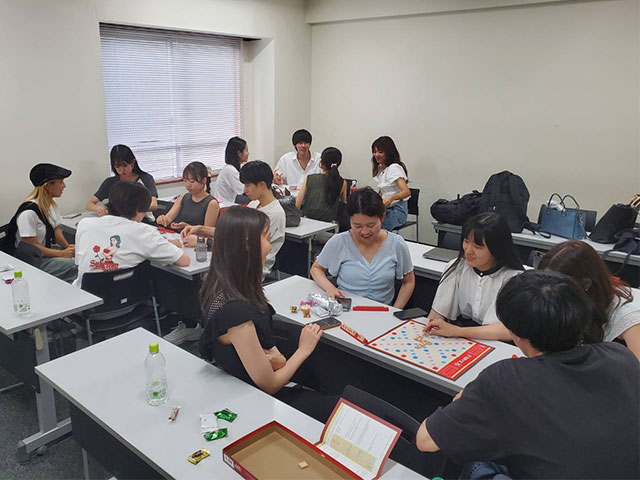 Tasaki's seminar. Students break the ice with the board game "Scrabble®," where students compete to create English words and earn points.
Saruhashi: On the other hand, the classes and seminars that you teach, Professor Katsumata, are focused on the theme of practical intercultural communication through English.
In my classes and seminars, I place
importance on learning through hands-on intercultural communication experiences using English. In "Global Studies VI," we engage in more practical collaborative learning through problem-solving.
Saruhashi: What specific themes are you focusing on in your collaborative learning?
Katsumata's "Global Studies VI" class teaches intercultural communication, a skill necessary in the business world. Every year, we conduct the Collaborative Online International Learning (COIL) project, where students learn online through collaboration with overseas university students. One recent project, in cooperation with an overseas consulting firm, involved working with Dutch university students on a simulation of three Japanese small and medium-sized enterprises selling their products overseas. First, our students interviewed the managers of the Japanese companies about which products they wanted to sell in the Netherlands and how. They then shared this information with the Dutch university students, who then conducted research into local needs and the market. Based on the results of the research, the Japanese and Dutch students worked together to develop a sales strategy and ultimately produced a commercial for the products.
 "Global Studies Ⅵ" COIL Project Slides (Partial)
SaruhashiThat 's amazing!
Katsumata: My specialty is not business, but intercultural communication, so I have focused on the intercultural communication required in the business world. Since the Dutch university participated in this project as part of an international business class, they were responsible for all on-site market research and other aspects. Our students reflected on their interactions with Dutch university students, international and Japanese companies, and their own communication within their own groups, and compiled these into presentations and reports. Particularly impressive was the way our students communicated in English to the Dutch students the thoughts of a small- and medium-sized business owner committed to Japanese manufacturing, and then shared their report from the Netherlands in Japanese. We also discussed cultural differences between Japan and the Netherlands, allowing us to consider global business strategies together. I believe the experience of working together on a project between Japanese and Dutch students, neither of whom is a native English speaker, was a valuable learning experience for the students.
Saruhashi Professor Ichiki, who teaches Chinese language and culture, what do you think of the department's curriculum and learning environment?
Upon enrolling, students in our department are likely to have the impression that it is a very international department. However, the overwhelming majority of students' overseas experience is in the United States, and how they communicate and interact with people from other regions and countries is a completely different story. In other words, the concept of "global" does not necessarily depend on the culture from which they draw. In my "Introduction to Cultural Studies II" class, we focus on "culture" in China. Throughout China's long history, there have been repeated clashes and fusions between the cultures of rulers and the ruled. While Han Chinese currently account for over 90% of the population, there have also been long-running dynasties led by minority ethnic groups, such as the Mongol Empire (Yuan Dynasty) and the Manchu Qing Dynasty, which are discussed in high school world history classes. Even today, 55 ethnic groups other than the Han Chinese are officially recognized in the country. Furthermore, Chinese, with approximately 1.4 billion native speakers, is the world's largest. Furthermore, even though they are both Chinese, Mandarin and Cantonese differ so much that they are virtually incomprehensible to each other, so it may be better to think of them as separate languages rather than mere dialects.
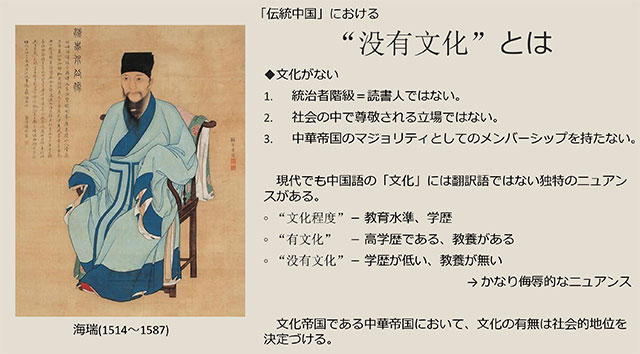 From the 14th slide of "Introduction to Cultural Studies II" in 2024
SaruhashiChina is a vast country, and the cultural sphere of overseas Chinese active abroad is extensive, making it seem as though China itself forms a world unto itself.
As
Ichiki says, China alone is a world of incredibly diverse languages, ethnicities, and cultures. China, Japan, the United States, the EU, Asia, South America, Oceania, Africa, and even people who move across countries and regions... each global is completely different.
■The future as seen through Department of International Communication
Finally, I'd like to ask each professor to talk about the future and possibilities for students studying in Department of International Communication, including the career paths of their seminar students. Many of my seminar students find employment in trading companies and international logistics, specifically airlines, shipping companies, and warehouse companies that handle customs clearance. Some students are active in the media and in the MICE business, which runs international conferences.
Katsumata: Like Professor Saruhashi, many of my seminar students also tend to go on to work for airlines. Some graduates have gone on to work as cabin attendants or pilots. Others go on to work in a wide range of fields, including finance, global corporations, and consulting firms.
Tasaki: My seminar is based on social psychology, so many students go on to pursue careers in marketing or the service industry. Statistical analysis is essential for objectively understanding communication-related phenomena, and I teach statistics and data analysis in a course called "Computer-Based Analysis of Survey Data." Students in our department can also aim to obtain qualifications as a "social researcher." Some students even use their qualifications to become civil servants.
Katsumata: There are an increasing number of opportunities in Japan to utilize cross-cultural communication skills, including consulting for global companies. Recently, some graduates have gone on to work in the field of coaching, where they support clients in achieving their goals through dialogue. Even after finding employment, many graduates change jobs in pursuit of a career that suits them best.
Saruhashi: Unlike the generation before us, for whom lifetime employment was the norm, we now live in an age where people search for the right job throughout their lives.
Katsumata: In addition to the self-discovery they experience during their four years at university, our graduates, once they enter the workforce, seem to pursue work that suits them best, without being bound by the reputation or income of their employer. I find their tireless spirit of inquiry and ambition very encouraging.
Tasaki: It's true that many of our graduates don't compromise and change jobs repeatedly while searching for their own aptitude. One of my seminar alumni had studied abroad, and he felt that "after all, the overseas culture suits me better," so he left a Japanese company for a foreign-affiliated company.
Ichiki: It's only my second year at this university, so I don't know many of our graduates, but I did have a student who wanted to become a diplomat. The theme of his graduation thesis was "Chinese Thought and Action Principles from the Perspective of Face." It was an excellent thesis, and he decided to continue his studies at graduate school, wanting to deepen his knowledge before entering the workforce.
Saruhashi: I hope you continue to do your best in the future. Our faculty's graduates not only work for global companies, but also for UN agencies, international NGOs, and NPOs. We've also heard stories of people who have mobilized all of their education and work experience to start their own businesses.
Katsumata: In other words, the "world" is the field of job hunting.
Saruhashi: For that reason, I would also recommend experiencing overseas while you are a student. Our faculty's unique short-term overseas training program is unique in that, from the stories of students who have participated and their subsequent learning attitudes, it is very clear that they have learned a lot and grown as people. In addition, the International Center offers study abroad programs (study abroad at partner universities and accredited universities) and short-term programs during summer and spring vacations in many countries, so I encourage you to gather information, find a program that suits you, and take on the challenge.
Katsumata: I would also recommend that you experience the appeal of different cultures and the joy of communicating with people from other countries while you are in school.
Saruhashi: Listening to everyone's talks today, I was able to once again realize the breadth of academic fields covered by our department. From the perspectives of Professor Katsumata's international collaboration and intercultural communication in English, Professor Tasaki's interpersonal communication issues and nonverbal communication, Professor Ichiki's teaching of Chinese language and culture, and my own specialty, sociolinguistics, which focuses on the social functions of language, each of these fields offers a different look at the concepts of "global/international" and "communication."
As a
faculty member, I personally love the diversity of this department. It's fascinating and always inspiring to hear from so many different professors with different specialties, as was the case this time.
Ichiki: I also enjoy teaching in this department. Students can interact not only with students from Department of International Communication, but also with students from Department of International Politics and Department of International Economics, and the same can be said for faculty members. I think it is a very global and diverse learning environment for both students and faculty. I have only recently become a faculty member in this department, but every day I feel that this faculty and department is a truly global environment.
Saruhashi: I'm sure the students can sense how you all put your heart and soul into your classes, education, and research while enjoying them. Thank you very much for taking the time out of your busy schedules to speak with us today.
Seminar Introduction (AGU LiFE)
Voices of current students and graduates (AGU LiFE)





Research Introduction (AGU RESEARCH)

*The years of employment, Position, activities, etc. of the people listed are current at the time of the interview.