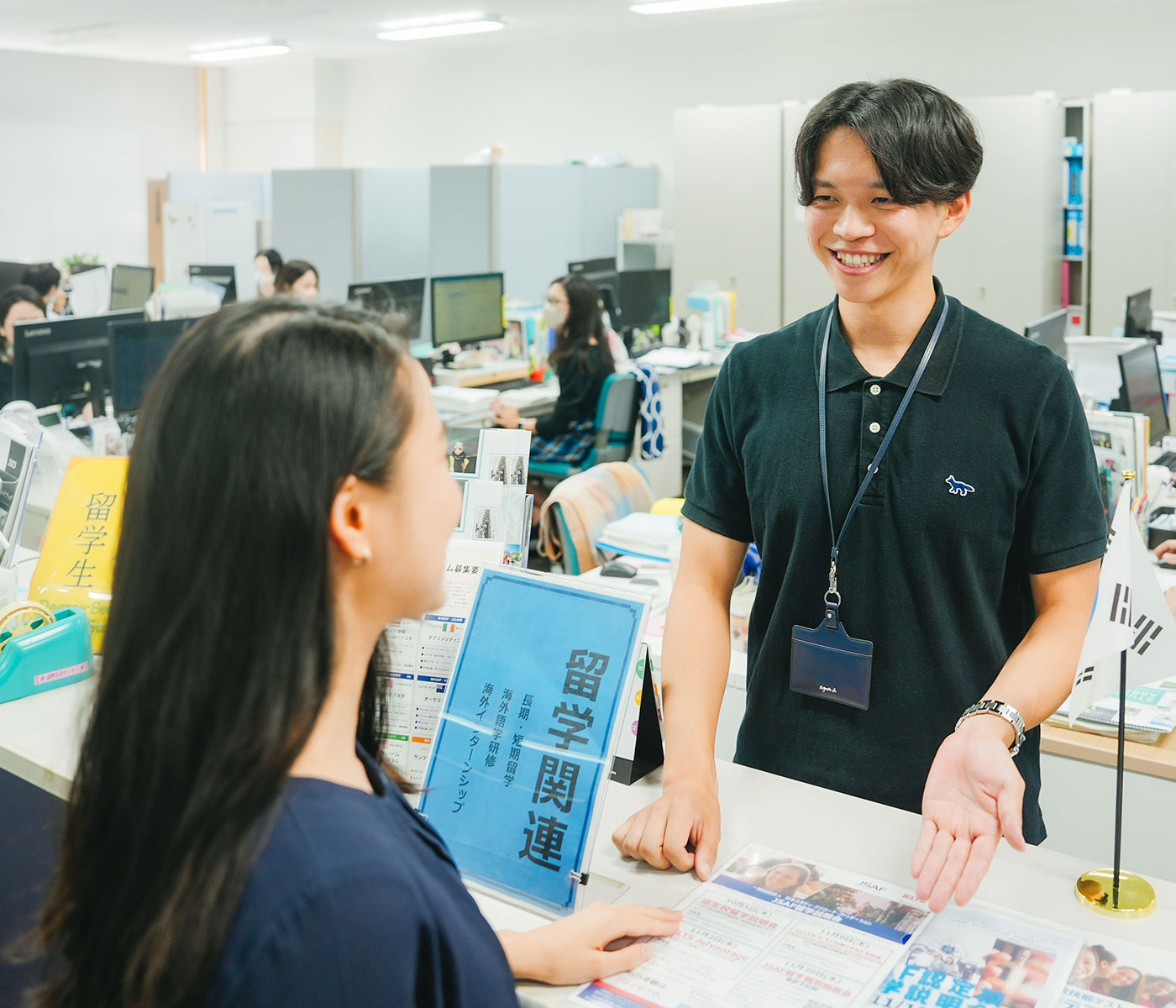
Make your university exchange program a reality!
~Hardship in your youth is something you should even buy – No pain, no gain.
2026 2.26
A courageous challenge will bring about a future beyond imagination.
Studying abroad involves immersing yourself in a different culture and expanding your learning on a global scale. Growth comes from overcoming language and cultural barriers by relying on your own abilities. This time, through a dialogue between the International Center Director and staff, who have extensive overseas experience, and students, we will introduce everything from real-life experiences to concrete preparations for studying abroad.

INDEX
▼ Study Abroad at Aoyama Gakuin University: A Look at the Numbers
▼ Opening the Door to the Future Through Studying Abroad – Encounters with Different Cultures Can Change Your Life
[1] Experience the world firsthand and discover a "new you"
[2] The foundation of studying abroad is a "sense of purpose." Unexpected learning will be born from that.
[3] Aogaku 's International Education Continues to Expand, Backed by Tradition
[4] The world becomes your "field of life." Open the door to possibilities through studying abroad.
[Column] Inheriting the spirit of Sen Tsuda and going from Aoyama Gakuin University to learning in the world
▼ How to make exchange programs a reality: From overcoming the "hurdles to studying abroad" to utilizing the International Center
[1] Carefully consider your goals and study abroad destination to create a study abroad experience that reflects your true self.
[2] Is it possible to balance studying abroad and job hunting? Learn the strategies and overcome the "study abroad hurdles"
[3] The key to success is "prior preparation." From study abroad costs to how to make the most of the international center.
[4] "Unexpected" situations are opportunities for growth. Experiences you overcome on your own become treasures.
Study Abroad at Aoyama Gakuin University: A Look at the Numbers
For exchange programs
Recipient rate of on-campus scholarships
about 64.6 %
Applicants for on-campus scholarships
Recipient rate *
*As of 2025, when our university has been selected for the Japan Student Services Organization (JASSO) Overseas Study Support Program.100 %
(Dispatched in FY2025)
Outside of class
"Practical Foreign Language Conversation"
Support
"Chat room"
≪Top responses from user surveys≫
I want to increase opportunities to communicate in foreign languages.80 %
79% want to improve their language skills
Speak a foreign language more outside of class
I want to practice75 %
Exchange students
utilization rate
about 19.5 %
more
I hope you will make use of it.
Study abroad support
"IELTS exam
Bonus system"
IELTS is essential for studying abroad in English-speaking countries. The International Center offers a one-stop service on campus, including preparation courses with partial cost subsidies, in-house exams, and a scholarship program. Both costs and preparation are worry-free.
It's worth using.
Opening the Door to the Future Through Studying Abroad: How Encounters with Different Cultures Can Change Your Life
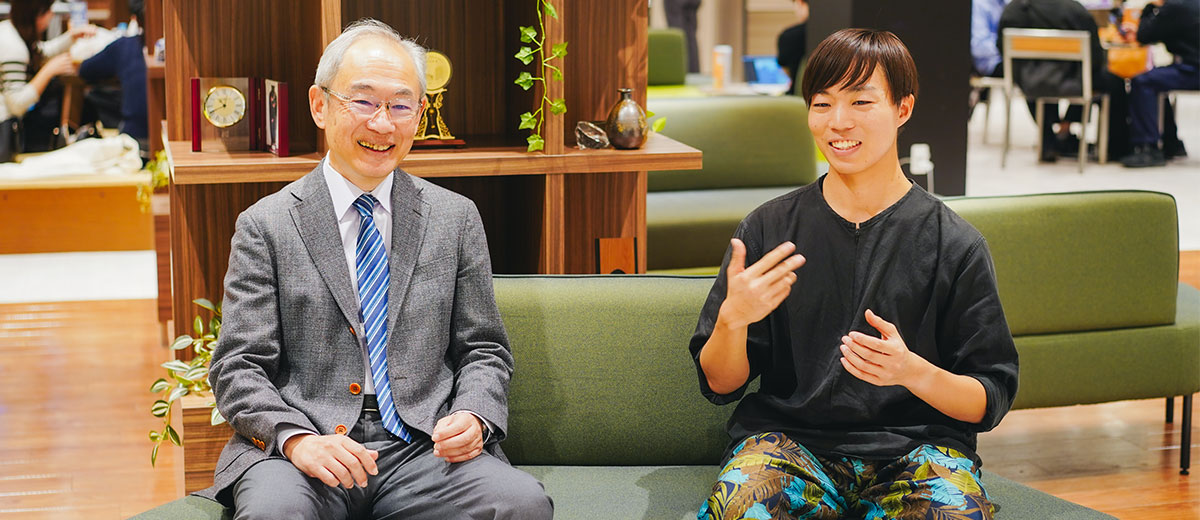
(From left to right in the photo)
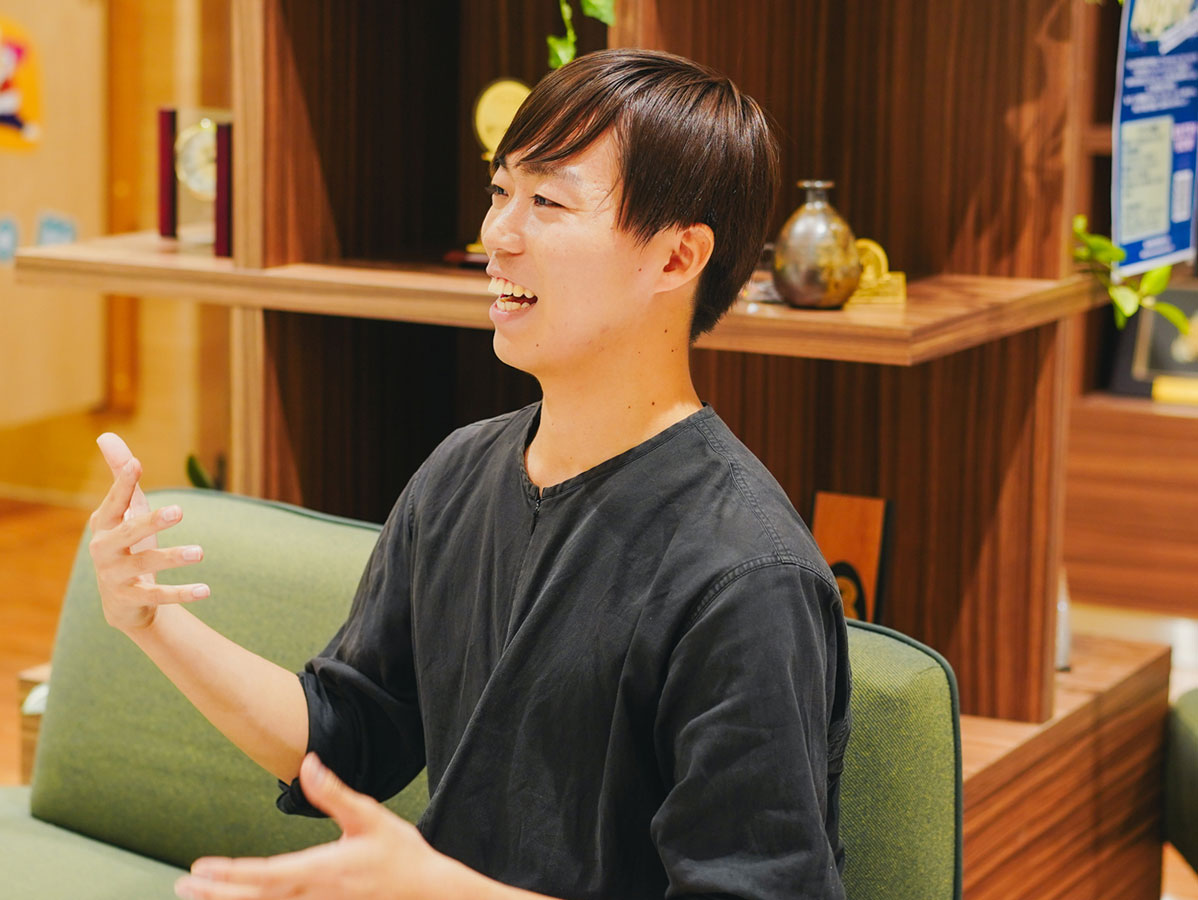
Director of the International Center
Professor, School of Global Studies and Collaboration
Kiyoshi Masumoto
School of International Politics, Economics and Communication
Department of International Politics 4 years
(During the second semester of the 2025 academic year)
[Exchange Destinations]
University of Washington (USA)
University of Washington
Born in Tokyo, a private Aoyama Gakuin Senior High School
Takimoto Tomotan
[1] Experience the world firsthand and discover a "new you"
I understand that Ms. Masumoto Takimoto studied abroad at University of Washington in the United States. What were your reasons for wanting to study abroad?
I wanted to see "present-day America" with my own eyes from the perspective of
international politics and economics. I thought that by understanding the current state of America, which has a great influence on world affairs, I could deepen my learning with a greater sense of personal responsibility. Also, I wanted to be stimulated by a high-level educational environment, so I chose University of Washington as my study abroad destination. Could you also tell us about your overseas experience, Professor?
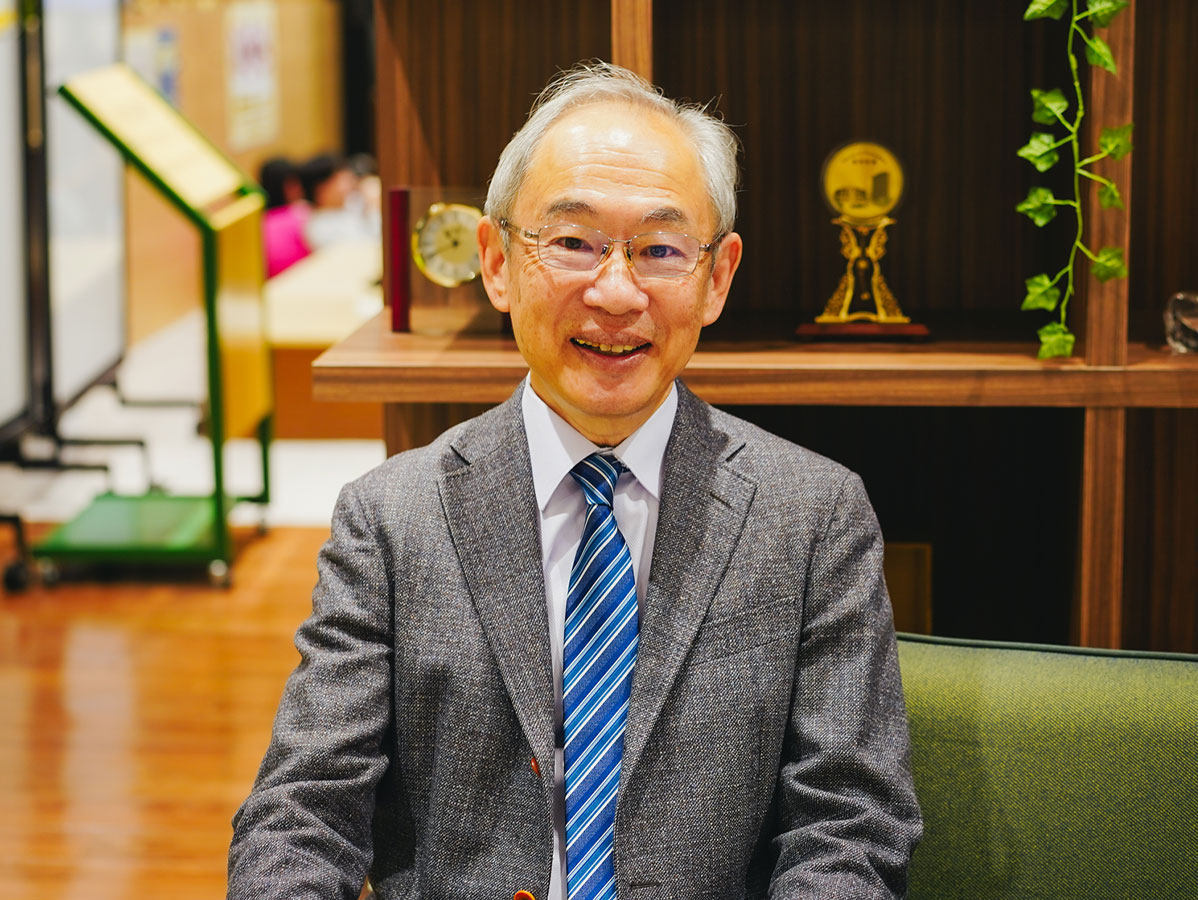
Masumoto's first trip abroad was during his fourth year of university. It was a solo trip to the West Coast of the United States, and it was a shocking experience, partly because his English was completely useless. After graduating from university, he worked for a private company for four years, then joined the Japan International Cooperation Agency (JICA) Overseas Cooperation Volunteers, spending two years in Kenya, and after that, he became a JICA employee and embarked on a full-fledged career in international cooperation.
Why did Professor
Takimoto choose the path of joining the Japan Overseas Cooperation Volunteers instead of traveling?
I felt that in order to truly understand the culture and local characteristics
of Masumoto, I needed to live there. I also believed that if I was going to live there, it was only natural that I should contribute to the community as a member of society, so I ultimately chose to join the Japan Overseas Cooperation Volunteers.
Takimoto: What was it like actually living in Kenya?
In
Masumoto Village, there were no shops, not even water or electricity. It was the first time I had ever experienced having "nothing to do." I had visited developing countries in Asia before, but no country had ever surprised me as much as Kenya. In Kenya, it was difficult even to blend in with the locals, but it changed my perspective on life, and from then on, I wanted to work in development.
Takimoto: I also made discoveries that I wouldn't have made otherwise, simply by living there. Seattle, where University of Washington is located, is famous for the Seattle Mariners of Major League Baseball and the first Starbucks store, but what I saw in my daily life was a diverse community. There are various events held in the community, starting with indigenous cultures, as well as Mexico's "Day of the Dead" *1, China's Lunar New Year, and Ireland's St. Patrick's Day *2. In addition to my major subjects, I was taking classes in traditional dances from various countries, and the local capoeira *3 studio that my professor showed me was also a place for dialogue between people with roots in Brazil and Central and South America, known as Hispanics. From these experiences, I came to understand that America is not simply a country where diverse races coexist, but a country that is made up of a collection of small cultural spheres.
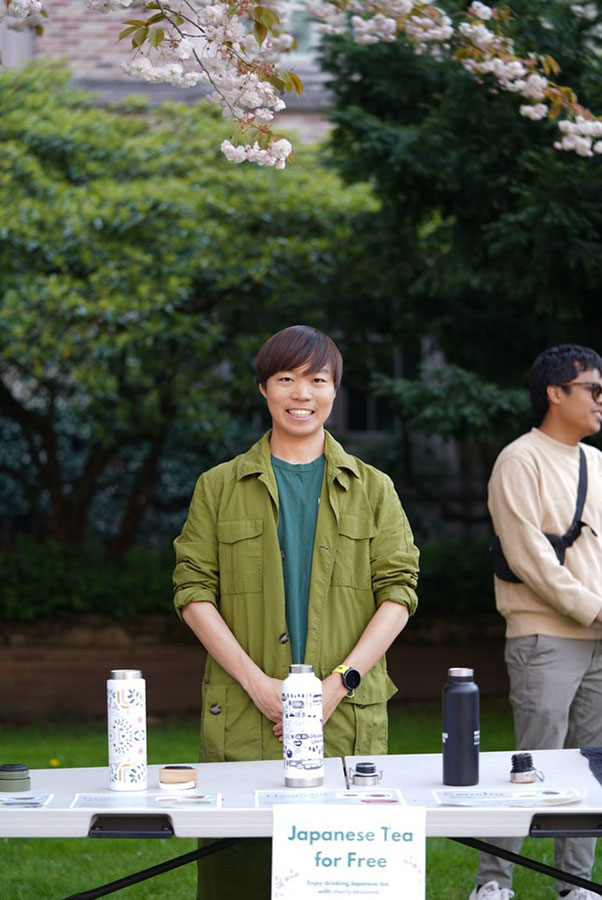 At The Quad, a famous cherry blossom viewing spot on University of Washington campus in Seattle. A Japanese tea tasting event was planned (by Ms. Takimoto).
Masumoto: One of the advantages of studying abroad is being able to learn while immersing yourself in local life and relationships. What was particularly memorable for me in Kenya was the experience of being an overwhelming minority as a "foreigner." Kenya is in the Black Africa region, so a Japanese volunteer in the Japan Overseas Cooperation Volunteers stands out very much among the local people. You could probably tell even from a kilometer away. Their appearance and customs were completely different from the "common sense" I had held up until then. The realization that I and Japan are not at the center of the world, and that I am merely "one in several billion," was very powerful.
Takimoto: I also gained something from being in an environment where I was a "foreigner." At the beginning of my studies abroad, the language barrier was thick, and I was isolated with no friends, which made me think about "who I am." Later, after making friends locally, I was often asked about Japan, and they told me about the charms of Japan from their perspective, and through these interactions, I gradually developed a sense of being Japanese. In fact, even before studying abroad, I had the desire to "share Japanese culture in America," so I took a Japanese tea ceremony course in Japan. Once I had gotten used to life in America, I decided to serve Japanese tea to my dorm friends, and it was more popular than I expected, as they found it a nice break from studying, and word of mouth spread. After that, I held two tea ceremonies with the international exchange club, where I introduced the types and characteristics of Japanese tea, how to brew tea in a teapot, the etiquette of the tea ceremony, and how to prepare matcha, all in English. Collaborating with international students who were knowledgeable about Turkish tea, and distributing Japanese tea samples on the main street of campus, I have fond memories of enjoying Japanese tea with many participants.
Masumoto: That sounds like a great experience. Experiencing a shift in perspective within a different culture and being able to view "Japan" and "yourself" in a relative context is a major benefit of studying abroad.
*1 Day of the Dead... A Mexican festival held annually on November 1st and 2nd. It celebrates the reunion of the living and the dead, commemorating those who have passed away and sharing the joy of life.
*2 Ireland's National Day (March 17). A festival commemorating Saint Patrick, who introduced Christianity to Ireland in the 5th century.
*3 Capoeira... A traditional martial art originating in Brazil that combines elements of combat sports and dance. It is registered as an Intangible Cultural Heritage by the United Nations Educational, Scientific and Cultural Organization (UNESCO).
[2] The foundation of studying abroad is a "sense of purpose." Unexpected learning will be born from that.
What was it that you were particularly conscious of when preparing for your study
abroad in Masumoto?
Takimoto: My goal was to "experience" international politics and economics firsthand, so I focused on accumulating specialized knowledge in those fields. My study abroad period coincided with the US presidential election, so I made sure not to miss this golden opportunity and read a large number of specialized books before I left. After reading the books, I was able to hear the real voices of Americans on the ground, which gave my prior knowledge a more three-dimensional feel and made learning even more interesting. At University of Washington, I took courses on American politics such as "History of the American Presidency" and "Trump in the World 2.0," and learned how American politics has evolved from past and present perspectives to connect with the current situation. The goals I set before studying abroad were tentative, based on hypotheses of "what might happen." These tentative goals are gradually reviewed and refined through real-world experiences on the ground. I believe that "goals" are something that grow and are shaped through accumulating such experiences.
 Voter pamphlet for the 2024 United States presidential election. Takimoto's studies in the United States coincided with the presidential election.
Masumoto: That's absolutely right. Studying abroad is about being well-prepared, having a clear sense of purpose that forms the core of your studies, and then experiencing encounters and discoveries that exceed your expectations.
Takimoto: Right now, even if you don't have a clear idea of what you should be aiming for, I think many people feel a desire to see the unknown. I believe that this kind of inquisitive spirit is the driving force behind human beings. One way to find that "purpose" is to combine your area of interest with an "overseas" perspective. In my case, it was a combination of "politics and economics x the current situation in America." There are endless other possibilities, such as "music x overseas," "sports culture x overseas," or "business x overseas."
Masumoto: I wholeheartedly agree. I also believe that people grow the most when they pursue something because they think, "This is interesting, I want to know more." Looking back, my trip to America, which was an unknown world to me during my student days, was a series of hardships. But that's precisely why everything, including the difficulties, was stimulating and interesting, and it has become the very foundation of who I am today. I can still vividly remember the unique smell of the air and the feeling I had when I first stepped off the plane at an American airport.
While anxieties are inevitable when taking on a challenge like
Takimoto's, I believe that incorporating minor setbacks as part of the "process to success" beforehand will turn them into positive experiences. For the first time, I lived away from my family for a year in a different culture, without anyone to rely on, and overcoming numerous obstacles has become a lifelong treasure and a source of unwavering confidence for me. And that experience has given me a firm sense of certainty that I will be able to overcome any difficulties that may come my way in the future.
3] International education at Aogaku continues to expand, backed by tradition
woman who has lost a man's affection or interest (as does a woman) To begin with, why do universities engage in "study abroad" programs?
square bearing block (at the top of a pillar) This is because the educational benefits of cross-cultural experiences are so great that it is a fitting value for a university to offer its students as a place of learning. Aoyama The founders of the three schools from which the institute originates were all American missionaries, and it is in the very tradition of Aogaku that global education has been practiced since its inception. Aogaku The servant leaders who supported the early days of the Tsuda Sen was also one of those who worked hard to internationalize not only our university but also Japan. When he first came into contact with America as an interpreter for the Shogunate's delegation, he must have thought, "This is interesting! I am sure he felt "This is interesting!
woman who has lost a man's affection or interest (as does a woman) I respect the challenging spirit of Sen Tsuda, who actively tried to absorb different cultures during the Meiji period, when the hurdles to foreign countries were much higher than they are today. It was because of his presence that his daughter, Umeko Tsuda, was able to see the world. Aoyama I was impressed to learn about the background of the international spirit that lives on at the institute, and to see the energy and ambition of these predecessors at its source.
square bearing block (at the top of a pillar) The spirit of Tsudasen has been inherited Aogaku That is why we would like Aogaku students to study abroad at a young age, even if they dare to buy hardship, to experience the world and expand their own boundaries. The challenge of studying abroad in a different culture will provide a solid foundation for your future global expansion, and will be a great support for the rest of your life. With this in mind, Aogaku aims to create a more international learning environment for the university as a whole. It is hoped that this will meet the increasingly diverse needs of students for study abroad, broaden their options, and further promote research and educational exchanges. In the future, plans are underway to expand the number of overseas partner universities to 200, and to launch 50 new educational programs. This will provide more opportunities for students to study together with students from partner universities, more classes on international themes, and a more fulfilling environment for students to learn together on the world stage. Although these initiatives are still in the conceptual stage, our goal is not to "simply increase the number. The aim is to enable students to acquire a multifaceted perspective by greatly expanding their choices of regions and countries. For example, the world, which was only a "dot" from a single perspective of Japan, becomes a "line" by looking at Europe and the United States, and then a "plane" by looking at Asia to see the whole picture. We hope that each Aogaku student will develop such a three-dimensional view of the world. Please look forward to our future development.
Takimoto: I was surprised to find that "America as seen from Japan" and "Japan as seen from America" are completely different, and I realized that the world is not one-dimensional. Then, thanks to the classes I took while studying abroad, my interest in Central and South America and the Middle East grew, and I began to form my own cubic worldview. Now that I've returned to Japan, I belong to Professor Tomohiko Satake 's seminar, which studies security in the Asia-Pacific and Indo-Pacific regions. Discovering many countries that I find interesting has broadened my world and deepened my learning in the seminar.
Studying abroad at Masumoto University not only provides students with new knowledge and experience, but also clarifies their interests, leading to further development of their studies upon their return. The university is also making efforts to ensure that as many students as possible can experience studying abroad.
Takimoto: Due to language proficiency and other factors, I started my study abroad program in my third year. I was anxious about the delay in graduation, but in reality, those worries were unfounded. Considering the immense value I gained from studying abroad, I would recommend it to anyone interested, even if it meant taking five years to graduate.
Masumoto: In recent years, more and more companies are seeking global talent, and recruitment activities targeting those with overseas study experience have become popular. A major advantage of exchange programs is that you can graduate in four years, but I think it's also worthwhile to broaden your horizons and consider study abroad plans that aren't limited by the graduation year.
[4] The world becomes your "field of life." Open the door to possibilities through studying abroad.
Takimoto: In the future, I would like to contribute to solving environmental problems from an international perspective through development cooperation and social business. This study abroad experience has strongly supported that goal. Through my study abroad experience, I learned that even if people come from different countries or ethnic groups, and even if their language skills are not perfect, they can connect with each other if they can share even one thing. Now I feel that the world itself has become my "field of life."
Masumoto: Nowadays, internationalization is not just for a select few. By experiencing the wider world while still a student, you can gain a broader perspective, develop a multifaceted viewpoint, and cultivate a desire for knowledge and experience. Such experiences can also serve as a catalyst for thinking more seriously about your career and will enrich your life itself. Studying abroad is not the goal, but the starting point. I sincerely hope that many students will have a meaningful study abroad experience.
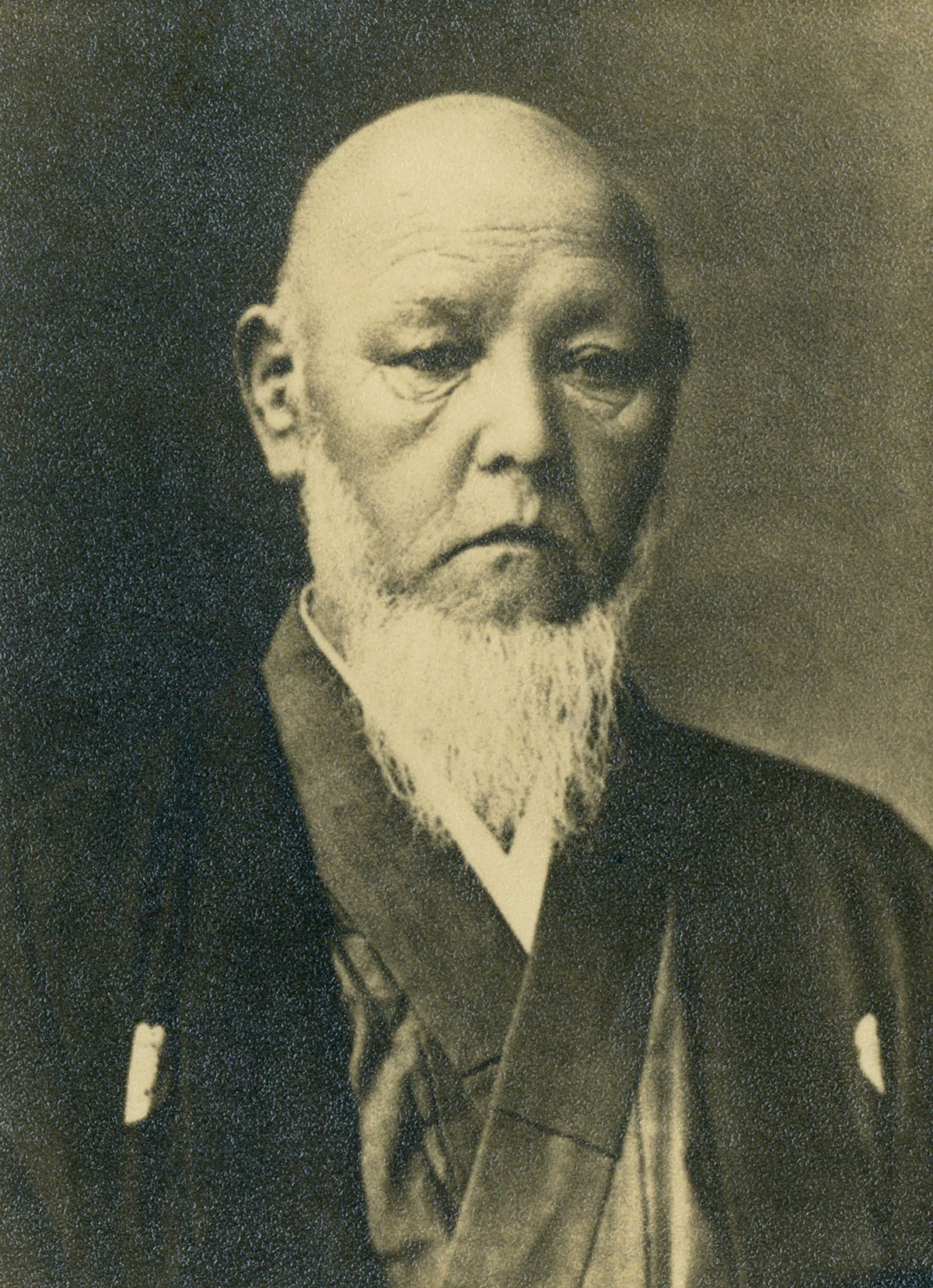
Inheriting the spirit of Sen Tsuda,
Learning from Aoyama Gakuin University to the World
Tracing the history of Aoyama reveals a spirit of seeking new knowledge and opening one's eyes to the world. At its origin lies the presence of Sen Tsuda, who was active as an agricultural scholar and educator. Sen was the father of Umeko Tsuda, one of Japan's first female students to study abroad.
Sen grew up in the Sakura domain, where opportunities for learning were given to talented individuals regardless of their social status, and he studied Dutch studies and English at a young age. In 1867, he visited America as an interpreter for a shogunate delegation, and his exposure to the open values of Western society greatly broadened his thinking.
After returning to his home country, Sen supported Dora E. Schoonmaker, who came to Japan with the aim of promoting girls' education. In 1874, he played a key role in the establishment of the "Girls' Elementary School," the oldest school and the origin of Aoyama, and provided generous support, including offering his own home as the school building (the founding anniversary Aoyama, November 16th, is derived from this opening date).
Furthermore, Sen met missionary Julius Soper through Umeko's boarding school during her studies in America. Influenced by Soper, Sen converted to Christianity and supported the activities of the "Kokyo Gakusha" school that Soper established in Tsukiji in 1878. The two schools, the Girls' Elementary School and the Kokyo Gakusha, formed the foundation of what is now Aoyama.
Sen's journey demonstrates that learning has the power to transcend boundaries and influence society. Engaging with the world and encountering new values is a crucial experience for today's students in broadening their perspectives. The significance of Aoyama Gakuin University students venturing abroad lies precisely in the spirit that Sen embodied.
How to Make Exchange Programs a Reality: From Overcoming Obstacles to Utilizing the International Center
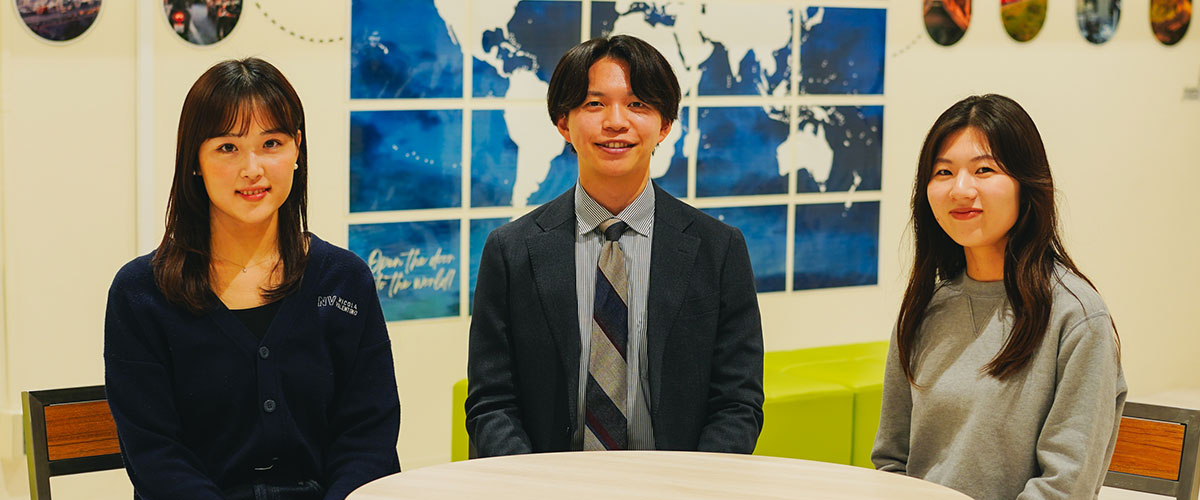
(From left to right in the photo)
School of Business
Fourth year Department of Business Administration
[Exchange Program Destinations]
University of Cologne (Germany)
Ibaraki Prefectural Koga Secondary School
Yu Watari
International Affairs Department International Exchange Division
(International Center)
Hiroki Sakata
School of Cultural and Creative Studies
Department of Cultural and Creative Studies 4 years
(Graduation Postponement Option)
[Exchange Student]
University of Ljubljana (Slovenia)
Tokyo, Private Aoyama Gakuin Senior High School From
Kisa Hattori
[1] Carefully consider your goals and study abroad destination to create a study abroad experience that reflects your true self.
Sakata: Today we'll hear about your study abroad experiences. Ms. Watari studied in Germany, and Ms. Hattori studied in Slovenia, is that correct?
Watari: I lived in Germany with my family during my childhood, so I wanted to study abroad in Germany for university. Later, during high school, I became interested in Germany's immigration and refugee issues and wanted to improve my German language skills, so I decided to study abroad. I chose University of Cologne for two main reasons: firstly, it offered an environment where I could learn both German and English by taking courses taught in English for international students (the system is scheduled to change from 2026 onwards); secondly, I was attracted to the surrounding environment, such as Cologne Cathedral and the Rhine River; and thirdly, the state of North Rhine-Westphalia (NRW), to which Cologne belongs, has a high proportion of immigrants and refugees, and there were many volunteer facilities there, which was another reason I chose it.
 Cologne Cathedral, a symbol of Cologne and a UNESCO World Heritage Site, is visible from anywhere in the city. I loved the view of the cathedral from my dormitory. The nighttime illumination has a different kind of beauty than the daytime view (Watari).
Hattori: I studied abroad at the University of Ljubljana in Slovenia, located in Central Europe. My main goal in studying abroad was to immerse myself in a different culture and experience the different values that come with it.
Therefore, I thought that choosing Slovenia, a country that is still relatively unfamiliar in Japan, would allow me to have a more unique and personal study abroad experience. At the University of Ljubljana, I took courses on "LGBTQ rights," which offered a uniquely European perspective, as well as Japanese language education courses for Slovenians.
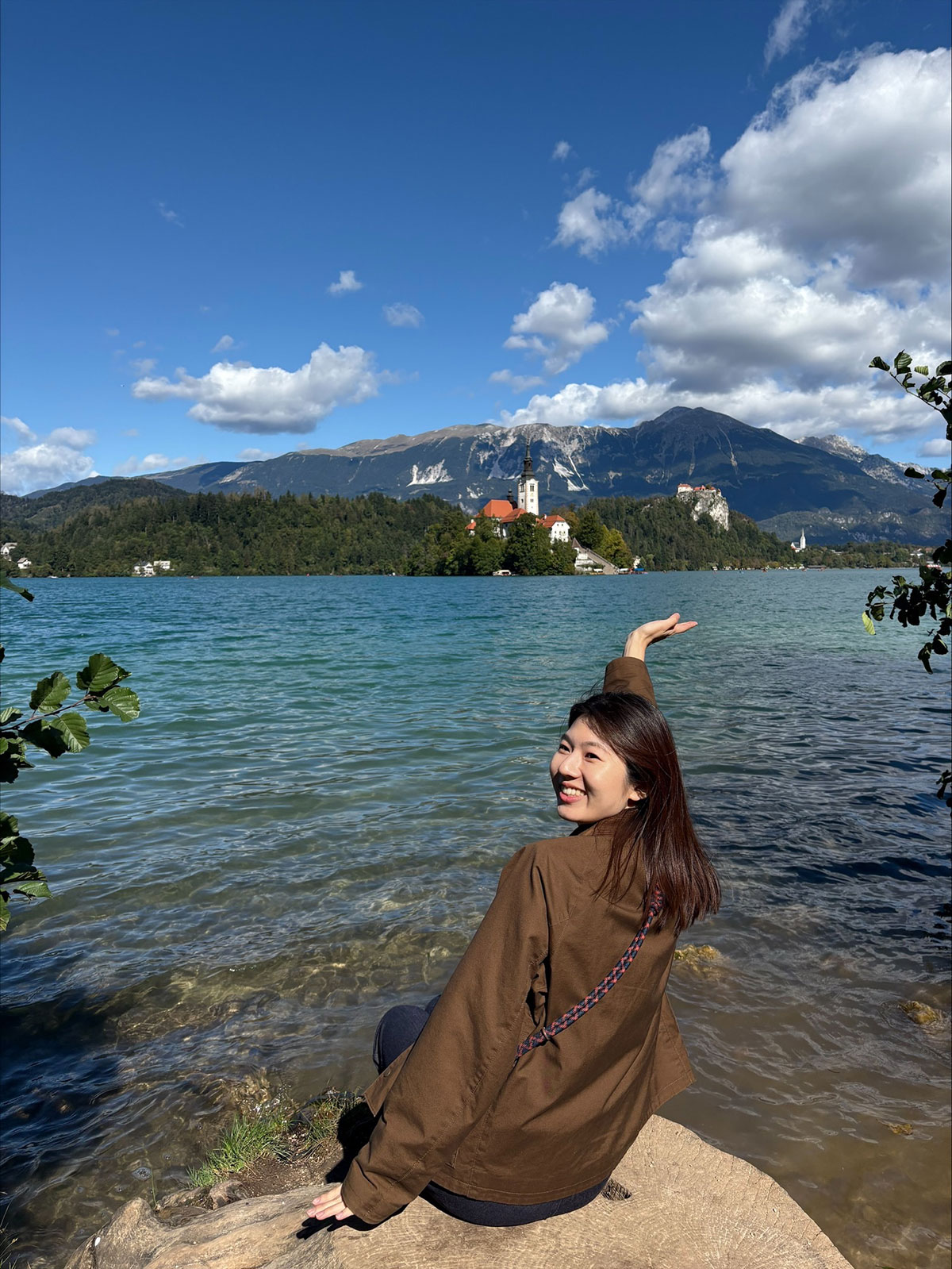 Lake Bled in Slovenia. The crystal-clear surface of this glacial lake reflects the sky, forest, and sunlight, changing its colors. A church stands on an island in the middle of the lake, and beyond it, the Julian Alps stretch out. (Hattori)
Sakata: Many non-English speaking countries like Germany and Slovenia offer significant advantages in terms of safety, cost of living, and scholarship programs, making them excellent study abroad destinations. The fact that Europe is geographically connected also makes it easy to travel to neighboring countries.
Hattori: Actually, I traveled to 25 countries while studying abroad in Slovenia. I had some interesting experiences, such as how the language and atmosphere completely changed the moment I crossed a border by bus.
[2] Is it possible to balance studying abroad and job hunting? Learn the strategies and overcome the "study abroad hurdles"
Did you two have any anxieties or worries when you decided to study abroad, Mr./Ms. Sakata?
Watari: My biggest concern was balancing studying abroad with job hunting. So, I went to the International Center for advice and gathered information by taking online lectures on "Studying Abroad x Job Hunting" that I found on Aogaku 's portal site. I also made use of the contact list of seniors who had been sent abroad the previous year, which the International Center provides to those who request it after their study abroad decision, and asked questions to seniors who had studied in Cologne. As a result of gathering information in this way, I was able to confidently manage both studying abroad and job hunting.
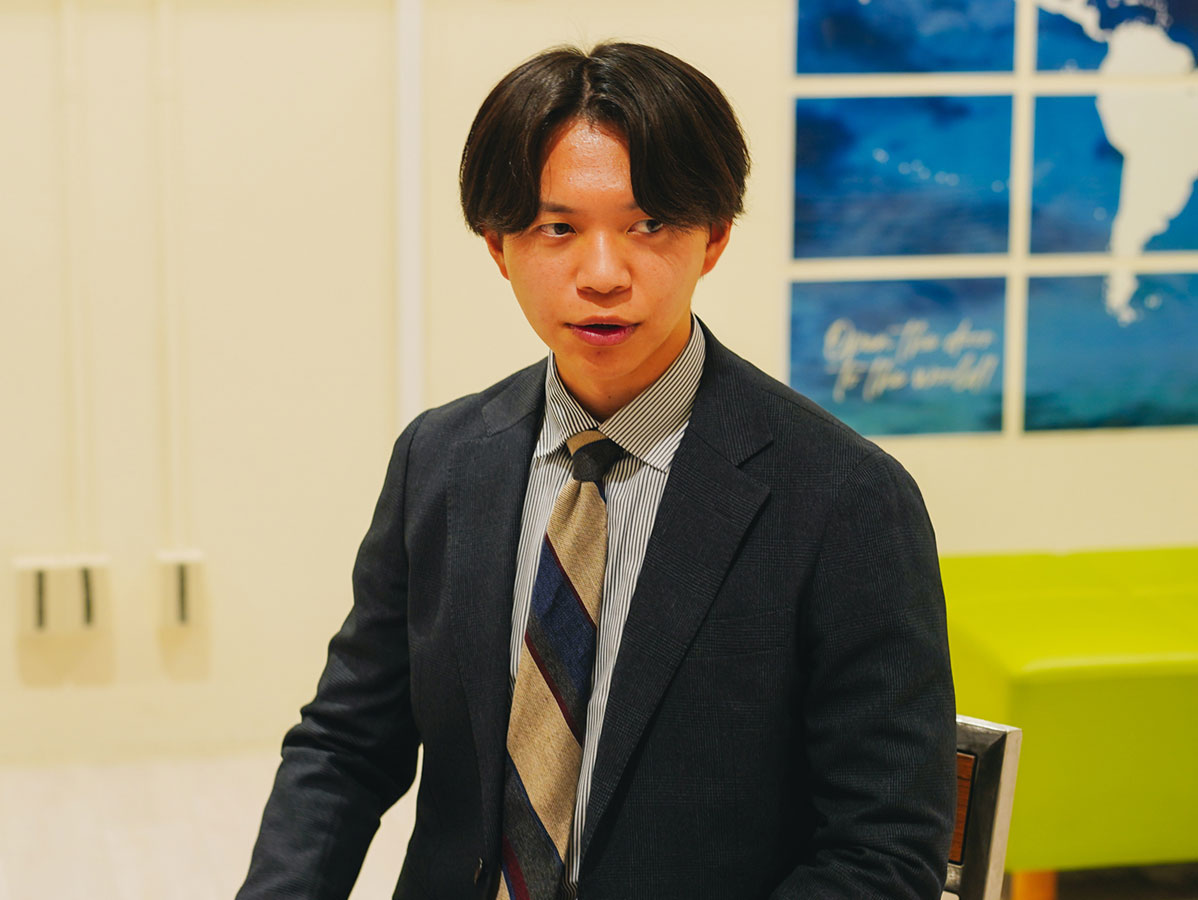
Sakata, how did you actually go about your job search?
I applied for an internship at my desired company from
Watari, and participated in the internship after returning to Japan. I focused my job search on companies that offered opportunities for overseas work, and I received a job offer from Continental Automotive Japan (now Aumovio), a German company involved in automotive-related businesses.
Many students are worried about balancing studying
abroad and job hunting, but it is possible if you utilize online job hunting events and bilingual English-Japanese events such as the Boston Career Forum. However, preparation before departure and adjustment to time differences are essential, so I hope you will do your best while taking care of your health. Ms. Hattori, what are your thoughts on concerns regarding studying abroad?
This is related to
Hattori's job hunting experience, but I was struggling to decide between "studying abroad" and "graduating and finding a job in four years." This was because I had tried to apply for a study abroad program for the first time in my second year, but was unsuccessful. I applied again the following year in my third year, but I was worried about the impact on my graduation date and job hunting if I studied abroad in my fourth year. In the end, an acquaintance who was working encouraged me, saying, "If you're hesitating, you should go. Studying abroad after graduation is really difficult," and my parents also agreed, so I decided to study abroad for a year starting in the second semester of my fourth year.
Sakata, what was your experience like actually studying abroad?
Hattori: I'm really glad I studied abroad. I chose to postpone my graduation, and it's now my fifth year, but it hasn't had the negative impact on my job search that I was worried about. In job interviews, I was able to clearly communicate the results of my studies abroad, and my decision to postpone graduation was viewed positively, with people saying I was "decisive" and "unique and interesting," and I actually received several job offers.
Sakata: I also had the opportunity to speak directly with recruiters from companies, and there were no negative comments about delaying graduation if the study abroad experience was meaningful. When I was a student, I was taking teacher training courses, so I prioritized graduating in four years and gave up on long-term study abroad. Looking back now, if I had consulted with the International Center or similar organizations at that time, I might have had a different option. Graduating in four years is an advantage of exchange programs, but if your purpose for studying abroad is clear, I think there is great value in taking five years to pursue it.
[3] The key to success is "prior preparation." From study abroad costs to how to make the most of the international center.
Studying abroad at
Sakata requires a lot of preparation, doesn't it? First, could you tell me about the costs of studying abroad?
I received an
external scholarship (a grant-type scholarship from the Keyence Foundation).
Hattori: I used the "Slovenian Government Scholarship" program that was introduced to me by the International Center, and I also saved money through part-time jobs. I was also grateful that the cost of living in Slovenia was relatively low.
One of the advantages of exchange programs is that tuition fees at the host university are generally waived if you pay Aogaku to
Aoyama Gakuin University, but you can further reduce the financial burden by utilizing scholarships.
And what about language skills, such as preparation for the IELTS (a test covering the four English skills of listening, reading, writing, and speaking) to prove your English proficiency?
Hattori: For me, the "chat room" was very helpful. Initially, I wasn't confident in my English skills, so I hesitated to use it, worried that I might feel embarrassed. However, when I asked friends who had passed the selection process and achieved their study abroad goals for their secrets, they all said, "The chat room." Using the frustration of failing the initial study abroad selection as motivation, I mustered up the courage to take the plunge. After that, I started enjoying English conversation so much that I went to the chat room every day, and my grades improved dramatically.
I submitted the results of the German Language Proficiency Test, which I obtained while in high school. Additionally, I took the IELTS exam a month before departure to prepare for English-taught courses at University of Cologne.
Have you made use of
the Sakata International Center?
Hattori: Yes. In particular, they helped me clarify my purpose for studying abroad. In my first study abroad selection process, I regretted not being able to clearly articulate my reasons for wanting to study abroad, so I received objective advice during the individual consultation. In the second selection process, I felt confident and was successfully accepted.

Watari: I started going to the International Center as soon as I entered university to get advice on scholarships and choosing a university. I had already decided on my purpose for studying abroad, but through repeated conversations with the staff at the International Center and seniors who had studied abroad, I became more confident in my own motivations.
Like the two of you,
Sakata, the International Center can help when you want to clarify your study abroad goals or have vague concerns. Let's clarify your study abroad goals and make your experience abroad more meaningful. The International Center also has a "Wellness Service" to support the physical and mental health of students. Experienced counselors are always on hand to provide support to prevent setbacks during your studies abroad, so please feel free to visit if you have any anxieties about studying abroad. Do you two have any other advice for students who are considering studying abroad?
Hattori: I recommend learning the local language beforehand, even if it's just at a basic conversational level. This will make it easier to connect with the locals and broaden your horizons. I took advantage of the university's credit transfer system and studied Slovenian at Tokyo University of Foreign Studies, the only university in Japan where you can learn it. I was grateful to receive valuable advice about the local culture and lifestyle from a native speaker.
Having
basic life skills, including cooking for yourself, will give you a sense of security when you live there. If you familiarize yourself with prices by going to supermarkets and other stores in Japan, it will be fun to compare prices locally.
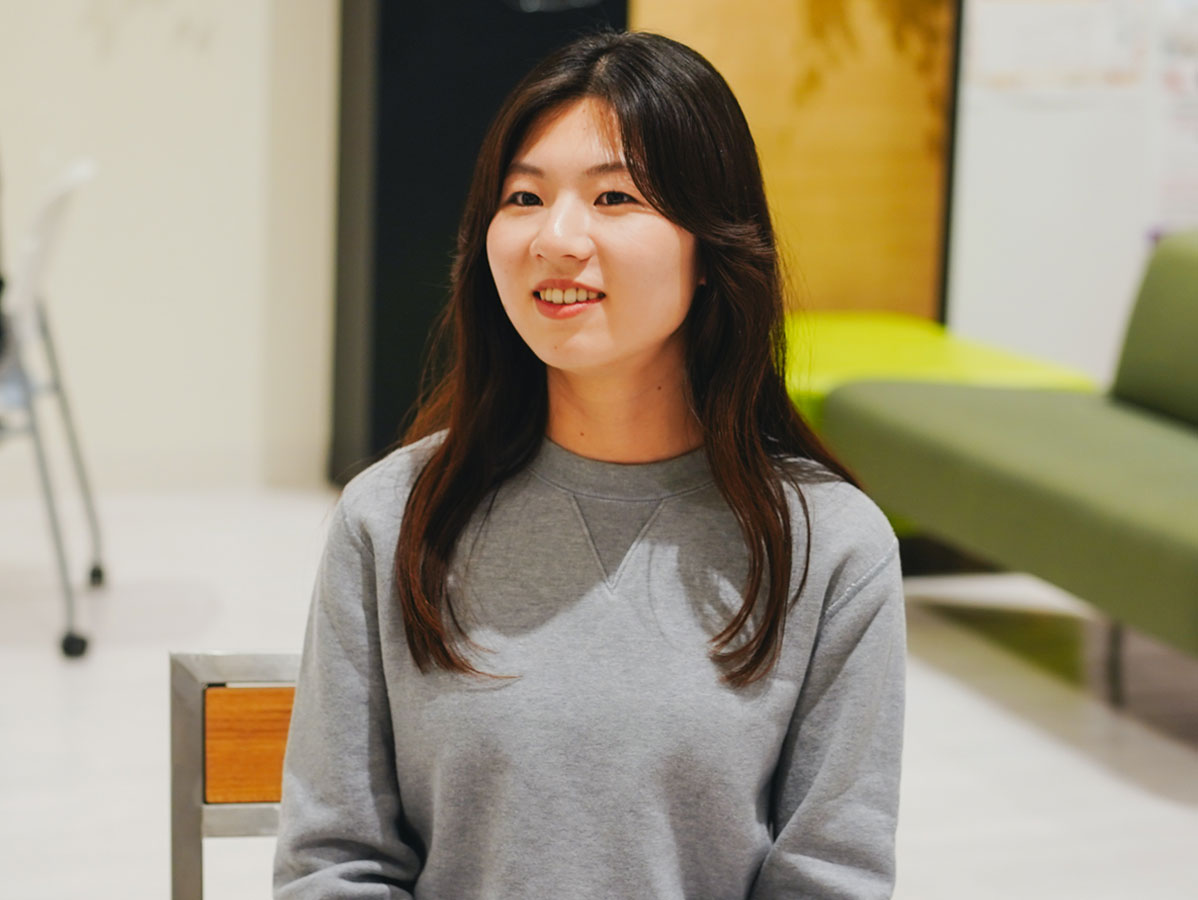
Hattori: I also think it's a good idea to increase your knowledge about "Japan." While there, I was asked a wide range of questions about Japanese politics and social issues, anime, food culture, and more. It was interesting to express my thoughts and exchange opinions, and it was a part of understanding different cultures.
In an environment with few Japanese people, each international student is perceived as a "representative of Japan." Preparing to clearly communicate your own thoughts will make your study abroad experience much richer.
[4] "Unexpected" situations are opportunities for growth. Experiences you overcome on your own become treasures.
Please tell us about any memorable or unexpected events that occurred during your time studying abroad, Sakata.
The biggest challenge
in Watari is the short daylight hours in winter. I think this is true not only for international students but also for locals. European winters were many times darker and colder than I had imagined, which made me feel a bit down. So, I decided to try something new and enrolled in an introductory class on traditional Japanese musical instruments, taught in German. I played the sho and hichiriki for the first time in my life, and attended classes held at the professor's home. Through traditional Japanese music, I also made more German friends. I wasn't familiar with gagaku (Japanese court music) when I was in Japan, so this turn of events was quite unexpected for me.
 Letters from friends and family who supported Watari during her time studying abroad. She pasted them on the wall of her dorm room and would look at them whenever she felt anxious or homesick to regain her positive outlook. In the foreground is a keychain she attached to her dorm room key, which, in true German fashion, also doubles as a beer bottle opener.
Hattori: I also found the gloominess of autumn and winter in Slovenia to be more difficult than I had imagined. While I was there, I had thought I wanted to hone my skills in an environment with little Japanese influence, but I felt so lonely that I started actively interacting with local students who were interested in Japan. As a result, I made foreign friends with whom I could connect through the topic of "Japan," and we made memories together through "food," which I love, such as teaching each other about each other's national cuisine.
 A cookbook of Slovenian cuisine owned by Ms. Hattori. She enjoyed cooking with her friends, including Slovenian dishes, and experiencing cross-cultural exchange.
Watari: Also, the most difficult thing for me during my time studying abroad was finding accommodation. Due to changes in the global situation, fuel prices soared, and dormitory fees increased significantly, forcing me to move to a different dormitory because I was over budget. Cologne is not an area where it's easy to find accommodation, so I negotiated with the dormitory owner every day in German and English, but the discussions went nowhere. We disagreed, and tension continued. Moving was extremely difficult, but it greatly honed my initiative, perseverance, and negotiation skills with foreigners.
Sakata: That must have been a valuable experience. While studying abroad, the International Center provides support via email and other means if you encounter any problems, but there are many situations where you ultimately have to rely on yourself. By taking initiative like Watari did, even troubles can become opportunities for growth.
From the internal selection process
at Hattori University to the decision to postpone graduation, and finally to the learning experience abroad, everything related to studying abroad has been a valuable experience for me. For those who are anxious about studying abroad, if you have the interest, you will definitely find a way, so I hope you will make your dream a reality.
I had a very glamorous image of studying abroad, but in reality, there were unexpected difficulties.
However, I believe that the experience of overcoming troubles on my own will be useful in job hunting and in my future life. Of course, I also grew academically, and after returning to Japan, I was able to obtain the German Language Proficiency Test Level 1. I hope that all of you will also have a fulfilling study abroad experience.
Studying abroad through
Sakata will greatly broaden your life choices by exposing you to different cultures. If you are considering studying abroad, please take some time to deeply consider your future aspirations and your goals for studying abroad. We hope that your study abroad experience will be as fruitful as possible.
Study Abroad Report (AGU LiFE)

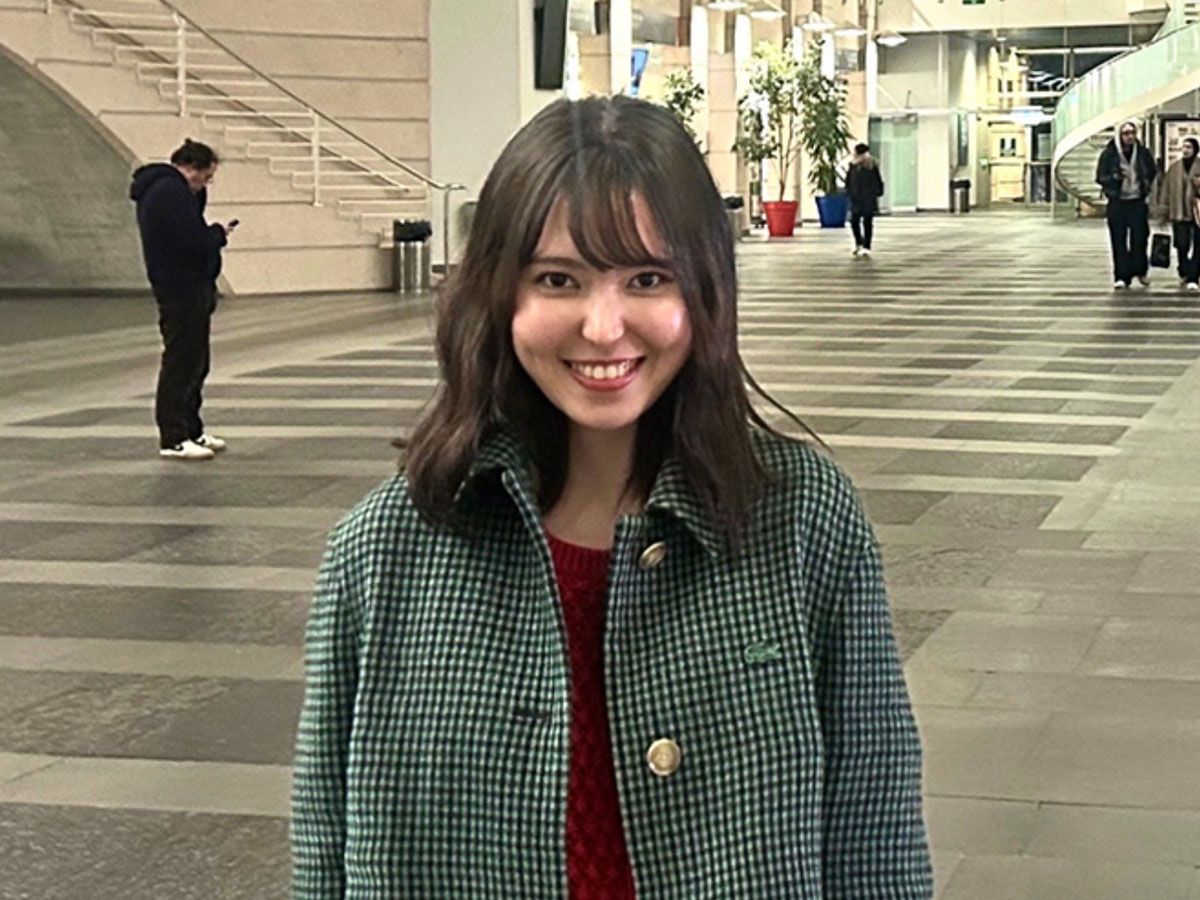
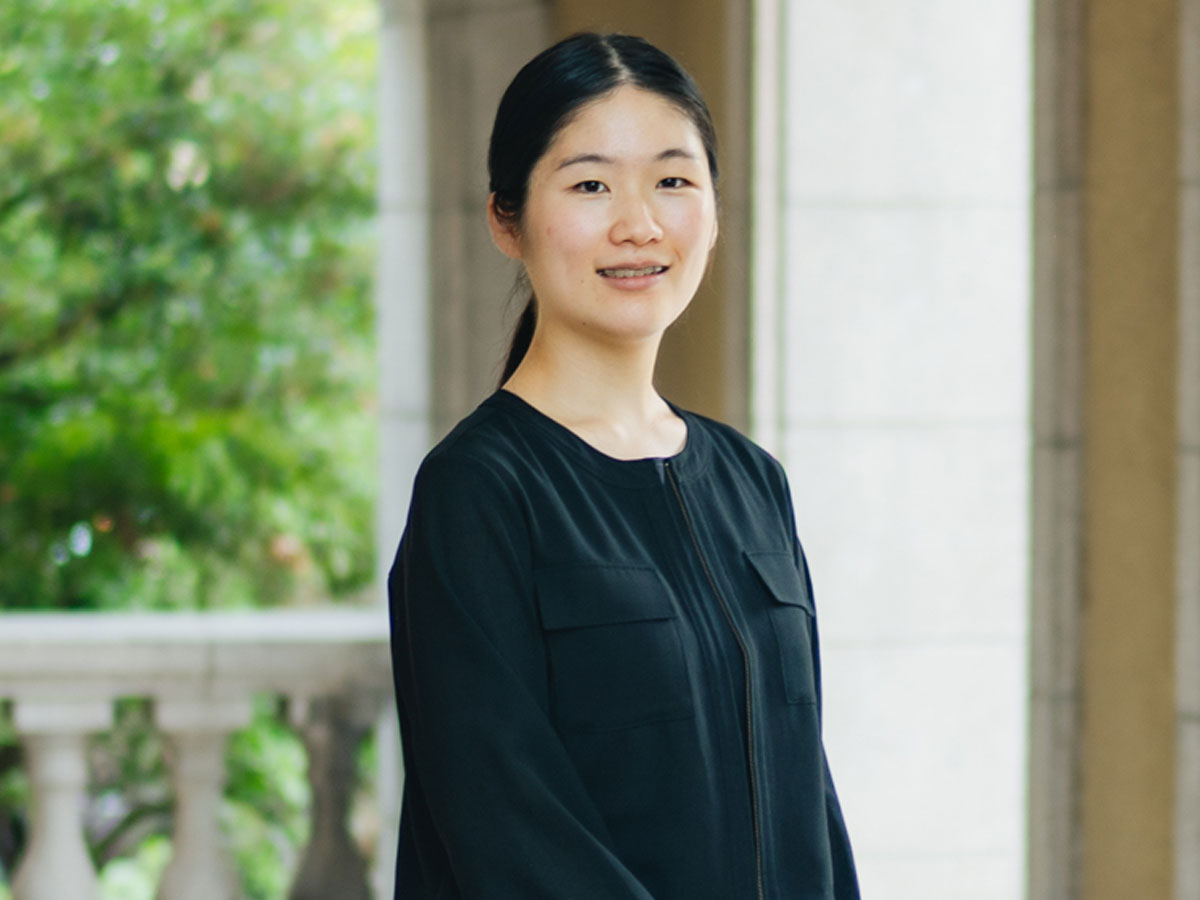
Exchange students at Aoyama Gakuin University are not just students from Japan challenging the world. The exchange students who come to Aogaku from 182 partner universities around the world are also learning every day, accumulating new discoveries and bewilderment in the unfamiliar culture of Japan.
Through their experiences, we can consider the meaning of going abroad and learning in a different culture.
Studying abroad is a gift to your future self.
Take the first step towards your life-changing journey by contacting the International Center / Academic Affairs Division International Exchange Section! Feel free to consult with us.
■ International Center, 2nd Floor, Building 17, Aoyama Campus
■ Sagamihara Campus, Building B, 1st Floor, "International Center" * Academic Affairs Division, International Exchange Section
VIEW DETAILS →