AGU NEWS Special Feature

An interdisciplinary approach Department of Human Rights will be realized.
A deep and broad study of "human rights"
2026 3.19

Addressing human rights issues through multifaceted learning.

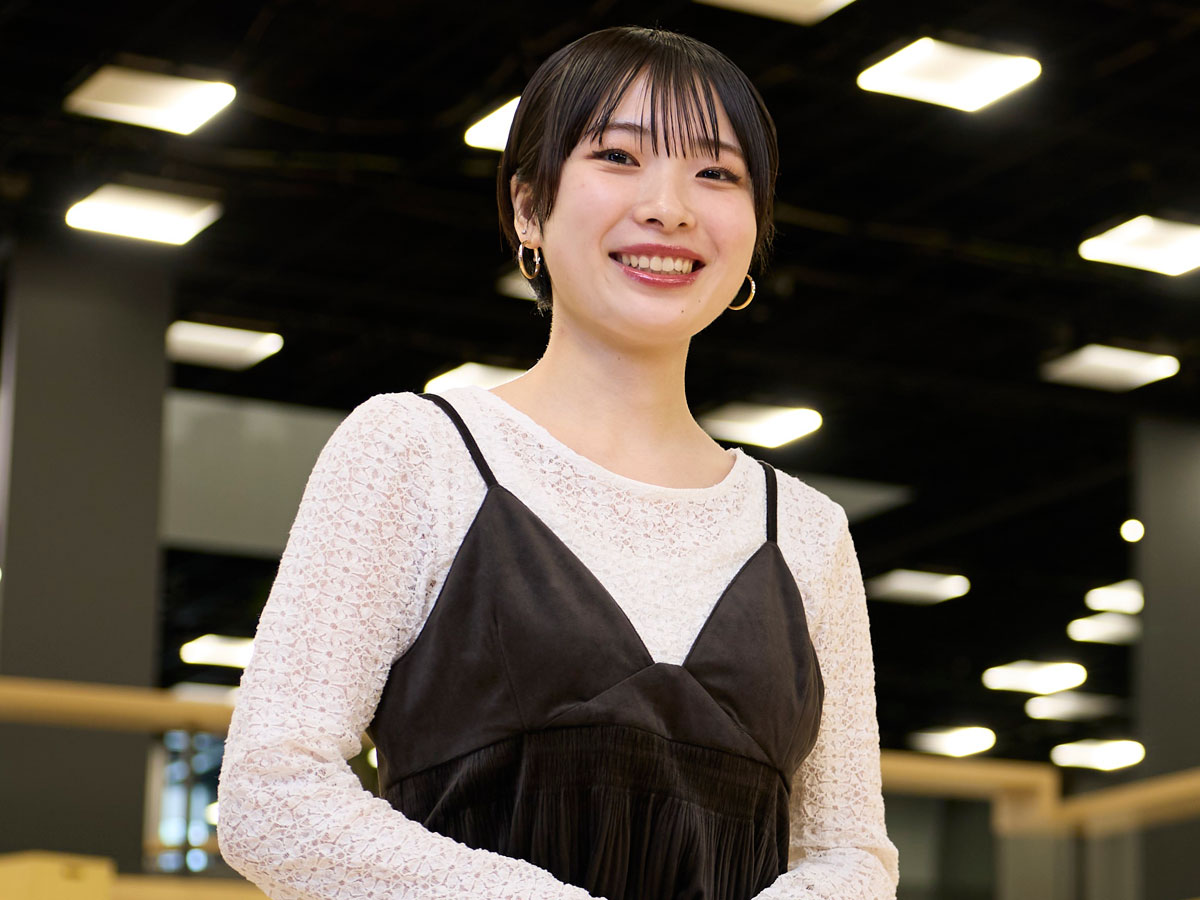
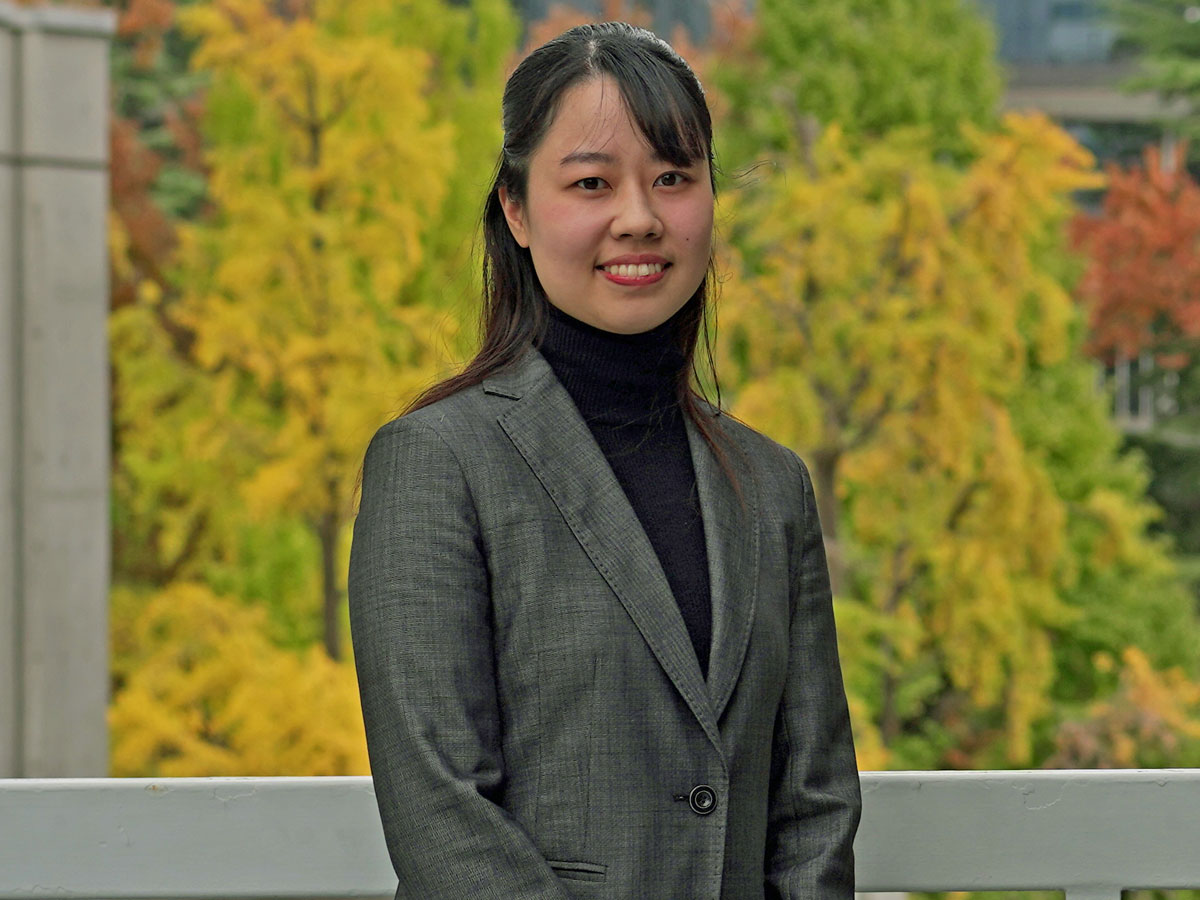
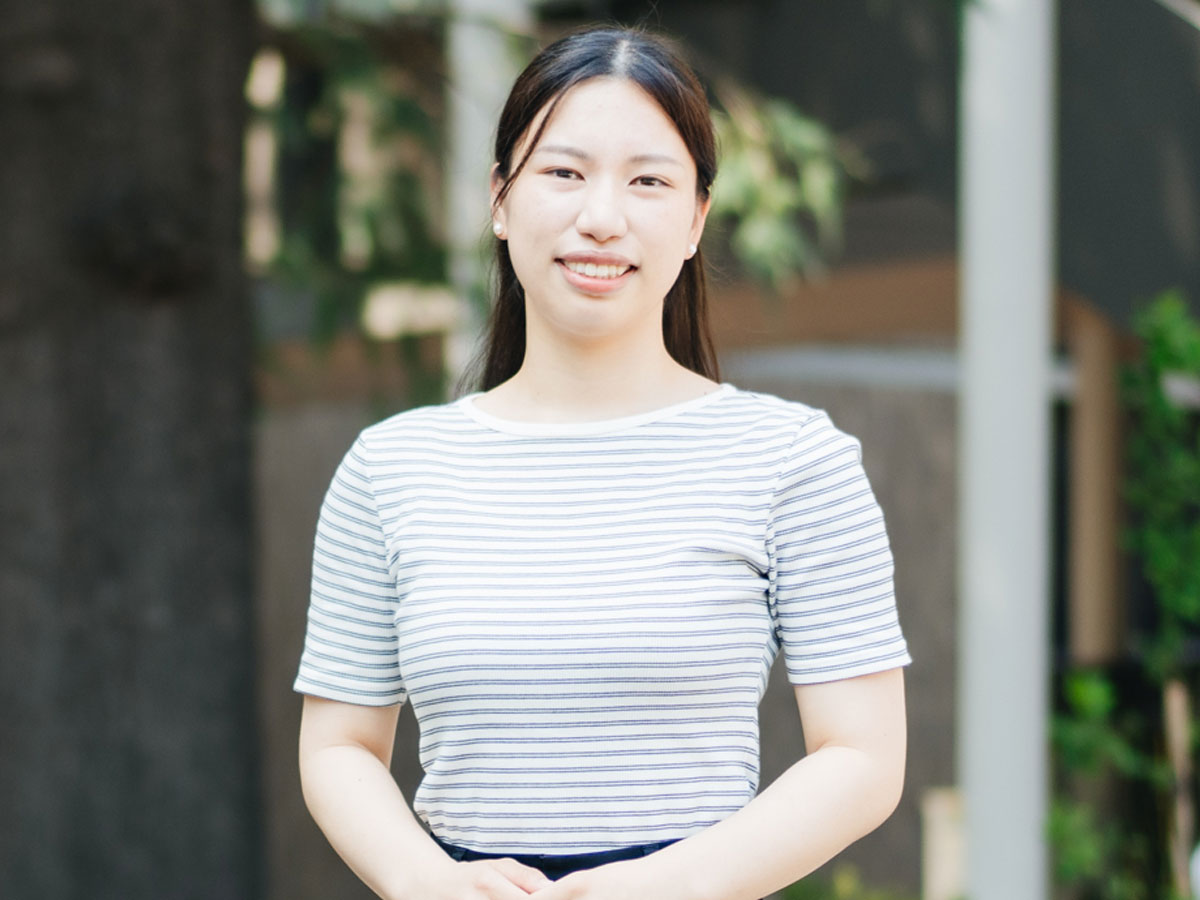
Department of Human Rights was the first department in Japan to offer specialized studies in "human rights." The name "Human Rights" embodies the universal concept of human rights that transcends national borders. This spring, the department, which has addressed human rights issues from multiple perspectives with law as its foundation, will send off its first graduating class. In this interview, we spoke with three students about their studies and the growth they have gained from their learning in the department.

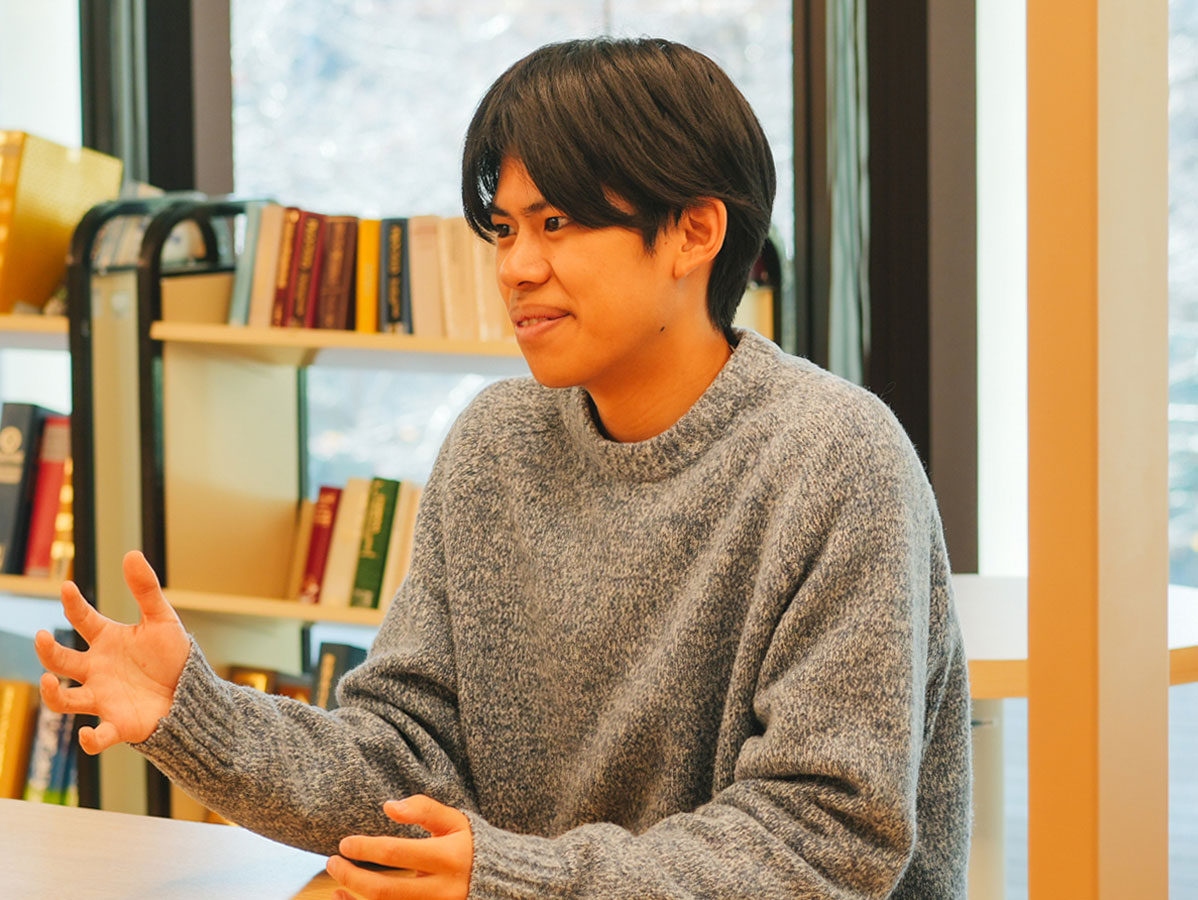
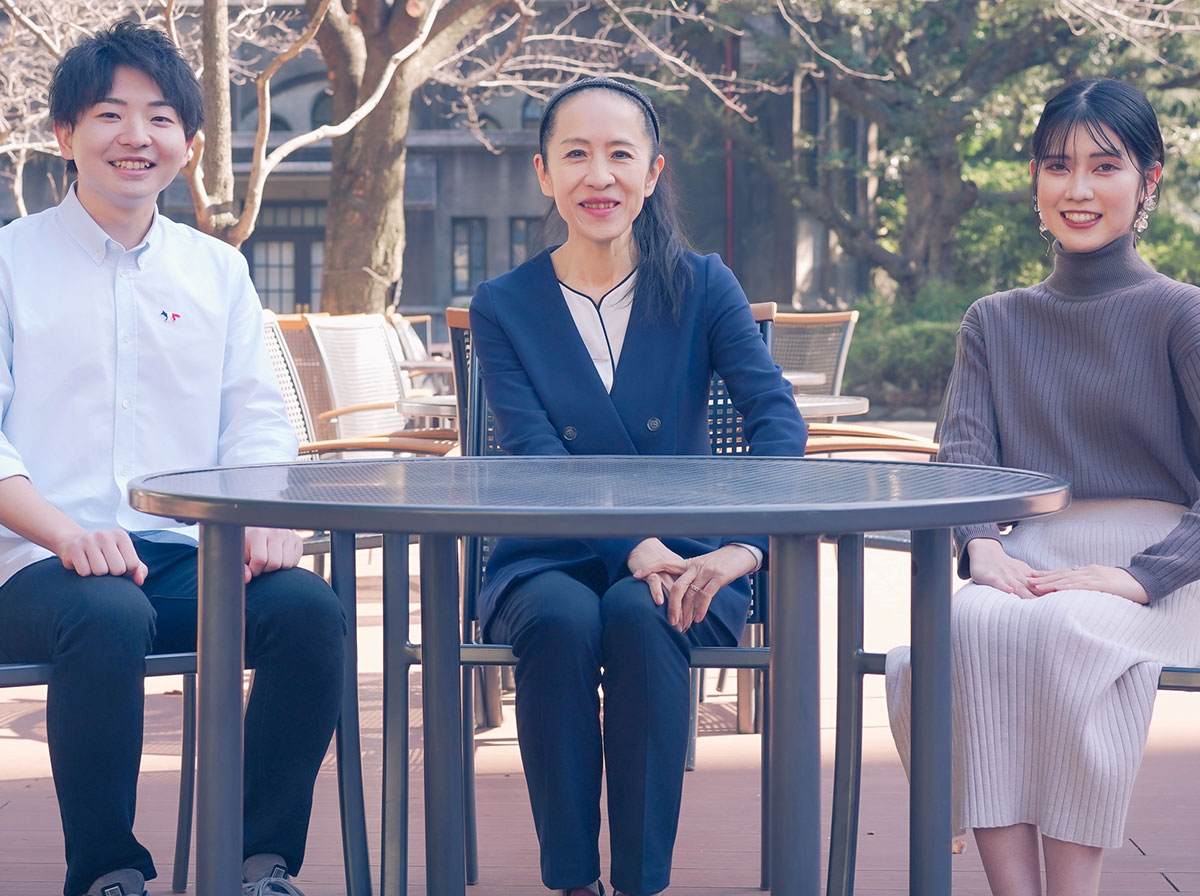
A roundtable discussion between first and second-year students of the department.

"People, things, and money"
To take a comprehensive view
From the perspective of "economics"
Deepening the understanding of human rights

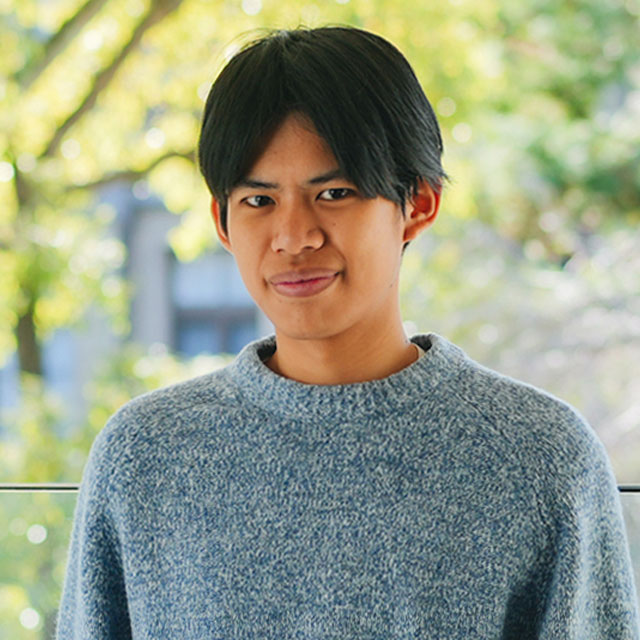
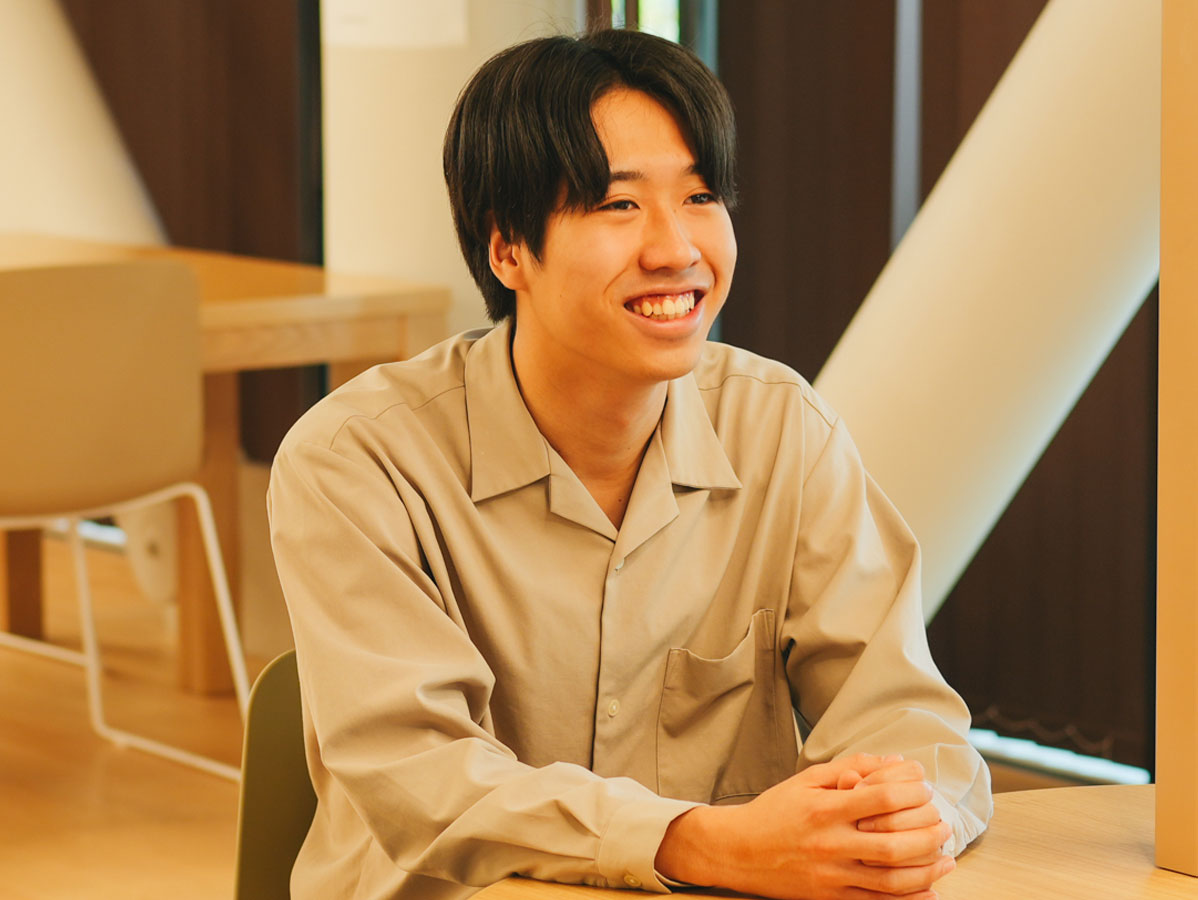
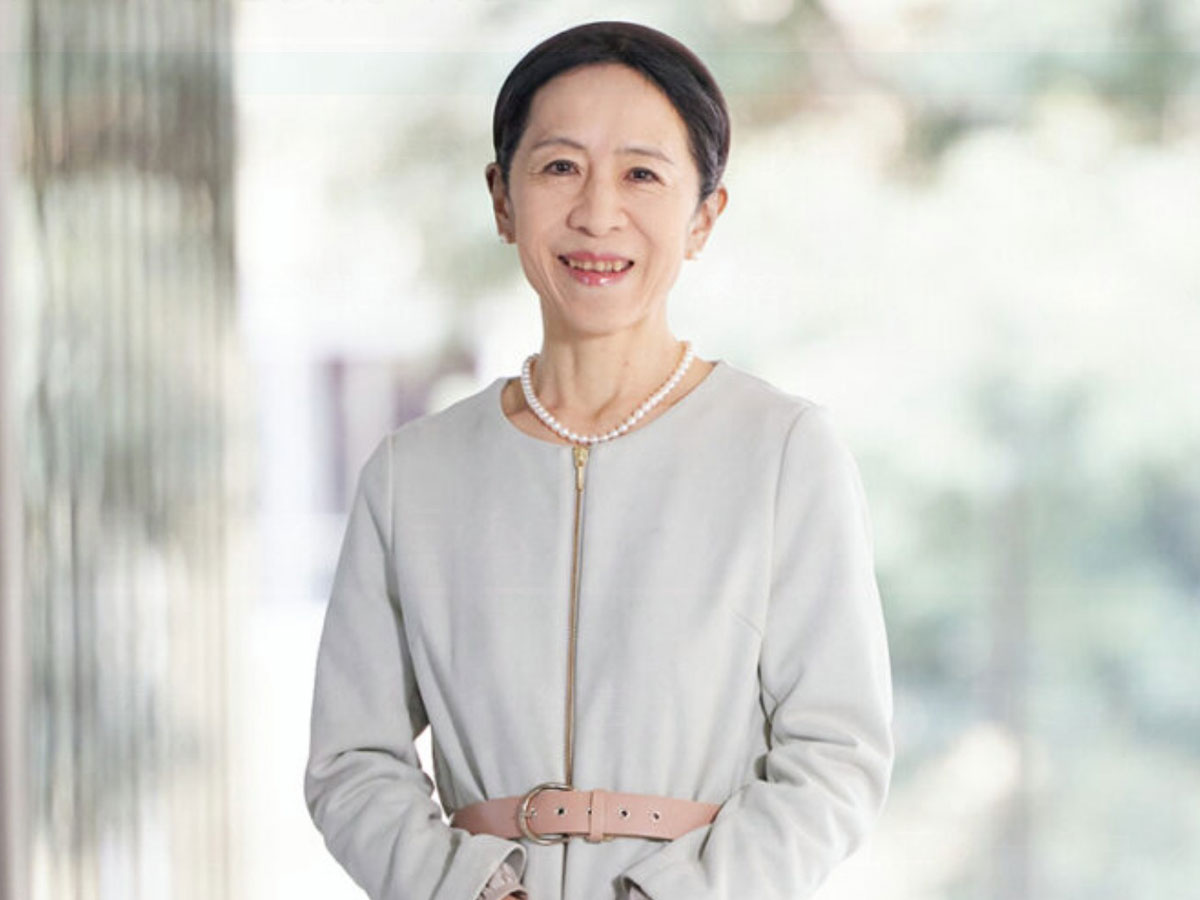
Faculty of Law Department of Human Rights 4th year
Kaede Ishikawa
Tokyo, private Aoyama Gakuin Senior High School From

Seminar Supervisor
Research Theme
Economics, economic policy, public economics

It is also my own starting point.
Revitalizing the shopping street
From the perspective of "regional revitalization"
To explore academically

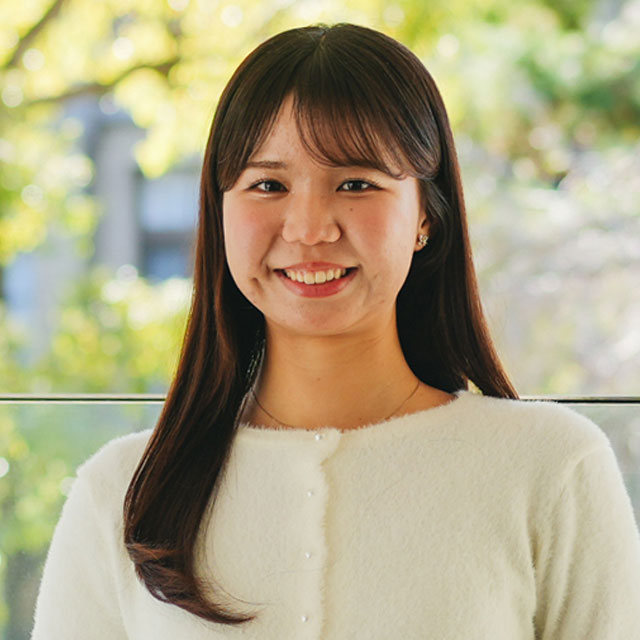
Third-year Department of Human Rights Faculty of Law
Mei Komatsu
Graduated from Yokohama Hayato High School (private school) in Kanagawa Prefecture.

Seminar Supervisor
Research Theme
Local government and community development:
Learning from "People's Movements"

"Qualitative Social Research Methods"
Through this, "listen deeply"
Learning the significance of things

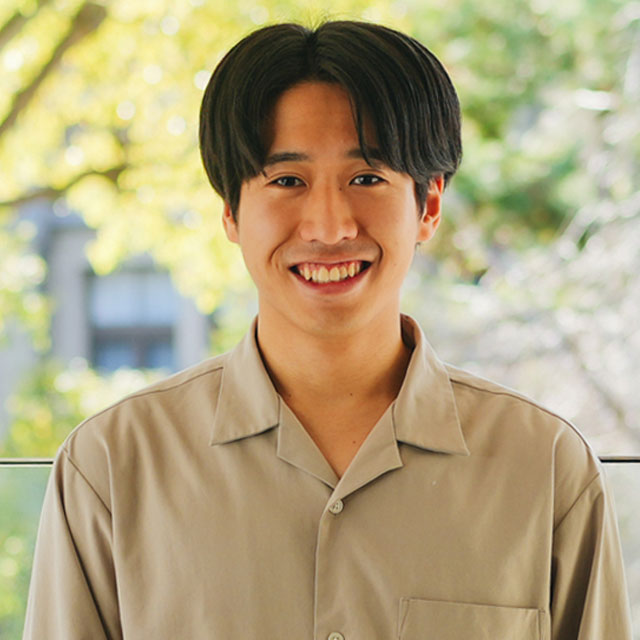
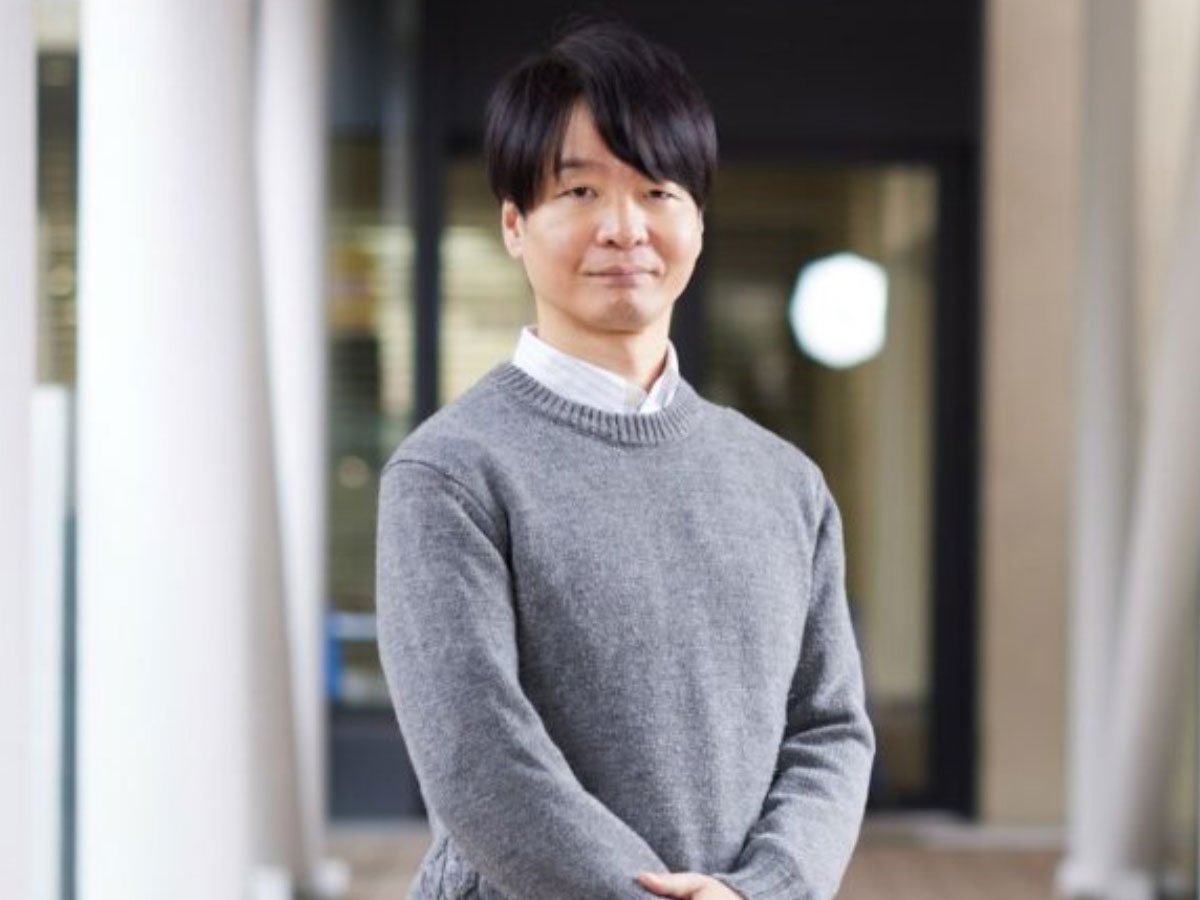
Third-year Department of Human Rights Faculty of Law
Megumi Doi
Graduated from Seigakuin High School, a private school in Tokyo.

Seminar Supervisor
Research Theme
Qualitative Social Research

■ Learning about "human rights" that began with each individual encounter

—Could you tell us what sparked your interest in the field of "human rights" and why you chose to major Department of Human Rights?

When I was in junior high school, my interest in "human rights" began when I did a homestay in Thailand as part of the curriculum. While staying with a mountain tribe family and doing volunteer work, I was confronted with the local poverty problem. At university, I wanted to deepen my academic knowledge of this matter, so I enrolled in Department of Human Rights with the goal of learning a field-based approach from Professor Morimoto, who has deep insights as a journalist.

Komatsu: As I listened to my grandparents' stories about the war, I became acutely aware of how mercilessly collective violence and discrimination trampled on individual dignity, and I developed a strong desire for peace. I believed that understanding the fundamental structure of society was essential to deepening my own awareness of these issues, and that's when I came across Department of Human Rights Rights, the first department in Japan to have "human rights" in its name. The interdisciplinary curriculum that allowed me to pursue human rights issues from multiple perspectives was also very appealing.

Ishikawa: Through my volunteer activities in high school, I became interested in human rights while interacting with people with intellectual disabilities. In Department of Human Rights, I wanted to examine the issues of discrimination and prejudice that exist within myself, delve deeper into them as social issues, and think about how to solve them.

--Let's talk about your actual learning experience. What were some of the most memorable things you experienced during your first and second years?

Toi"Public Policy Internship A One of my most memorable experiences was visiting the Numata Town Employment Support Center in Hokkaido as part of a practical training course. This center is a self-reliance support facility that provides vocational training to those released on parole from juvenile detention centers. While there, I had the opportunity to talk individually with the residents while harvesting tomatoes and other crops. Until then, I had preconceived notions about those released from juvenile detention centers. However, the people I actually met were close to my age and I realized they were young people with dreams, which gave me a great deal of insight. I also realized that the "laws and systems" I was studying at university were actually influencing people's lives. Furthermore, learning that there are various factors behind crime led me to question, "Why did they commit crimes? Doesn't society bear any responsibility?" From there, I developed a desire to "What can I do?" and "Learn more about the background of the problem," and I am currently volunteering to teach boys under home observation at the request of the family court.

Komatsu: I vividly remember my first experience attending a court hearing as part of a report for my first-year "Introduction to Law" class. The trial I observed was a criminal case for theft, but what surprised me was that the trial was not simply a place to judge crimes. The trial focused on the defendant's "difficulty in living," stemming from his isolation from welfare support due to mental health issues and loss of housing, and his struggles to make ends meet, as well as discussions about rebuilding his life in the future. Through this experience, I came to understand that the law is not merely a set of rules and articles, but a "living law" directly connected to the lives of real people.

What I remember most vividly is that the grade I received for a course I took in my second year was different from what I expected. I attended all the classes and submitted reports based on my own thoughts, so I think there was a discrepancy between what I understood from the lectures and what the professor wanted to convey to the students. In other words, I realized that I hadn't adequately conveyed objective perspectives and diversity in my reports. Issues surrounding human rights often involve differing opinions from person to person. Looking back now, I think this experience was an interesting result as a lesson that "there isn't just one right answer."
Another memorable experience was visiting a memorial for the Tokyo air raids in Tokyo during a "Modern History B" class. Until then, I had only learned about the war through media and videos, but seeing the memorial with my own eyes and experiencing the atmosphere that can only be felt on-site was a new learning experience.

■ Cultivating individuality and expertise with "human rights" as the core principle.

—You joined a seminar (or seminar group) in your third year. Could you tell us your reasons for wanting to join a seminar?

Doi: I am currently studying in Professor Morimoto's seminar, fulfilling a wish I had since before entering university. I am currently studying "qualitative social research," which emphasizes individual interviews. I have always had a strong desire to convey the voices of those directly affected by social problems to society, and I believe that qualitative research methods, which involve deeply engaging with each individual, are the most suitable way to achieve this.

Komatsu: I originally enrolled Department of Human Rights because of my interest in peace, but I was so impressed by a documentary about the revitalization of a shuttered shopping street that I am now studying regional revitalization in Professor Mori's seminar. This is because I myself was born and raised in a shopping street and have personally witnessed the decline of my local shopping district. I chose this seminar because I wanted to learn theories and methods for regional revitalization in a specialized way.

Ishikawa: I am studying economics in Professor Sato's seminar. In my second year, I learned about cases of people who are in difficult situations because economic problems and human rights issues overlap. Through that experience, I came to think that in order to understand human rights more realistically, an economic perspective that encompasses the three elements of "people, goods, and money" is indispensable.

—What was the most memorable thing you learned in the seminar?

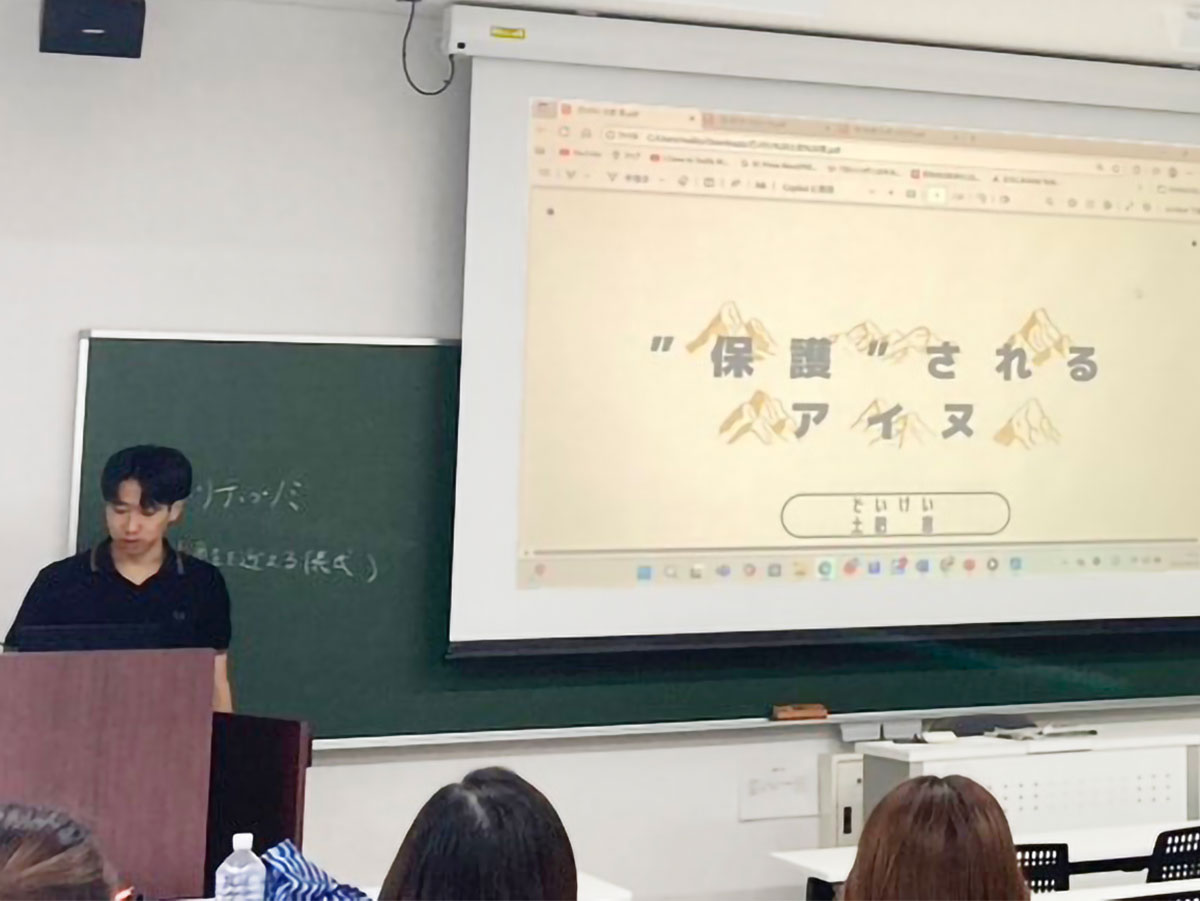
During a summer seminar camp with the Doi family, I visited Hokkaido and met with members of the Ainu organization "Raporo Ainu Nation." While the Ainu are increasingly treated as a familiar and approachable group due to influences such as the manga "Golden Kamuy" and cultural facilities like "Upopoy (National Ainu Museum and Park)," they actually have a history of exploitation dating back to the Edo period and continue to face many challenges, including low university enrollment rates and a large number of households receiving welfare. Although I had studied these issues beforehand, there were many things I only truly understood after directly speaking with Ainu people themselves. The members of Raporo Ainu Nation I met were very friendly and warm, and I reaffirmed the importance and interest of hearing directly from those directly affected. This experience sparked in me a desire to "convey the issue of discrimination to society," and I decided to pursue a career as a newspaper reporter. Furthermore, seeing many newspaper companies covering Ainu traditional ceremonies and witnessing the sincere efforts of reporters was a major encouragement when considering my career path after graduation.

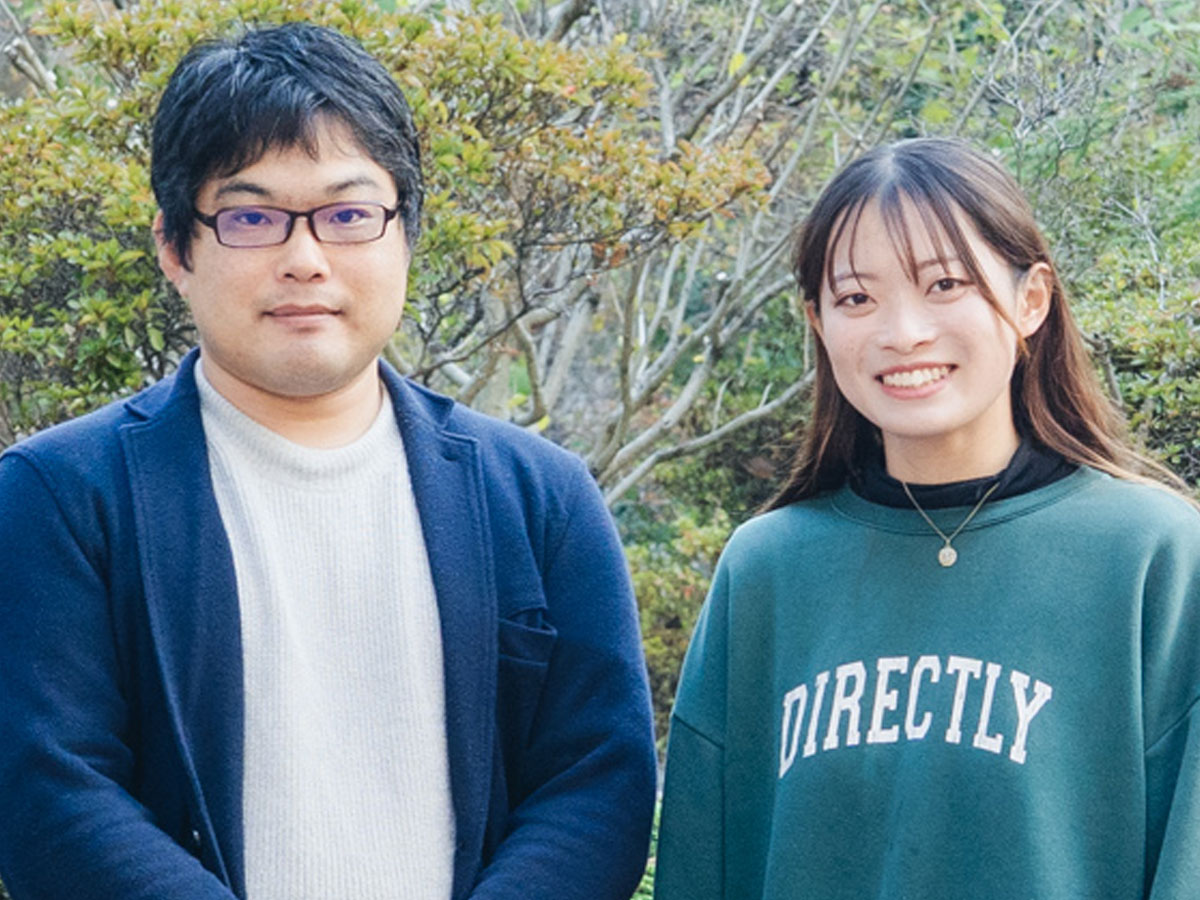
Ms. Doi presents the results of her fieldwork in her seminar.

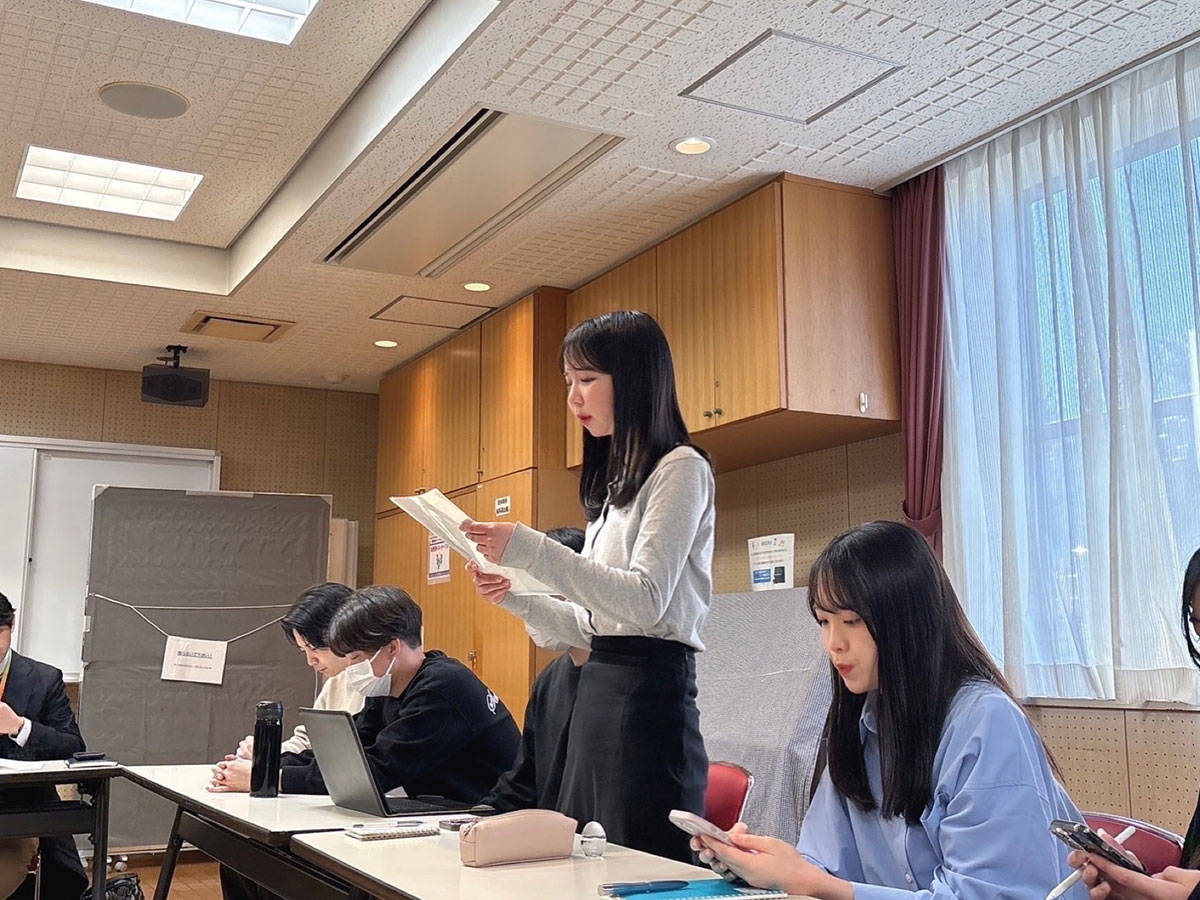
One of the most memorable things I learned in Professor Komatsu 's seminar was investigating the current state of shopping streets. What I learned during the investigation was the reality that if a shopping street declines and it becomes difficult to continue operations, removing the arcade can cost tens of millions of yen. I was deeply shocked by this structural dilemma, where the arcade, once a symbol of vibrancy, becomes an obstacle to the future. In the area we investigated, there were five shopping streets connected together, and it was considered desirable to unify them from the standpoint of operational efficiency. However, in reality, it became clear that there are significant hurdles to integration, such as the difficulty of reconciling the interests of each shopping street, including how to handle the assets they have accumulated and who will bear the cost of removing the arcade.

Ms. Komatsu presenting at the shopping district's debriefing session.

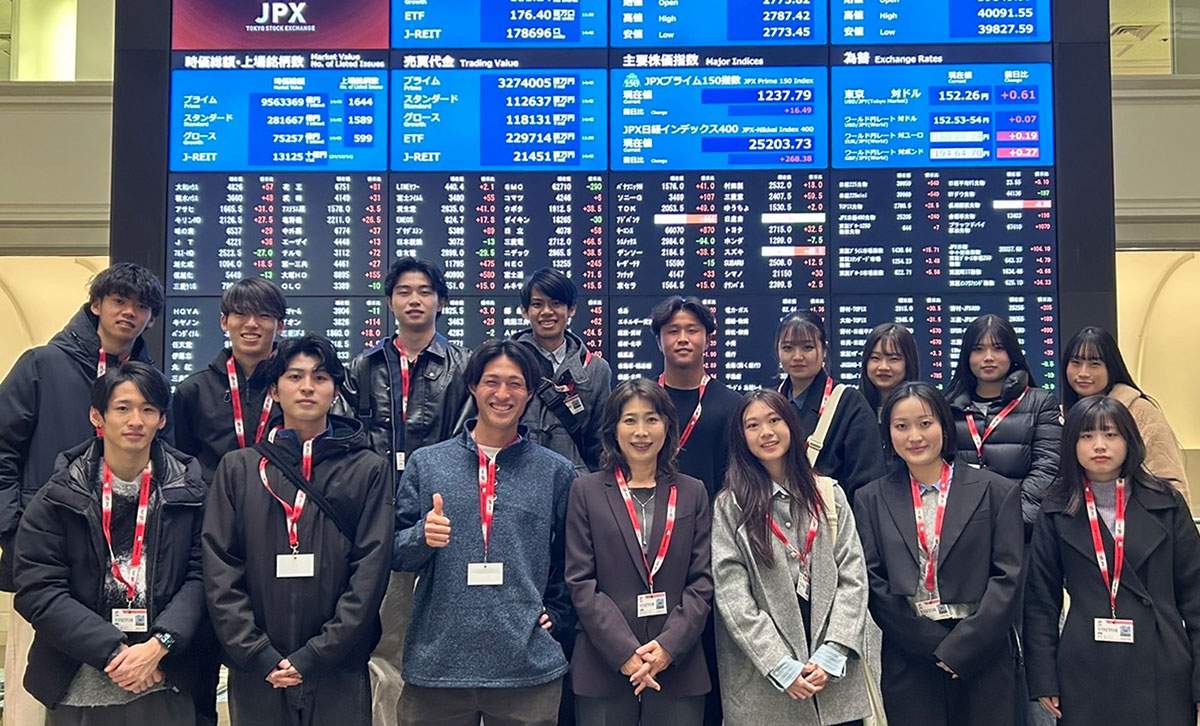
Ishikawa: I remember visiting a securities company. The way stock prices fluctuated by the second made a huge impact on me. I was overwhelmed by the presence of large corporations in the market, and at the same time, from my own part-time job experience, I realized that even though positions and roles may differ, each individual's work drives the economy. Just like when I visited the air raid memorial, I felt that there are lessons that can only be learned by actually going to the site myself.

A visit to a securities company during a seminar (Ishikawa is the fourth person from the left in the back row)

■ Questions with no single correct answer foster critical thinking and emotional development.

—Could you tell us about the distinctive features of studying in Department of Human Rights?

Doi: First of all, I think the density of the first-year curriculum is a major factor. In Department of Human Rights, which emphasizes interdisciplinary learning, the fields of study are broad and there are many assignments, so it was necessary to work hard at first. However, I feel that gaining foundational knowledge during this period made advanced learning much smoother. There were some areas in the required subjects that I had difficulty with, but learning the basics broadened my perspective considerably. For example, I was not good at mathematics, so I struggled with economics, but I realized that an economic perspective is essential when considering the root causes of social problems, and after that I started to study it more actively.

Komatsu: What I particularly appreciated was being able to learn about real-world human rights issues in real time. For example, the day after the "Former Eugenics Protection Law" was reported in the news, its background and problems were immediately discussed in class. Being able to discuss events happening in society in a timely manner made me feel that human rights issues were more relatable. There were also lectures by practicing lawyers and journalists, allowing us to learn from the firsthand accounts of experts.

At Ishikawa Department of Human Rights, there are many opportunities for discussion. Human rights issues often involve "questions without right answers," and problem-solving is often difficult, so there are always moments when discussions reach an impasse. Even then, we try to shift the discussion by asking ourselves, "How can we continue thinking without giving up here?" This has been both interesting and challenging. Sharing opinions with people who have different views can be difficult, but I think the good thing is that what I had taken for granted as "common sense" gradually becomes clearer.

Doi: I also think the discussion format was excellent. In human rights issues, solving one issue from one perspective can sometimes create new problems, and by persistently discussing these difficulties, I had the opportunity to become aware of the biases and unconscious violence within myself. Another good thing about discussions is that you can make new friends through communication.

Komatsu: When we engage in discussions about complex social issues, we often come to the realization that "it's ultimately impossible to solve this problem," and we feel powerless. However, I believe it's important not to give up thinking at that point, but to continue searching for "something small that we can do."

—Could you tell us about any changes you experienced before and after enrolling? Did your understanding of "human rights" change at all?

In a book by Masahiko Doi Kishi, there is a statement to the effect that "the purpose of qualitative social research is to deeply investigate how complex the world is." The world is inherently chaotic, but sometimes we tend to view things in a binary opposition of "good or evil" in our pursuit of superficial clarity. However, by studying "qualitative social research," which centers on individual interviews, and listening carefully to the stories of many people, I have come to understand that there are complex backgrounds to people's words and actions and events. Now I feel that I can avoid making hasty judgments about things. Especially now, when social division is a problem, and as someone aspiring to be a journalist, I want to cherish the attitude of "listening deeply to what others have to say."

Previously, I viewed human rights as something that "should be protected if possible," and that their adherence was left to individual judgment. However, having learned about human rights systematically in the "International Covenant on Human Rights" class, and knowing that Japan has ratified the "International Covenant on Human Rights," I came to understand that human rights are "something that everyone must protect," guaranteed to all. Furthermore, learning about "human rights," a universally recognized and objective standard of judgment, allowed me to gain a logical basis for considering social issues in class.

Komatsu: I was able to deepen my understanding of complex and uncertain issues, such as the problems with shopping arcades and the issue of unifying management, by continuing to think about them despite my internal struggles. I also began to see the problems faced by shopping districts outside of my own as my own.
Previously, I perceived human rights issues as events far removed from everyday life, such as international conflicts or historical social movements, and limited to specific situations or individuals. However, I now understand that human rights issues are deeply intertwined with everyday life, including casual conversations and our immediate environment, and that they are partly caused by our own unconscious biases. Furthermore, I used to think that human rights issues such as "poverty" and "gender" were independent problems, but I now understand that in reality, multiple issues are intricately intertwined, amplifying discrimination and difficulties.

Through studying economics in depth in Professor Ishikawa 's seminar, I've come to understand how to link the two perspectives of economics and human rights. For example, I've started to think that by improving tax systems and economic support plans, we can also support the human rights of socially vulnerable people and create a better society. I've also developed an interest in the relationship between current events and stock prices, so I started using NISA myself and am now able to feel the movements of the economy firsthand.
For me, the biggest change over the past four years is that I've started thinking about human rights even in the smallest everyday moments. When I used to see only women, like my mother and grandmother, working at family gatherings, I didn't feel anything. But now I've come to realize that I'm taking this situation for granted. Also, I used to think of human rights as something the strong do to protect the weak, but now I believe that both sides are equal and that human rights are about respecting others.

■ Questioning "common sense" and passing on human rights education to the future

—How do you plan to utilize what you've learned in Department of Human Rights in the future?

Doi: I want to work in the media, such as as a newspaper reporter, in the future to spread the idea that "human rights" are not for a select few, but "basic rights and the foundation of life that everyone possesses."

When I encounter Komatsu News or posts on social media, I will always be mindful of "whose perspective the information is being told from" and "whose perspective is missing." I will also constantly ask myself whether my own actions or societal stereotypes are creating barriers that cause suffering for minority groups.

Ishikawa: In the past, I often judged things based solely on hearsay before seeing them for myself, and I think I was prone to prejudice. However, I learned a great deal during my four years Department of Human Rights, and I was able to cultivate the ability to question what I had taken for granted as "common sense." I would like to continue to cherish that attitude in the future.

--Finally, do you have a message for those who are interested in Department of Human Rights?

For me, the biggest discovery in Department of Human Rights was that "human rights issues are closely connected to everyday life." This is also true of everyday issues such as women's rights within the family and the isolation of the elderly, as Ms. Ishikawa mentioned. I hope that people will realize that Department of Human Rights offers accessible learning opportunities that can be started from familiar interests.

Komatsu: As you study in this department, I would like you to cherish the imagination to recognize that "what is 'normal' for you may be different for someone else." I believe that the first step in solving major discrimination problems is this kind of small imagination in everyday life.

The Ishikawa Department of Human Rights offers many opportunities to deeply consider human connections and individual existence through the theme of human rights. We encourage anyone who has an interest in or questions about human relationships to enroll. You will have the opportunity to break down and understand various questions on your own, making it a meaningful learning environment for many people.

What is Department of Human Rights?

Faculty of Law
Department of Human Rights
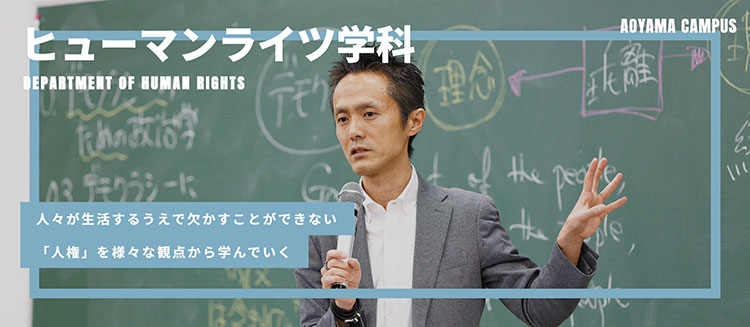
Chief

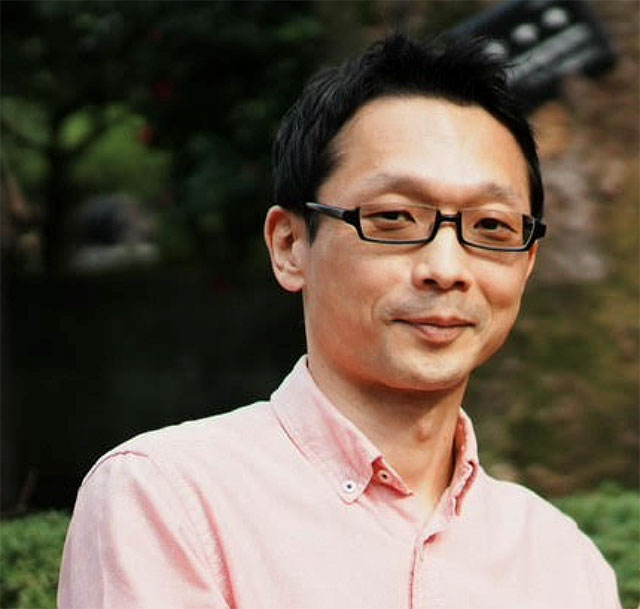
Yusuke Mori

Department of Human Rights was established in 2022 as the first department in Japan to study law from the perspective of "human rights." The name "Human Rights" embodies the various aspirations of those involved in its founding, but I would like to emphasize that it is not so much about "rights," but rather about human rights—what is right—and therefore about exploring the right path for human beings. Broadly speaking, it is about how to make this society in which we all live easier to live in. Therefore, while Faculty of Law students study law, they also acquire knowledge in a wide range of fields such as politics, economics, society, and public policy, stemming from their interest in how to improve the society in which people live. Human rights issues may seem to only concern people facing great difficulties, such as socially vulnerable groups and minorities, but they also concern your own daily life as you read this article. For example, even something as simple as the "means of transportation" you use every day can be connected to learning about human rights. The fascinating aspect of the Human Rights Department lies in learning how to overcome problems that people face or may face in the future, and how to create a society where Department of Human Rights more easily. It involves tackling complex and difficult-to-solve questions that don't have a single answer.

Seminar Introduction (AGU LiFE)

Student Voices (AGU LiFE)

Research Introduction (AGU RESEARCH)