Breaking away from stereotypes
Learning to "like"
May 15, 2025
Promoting specialization and diversity in learning.
Advance new initiatives
The forefront of College of Science and Engineering
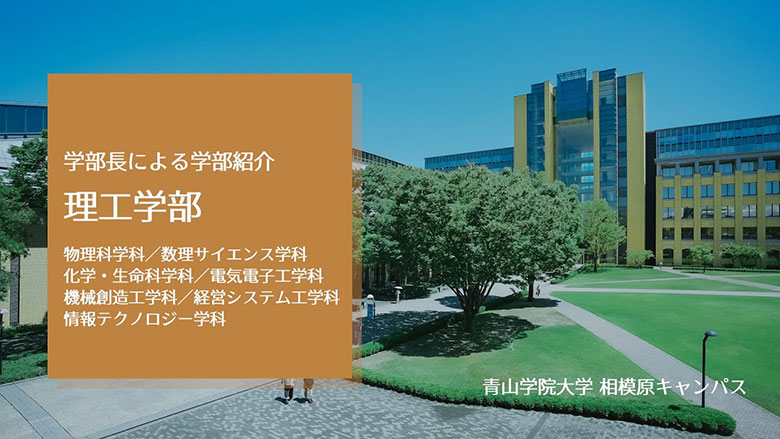
College of Science and Engineering will celebrate its 60th anniversary in 2025. The beautiful green Sagamihara Campus is home to seven departments, from science to engineering, and is conducting specialized education and research in a wide range of science and technology fields. We will introduce the latest information on the Faculty of College of Science and Engineering" that promotes diversity in learning.
 What is required in the information society is "high level of expertise"
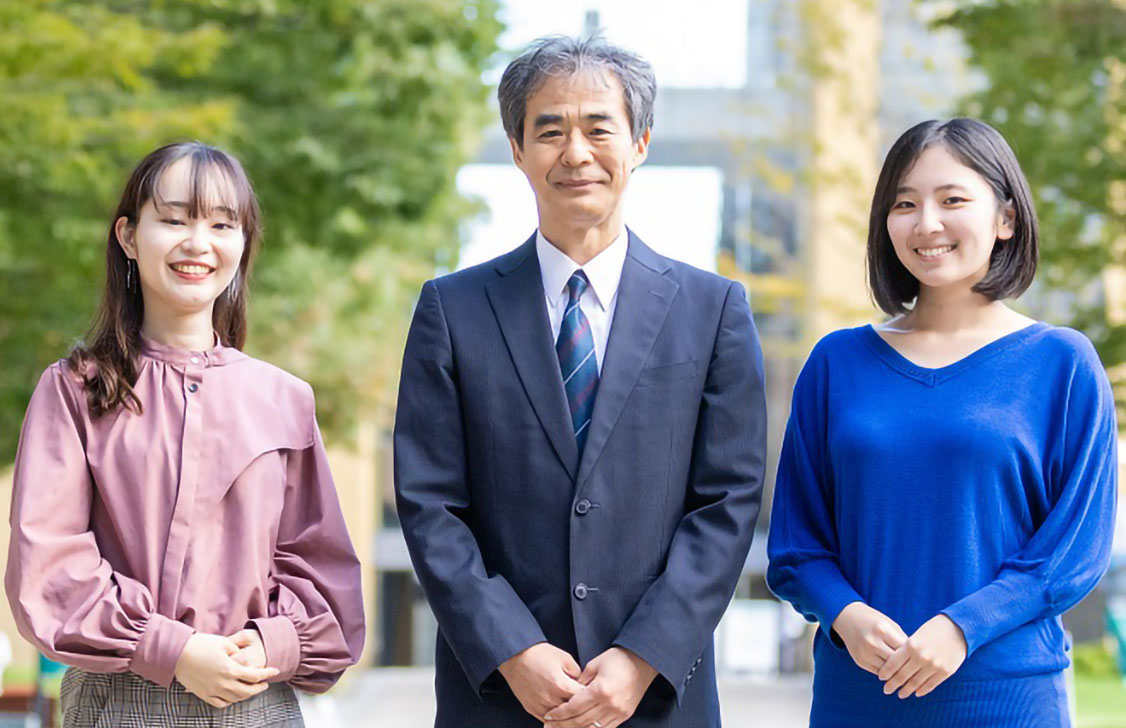
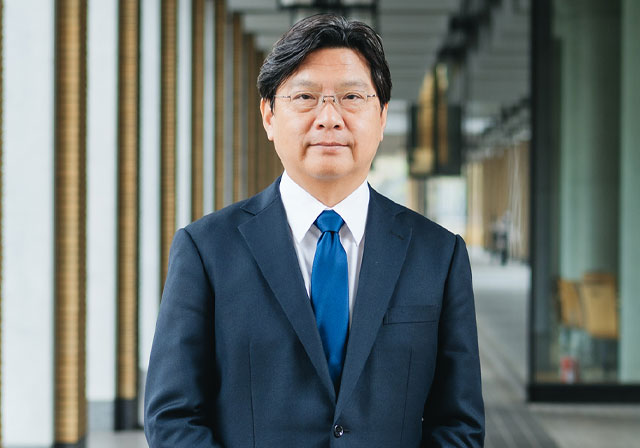
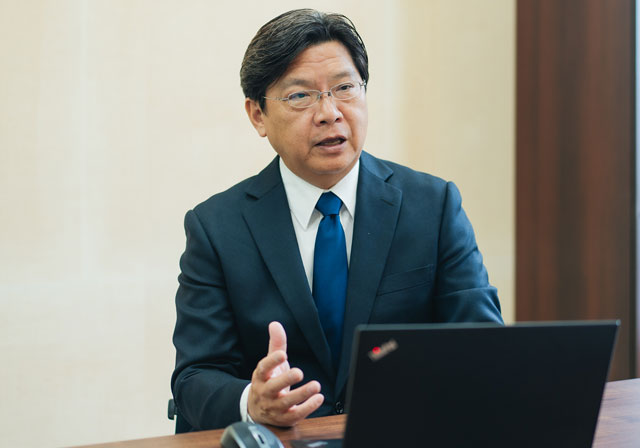
Dean College of Science and Engineering
Professor, Department of Electrical Engineering and Electronics College of Science and Engineering
Shinji Huang
D. in 2000 from the Department of Physics and Engineering, Graduate School of Engineering, the University of Tokyo. D. in Engineering from the University of Tokyo. After working as an assistant at the University of Tokyo, an assistant at Tohoku University, and an associate professor at Nara Institute of Science and Technology, he was appointed as an Aoyama Gakuin University College of Science and Engineering Department of Electrical Engineering and Electronics associate professor in 2013, and became a professor in 2018. He is the Director of the Nanocarbon Device Engineering Laboratory. He specializes in crystal growth of functional materials and device applications. Aoyama Gakuin University He started his research on crystal growth and device applications of graphene (a sheet-like material composed of carbon atoms) in earnest in He has been involved in research and development of thermal CVD growth of single-crystal graphene on iridium, graphene transparent antennas, etc. He is a member of the Japan Society of Applied Physics, the Carbon Materials Society of Japan, the New Diamond Forum, and other societies.
■ Student support system to support Aogaku 's "research capabilities"
As information technology advances rapidly, modern society is faced with a variety of problems. To address these problems, more advanced expertise is required in a variety of fields, and the importance of science and technology in particular is increasing.
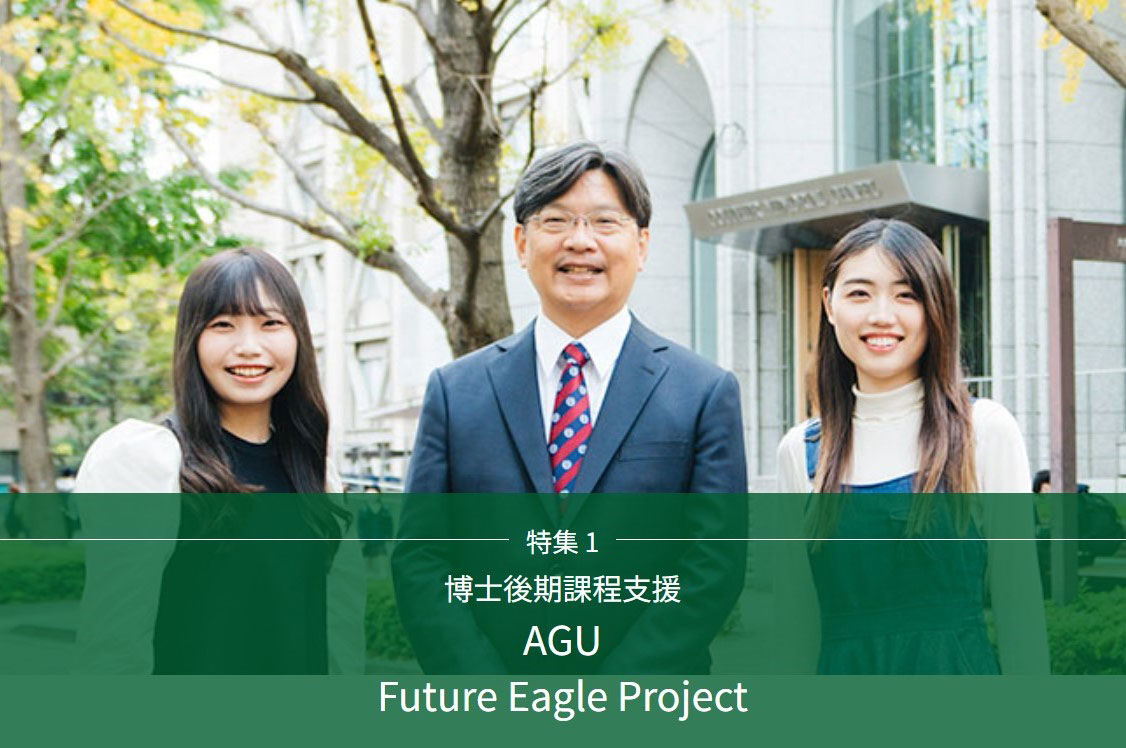
College of Science and Engineering is focusing on student support systems to produce excellent human resources, with the keyword "the future is the era of specialization." As an example, the "Aoyama Gakuin University Young Researcher Development Scholarship" system provides doctoral students with a scholarship to cover their tuition fees, so tuition is essentially free. In addition, the "AGU Future Eagle Project (FEP)" promotes efforts to form diverse career paths, such as research study abroad and sub-mentoring systems, as well as basic support to allow students to concentrate on research, such as support for research expenses and living expenses, and we plan to continue strengthening this support system. In addition, as a unique initiative of the Graduate Graduate School of Science and Engineering, from 2019, the "Special Grant Scholarship System" was established for the master's program, which provides scholarships equivalent to full or half of tuition fees to top-achieving students who advance to the university, and supports them in acquiring advanced specialization.
Thanks to these efforts, in 2023, the rate of graduates from the Faculty College of Science and Engineering moving on to graduate school (master's or doctoral programs) exceeded 50% for the first time (including those moving on to graduate schools at other universities). The doctoral program's enrollment rate is also 90%, indicating that more students are seeking to gain higher levels of expertise. Our university's research capabilities are highly regarded, and in the "Nature Index 2018 Japan" by the international scientific journal Nature, we were ranked 5th among Japanese research institutions (proportion of high-level research papers in the field of natural sciences) for the proportion of high-quality scientific papers published in high-level academic journals between 2012 and 2017.
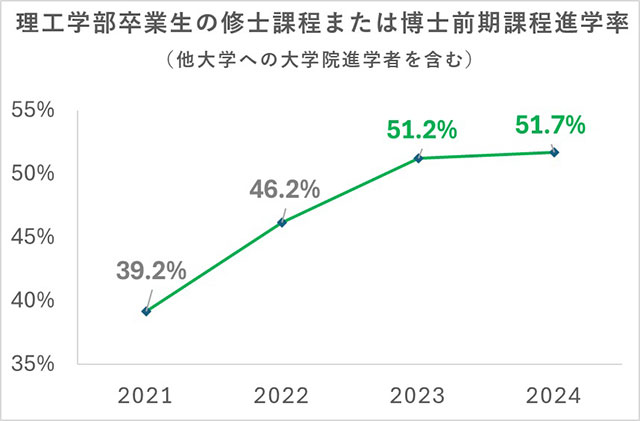 The rate of students moving on to the Graduate Graduate School of Science and Engineering has increased, with over 50% of the graduates from the Faculty of Science College of Science and Engineering, including other graduate schools, moving on to graduate school
. One of the university's mission statements is, "We aim to develop talented individuals who have the wisdom and ability to discover and solve problems on their own with correct recognition based on a global perspective." Since science and technology is a common academic field around the world, we hope that students in the Faculty College of Science and Engineering will acquire a more global perspective and advanced expertise, and play a role in contributing to society based on the spirit of Aoyama 's school motto, "Salt of the Earth, Light of the World."
The rate of students moving on to the Graduate Graduate School of Science and Engineering has increased, with over 50% of the graduates from the Faculty of Science College of Science and Engineering, including other graduate schools, moving on to graduate school
. One of the university's mission statements is, "We aim to develop talented individuals who have the wisdom and ability to discover and solve problems on their own with correct recognition based on a global perspective." Since science and technology is a common academic field around the world, we hope that students in the Faculty College of Science and Engineering will acquire a more global perspective and advanced expertise, and play a role in contributing to society based on the spirit of Aoyama 's school motto, "Salt of the Earth, Light of the World."
The rate of progression to Graduate School of Science and Engineering has increased, with over 50% of graduates from the Faculty of Science College of Science and Engineering progressing to graduate school (master's or doctoral programs), including other graduate schools.
■ New initiatives to promote diversity in learning
1) Proportion of women in science and engineering fields and "unconscious bias"
The Faculty of College of Science and Engineering is now working on eliminating the gender imbalance. The percentage of female researchers in Japan is only 17.5%, the lowest among OECD (Organization for Economic Cooperation and Development) member countries. The percentage of female researchers in our Faculty of Science College of Science and Engineering in 2024 will be 19% on average, which is also a similar situation. Incidentally, Latvia and Lithuania, which have the highest percentage of female researchers among OECD member countries, have a value of around 50%.
There are two problems behind the extremely low number of women in science and engineering fields in Japan. The first is the "entrance" problem, where there are few female students who choose science and engineering, and the second is the problem that even if women do manage to enter science-related professions, they are forced to drop out due to life events such as marriage and childbirth, or due to work environment. Furthermore, it has been pointed out that the root of these problems is the "unconscious bias (unfounded stereotype)" that "girls are not good at science and engineering." This bias is widespread throughout society, including in the educational field and at home, so even female students who were originally interested in science and engineering are unconsciously influenced and end up leaving the field.
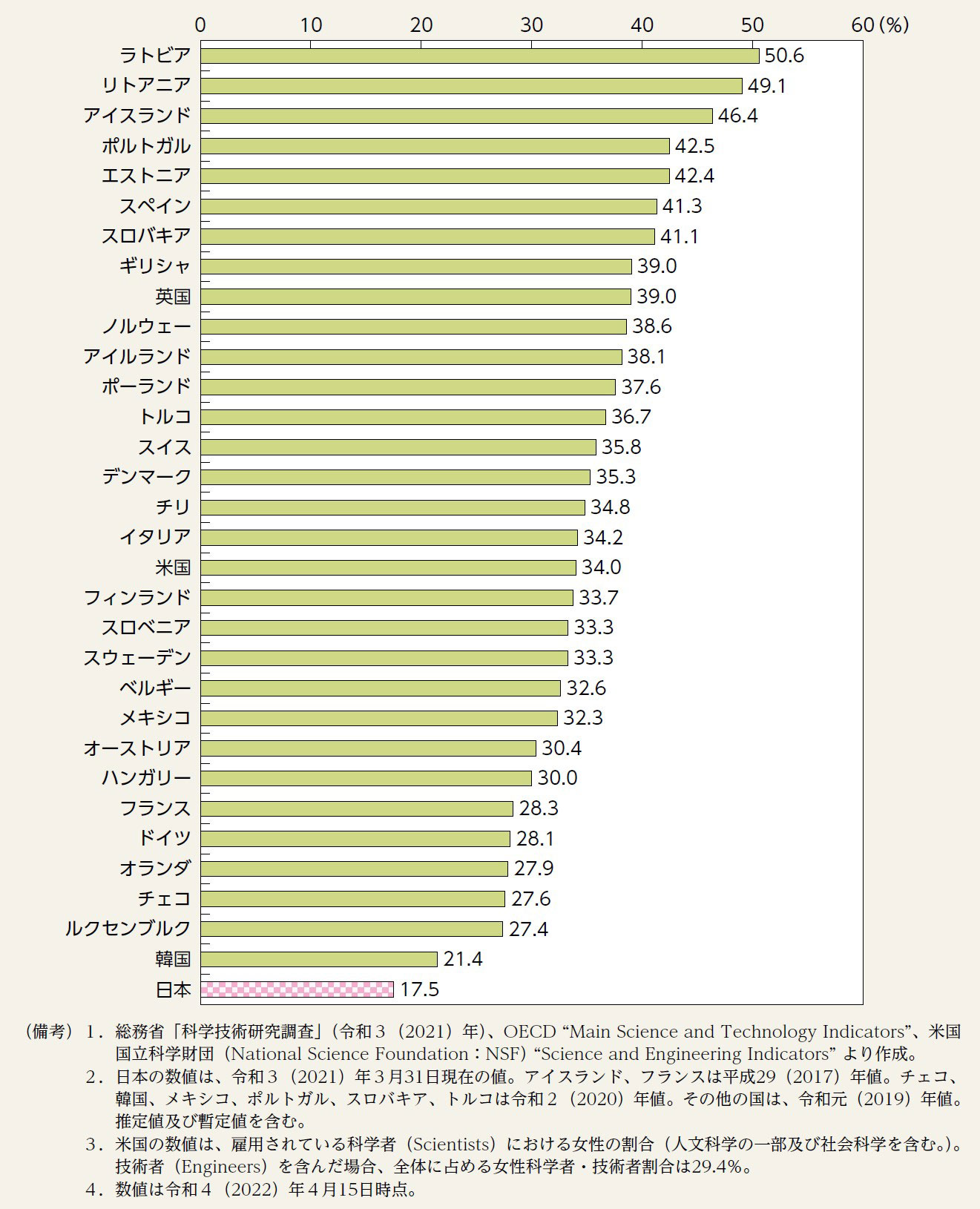 Proportion of female researchers (international comparison)
 Source: Cabinet Office Gender Equality Bureau "Gender Equality White Paper (2022 Edition)"
However, the international academic achievement survey "PISA" shows that the mathematical ability of Japanese female students is among the best in the world and is comparable to that of male students. This shows that the image that "girls are not good at science and engineering" is a prejudice with no scientific basis.
Eliminating this "unconscious bias" in society has many benefits. First, by being freed from prejudice, female students are able to demonstrate their inherent science and engineering abilities. As a result, the proportion of women in science and engineering fields will increase and the gender ratio will be balanced, which will enable research and development of technology and systems to meet a wider range of social needs. In fact, manufacturers of home appliances, cars, and medical equipment have promoted diversity within their companies, leading to product development based on new perspectives and achieving great business success. As a result, there is a great demand for women in science and engineering from the corporate side as well.
 Average scores in three areas of the PISA survey in Japan (Japan's ranking among OECD member countries/Japan's ranking among all participating countries and regions)
 Source: Shintaro Yamada D&I Foundation, "Original analysis of the PISA 2022 rankings! The actual score gap between men and women and comparison with other countries (January 2024)"
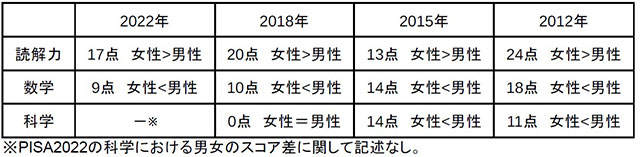 Gender score gap in three areas of the PISA survey in Japan
 Source: Shintaro Yamada D&I Foundation, "Original analysis of the PISA 2022 rankings! The actual score gap between men and women and comparison with other countries (January 2024)"
Eliminating the gender imbalance at universities also has great benefits for male students. For example, in College of Science and Engineering, there are many cases where the members of laboratories are all male, which can result in a biased perspective and awareness of society. Therefore, for male students, the experience of studying alongside female students is of great significance in cultivating their social skills. It is also expected that the scope of education and research at universities will be greatly expanded.
2) Affirmative action
In the international community, affirmative action has been promoted for some time to overcome such "unconscious bias" and eliminate the gender imbalance. For example, the US National Science Foundation has been promoting the "NSF ADVANCE" program to reform awareness and organizations since 2000, which has significantly increased the proportion of female researchers [Figure 2-1]. In response to this global trend, various efforts have been started in Japan to eliminate the gender imbalance. However, if we take the situation of university faculty as an example, the current situation in Japan is the same as that of the United States 20 years ago (engineering) or 27 years ago (science) [Figure 2-2]. Moreover, the speed of change is very slow, so if the current rate of change is maintained, it is predicted that it will take up to 155 years for the female ratio to reach 50% [Figure 2-3]. Therefore, in order to achieve the ideal situation with a little more speed, a movement is spreading throughout the country to take affirmative action from the perspective of universities.
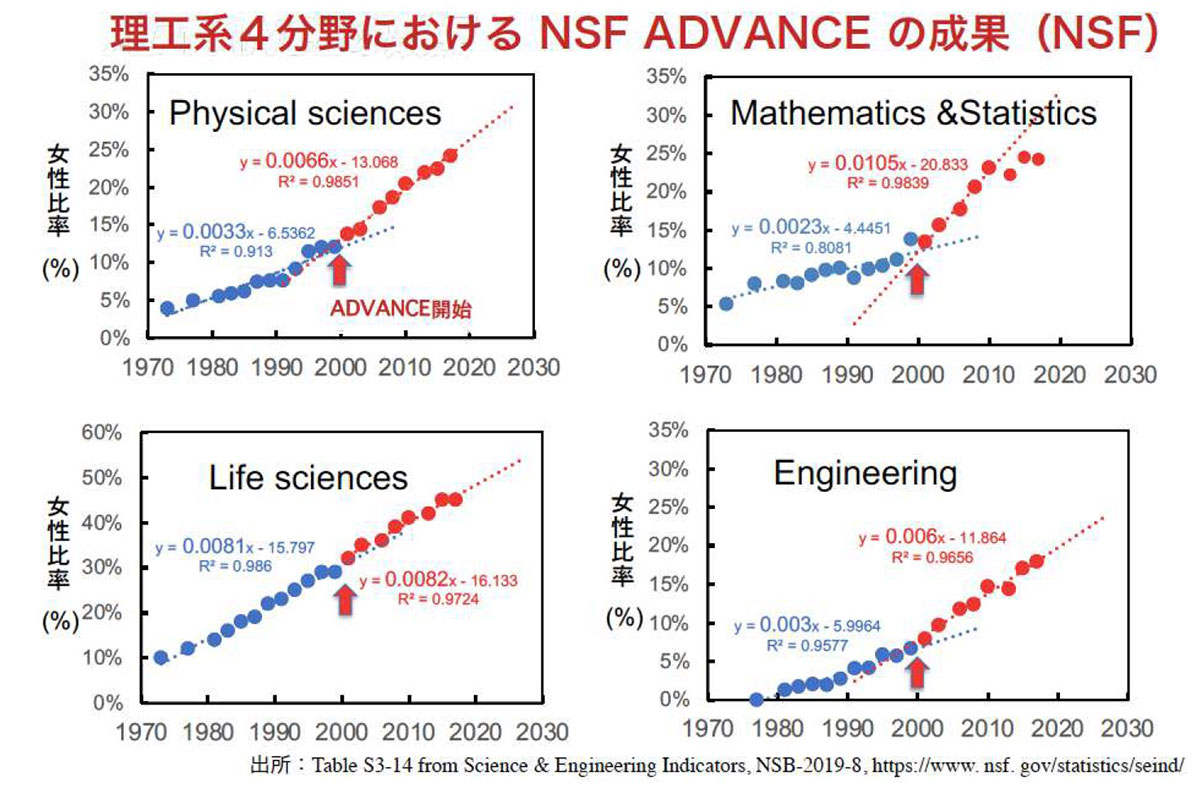 Source: "Individual support alone will not increase the proportion of women. Changing organizational culture and awareness is necessary," by the Gender Equality Association (2022)
Website: https://djrenrakukai.org/request/221219.pdf
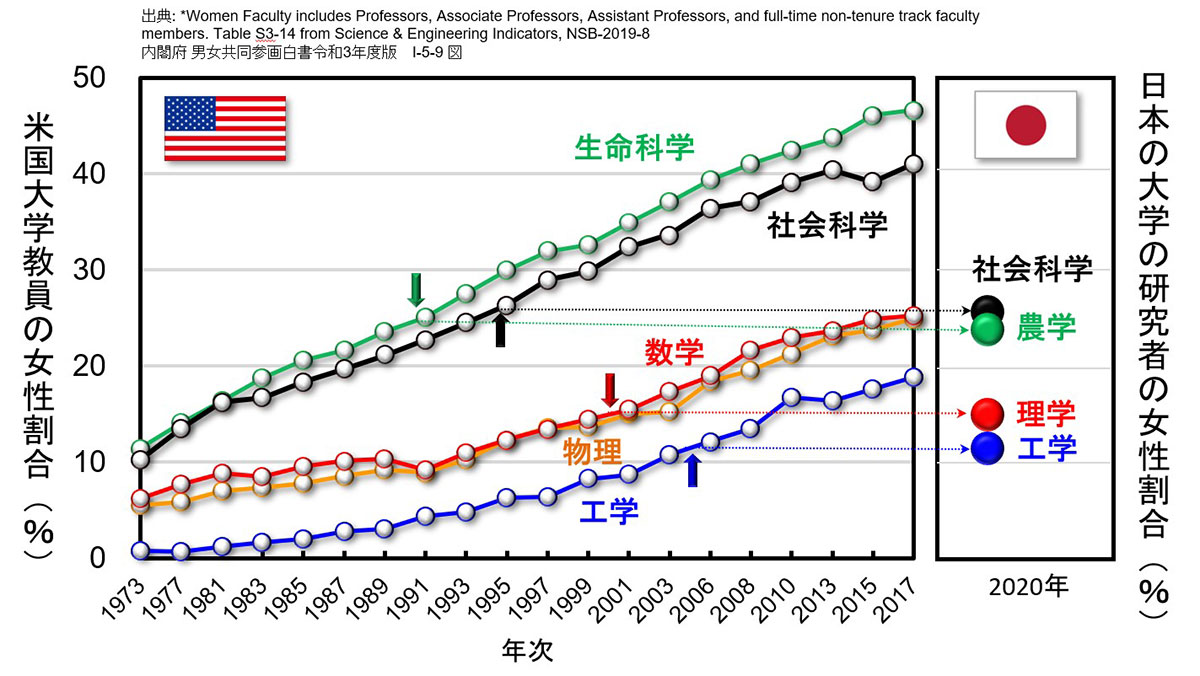 Created by Reiko Urade, Gender Equality Association, borrowed with permission from Reiko Urade.
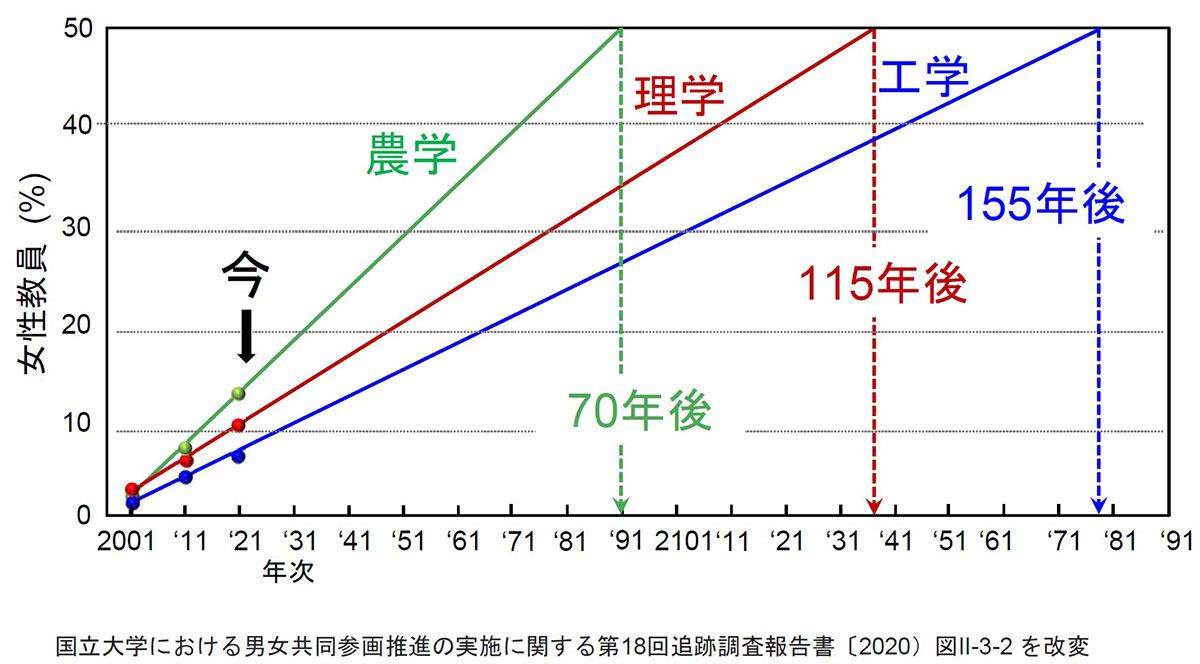 Source: "Trends in the ratio of female faculty members at Japanese national universities and the predicted year until parity" by the Gender Equality Academic Association (2022)
Website: https://djrenrakukai.org/request/221219.pdf
3) About our university's "Special Admissions Selection for Female Students in Science and Engineering"
What we can do as a university is to improve the "entrance" to increase the number of women in science and engineering, and as a concrete action, considering that the "schedule selection for female science students" system has already been implemented at many universities, including national and public universities, our university has decided to start a "special admission selection for female science and engineering students" from the 2026 admissions selection. Currently, most private universities that are promoting women's quota selection are single-discipline engineering universities, so we believe that by introducing the "special admission selection for female science and engineering students" at our university, a comprehensive university in the metropolitan area, we will be able to provide applicants with a wider range of options.
As mentioned earlier, the current average ratio of women in the College of Science and Engineering is 19%, but there is a large difference between departments, ranging from 10% to 41%. Therefore, the departments subject to this selection process are four departments with particularly low female ratios (Department of Physical Sciences, Department of Electrical Engineering and Electronics, Department of Mechanical Engineering, and Department of Integrated information technology). Each department will recruit five students, and the selection process will be carried out through "document screening," "basic academic ability survey," and "interview." This is not a school recommendation type selection process, so you can apply if you meet the required application qualifications. Please note that you cannot apply for both school recommendation type selection and school recommendation type selection.
An important point about the "Special Admission Selection for Female Science and Engineering Students" is that it is a corrective measure, not a preferential treatment measure. It does not unfairly give preference to students of one gender, but aims to correct the original male-female ratio, which has been prevented from being realized by unconscious bias and other barriers, to a healthy state. Article 4 of the United Nations' "Convention on the Elimination of All Forms of Discrimination against Women," which Japan has also ratified, states that "Temporary special measures taken by a Contracting State with the objective of promoting de facto equality between men and women shall not be interpreted as discrimination as defined in this Convention." Our "Special Admission Selection for Female Science and Engineering Students" is also based on this Convention as its legal basis.
It is also important to note that the "special admissions selection for women in science and engineering" is merely a temporary measure. As the treaty states, this is a "temporary special measure," and this selection system will be reviewed, including the possibility of abolishing it, once the goal of "a female ratio of over 20% in all departments of the Faculty of College of Science and Engineering" is achieved.
Aoyama will celebrate its 150th anniversary in 2024. Its history began with a girls' elementary school founded by female missionary Dora E. Schoonmaker, and since then, the university's journey has been one of education for women. We are proud that the recent initiatives in College of Science and Engineering regarding women's education are in keeping with the founding spirit of our university.
4. A world where everyone can freely choose the learning they want to do
Finally, I would like to introduce an event called "Girls Meet STEM college." This event will be held from 2024 in collaboration with the Yamada Shintaro D&I Foundation, and aims to give female junior high and high school students a fun experience of student life in the STEM (science and engineering) fields through laboratory tours and interactions with university students. At the event, female students from the Faculty of Science and College of Science and Engineering gave a real-life account of the appeal of science fields, and participants and parents commented, "It was impressive to see the female students actively learning," and "I was surprised at how high the level of research was."
We will also be holding an open campus event at Sagamihara Campus on Sunday, July 13, 2025, so we hope you will come and see our students' daily lives and our excellent research environment.
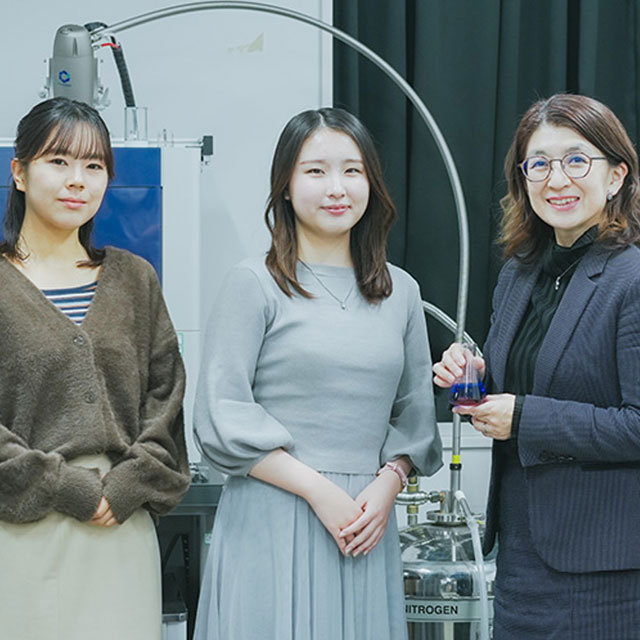
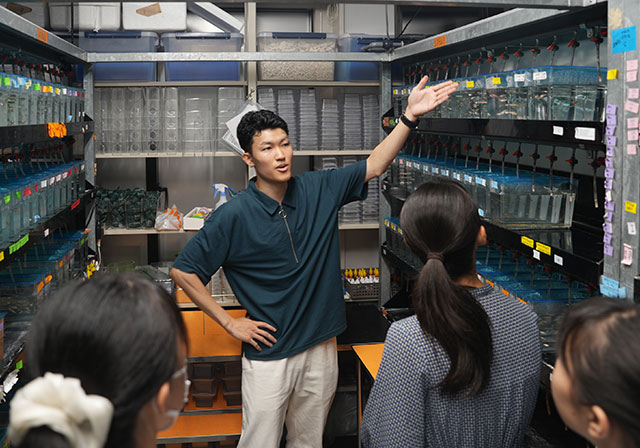 Based on the concept of "Choose your career path based on what you like," we held laboratory tours and interactions with university students.
■ Aiming for a society where people can freely study what they like without being bound by their attributes
Our university aims to create a society where students can freely study what they like without being bound by their own attributes. Currently in Japan, female students in science fields are a minority, but if more universities like Massachusetts Institute of Technology (MIT), where the female ratio exceeds 45%, increase in Japan, their presence will become commonplace. I hope that the world will soon become one where the "affirmative action" that we are currently working on is no longer necessary. To achieve this, I believe that it is the responsibility of leaders to change the stereotypes and prejudices that remain in society.
The new initiative of College of Science and Engineering is a message to students who wish to study what they love, and also to the education sector and society as a whole.
Female science and engineering students at our university
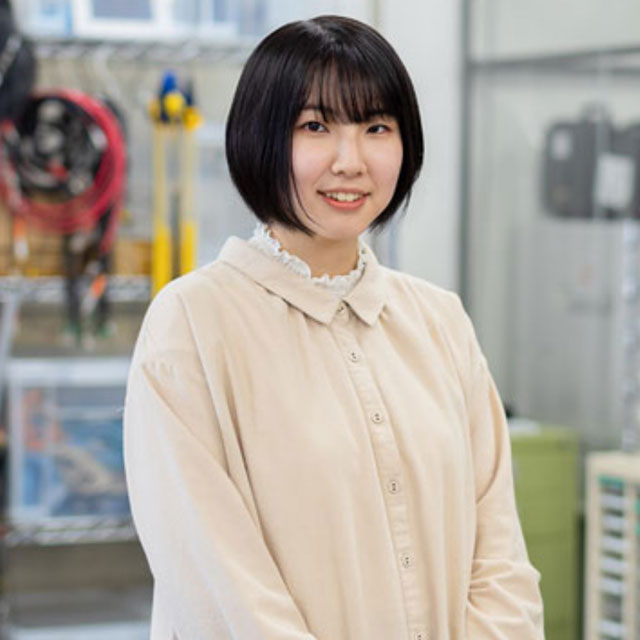
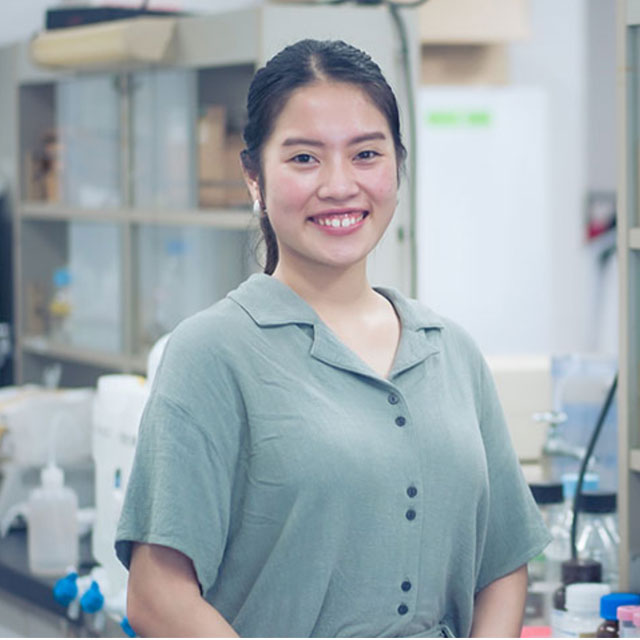
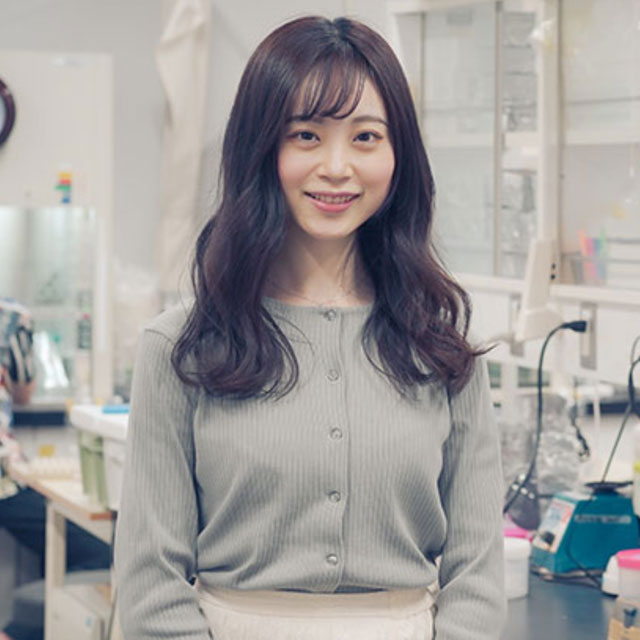
We would like to introduce the female undergraduate and graduate students studying at College of Science and Engineering. We asked them to talk about the attractions of the Faculty of College of Science and Engineering and campus life from a variety of perspectives based on their respective interests and concerns. Please take a look.
*Affiliation, year, etc. are current at the time of the interview.
Graduate Graduate School of Science and Engineering Department of Science and Engineering, Basic Chemistry Course
I want to use the experience I gained from enjoying research in my teaching activities. I decided to pursue a doctoral program to realize my vision for the future.VIEW DETAILS →

Graduate Graduate School of Science and Engineering, Department of Science and Engineering, Life Science Course
Involved in cosmetics development with emphasis on skin science from the perspective of life scienceVIEW DETAILS →
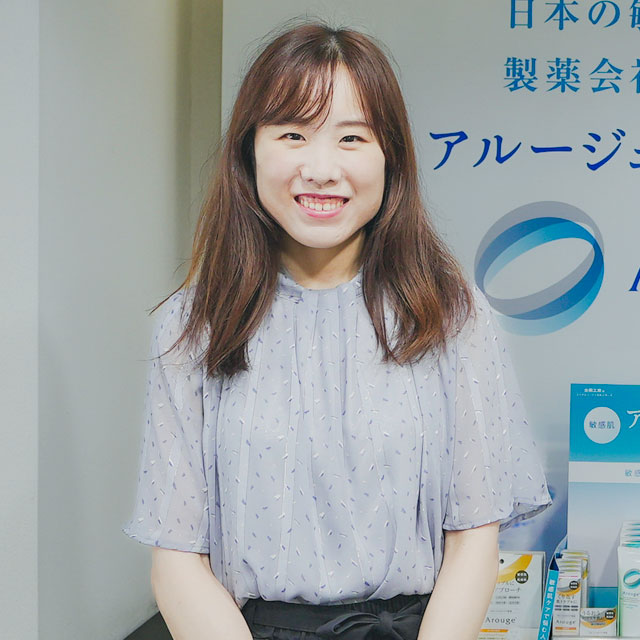
Graduate Graduate School of Science and Engineering Department of Science and Engineering, Electrical and Electronic Engineering Course
Interest in invisible electricity leads to research on carbon materials. A positive attitude and steady effort lead to successVIEW DETAILS →

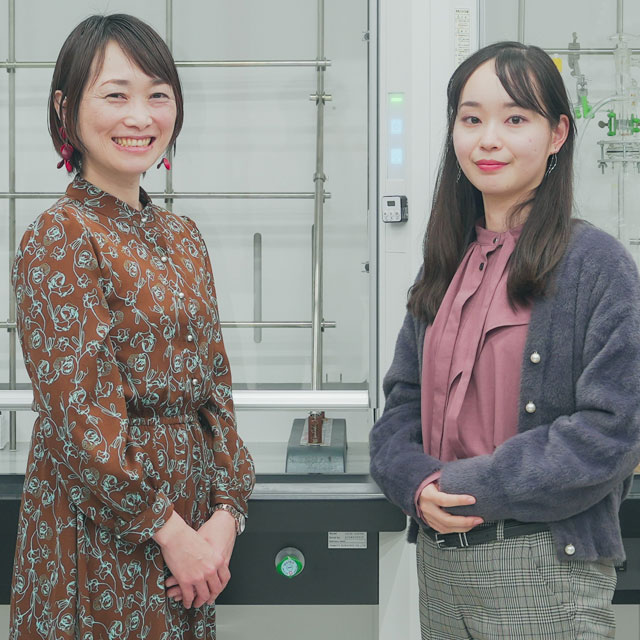
Graduate Graduate School of Science and Engineering Department of Science and Engineering, Mechanical Engineering Course
Research into medical devices began through trial and error. Driven by single-minded passion and the support of othersVIEW DETAILS →
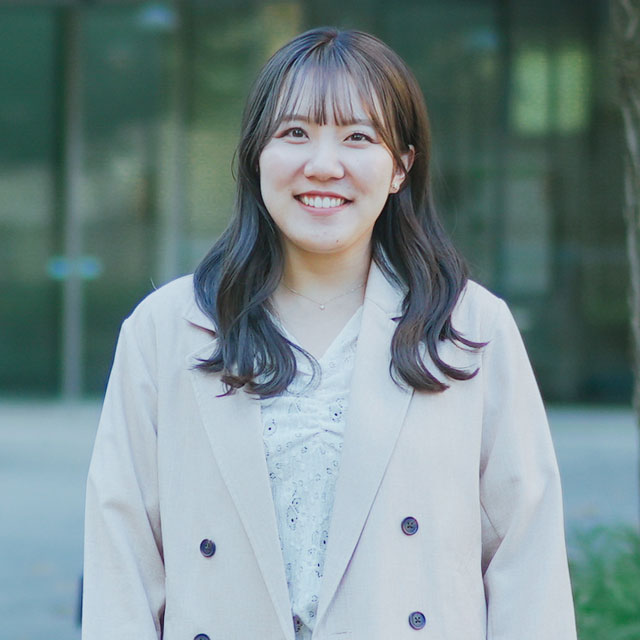
● Department of Physical Sciences, College of Science and Engineering (including the Department of Physics and Mathematics at the time of the interview)
Building my own experimental equipment from scratch and facing unanswered questions every day is a valuable opportunity for growthVIEW DETAILS →
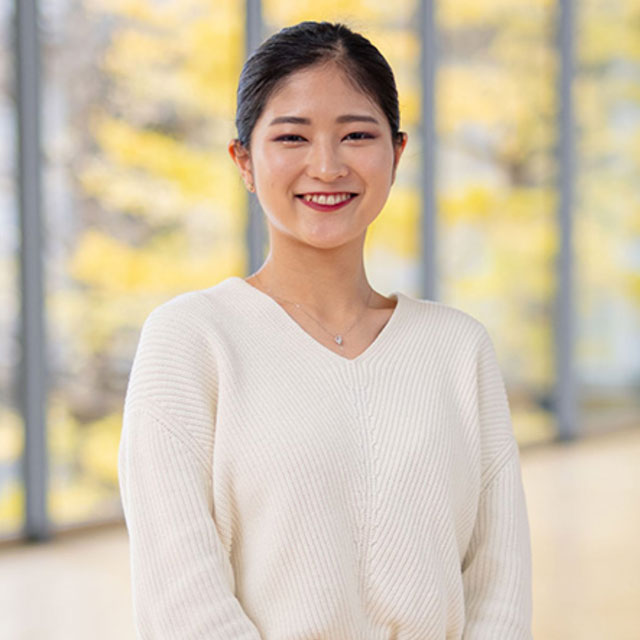
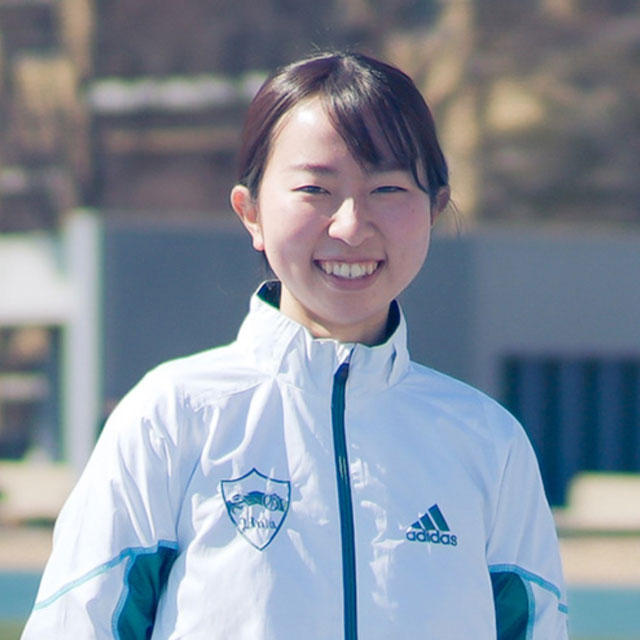
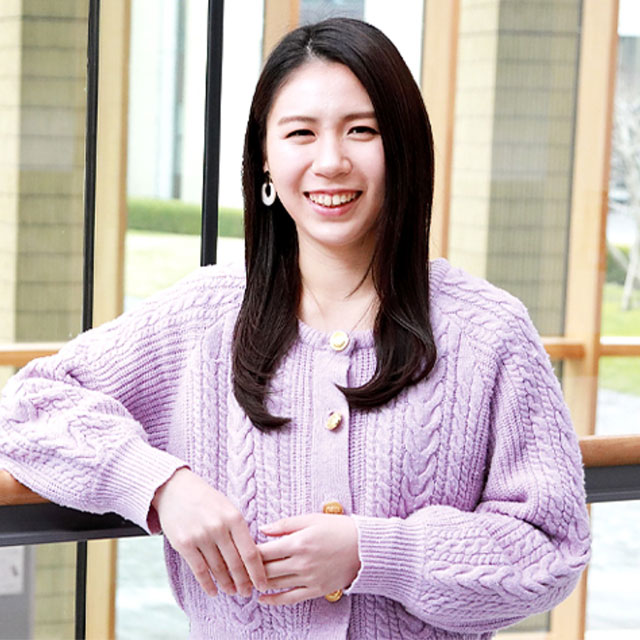
●School College of Science and Engineering Department of Mathematical Sciences
Putting specialized knowledge to use in society: University mathematics shows the way to the futureVIEW DETAILS →

●Faculty College of Science and Engineering Department of Chemistry and Biological Science
Explore your interests beyond the fields of chemistry and life sciencesVIEW DETAILS →
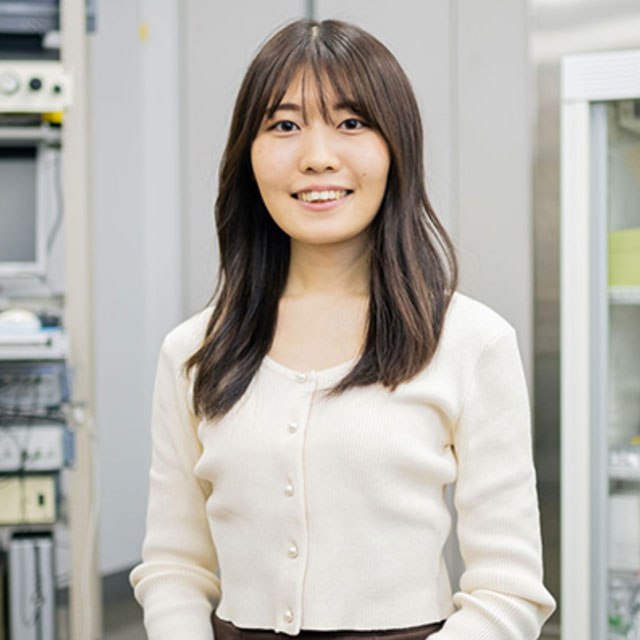
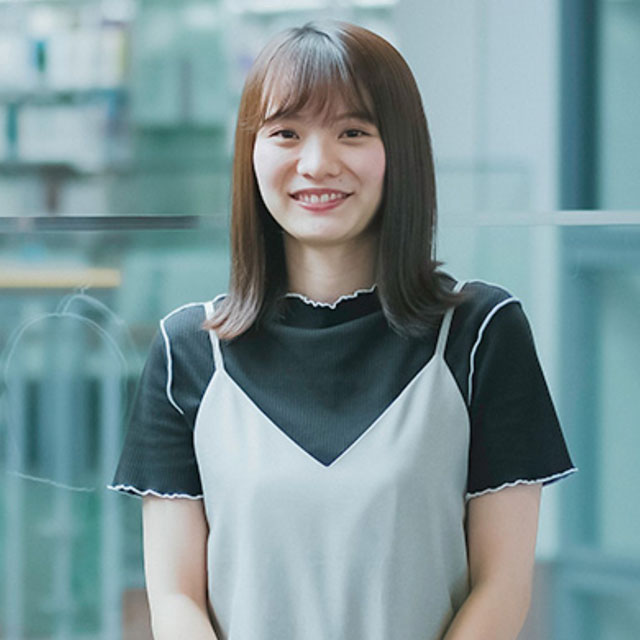
● College of Science and Engineering, Department of Electrical Engineering and Electronics
I was able to work hard because I was at Aogaku. I will use the growth I gained from my research activities to succeed in the aviation industry.VIEW DETAILS →
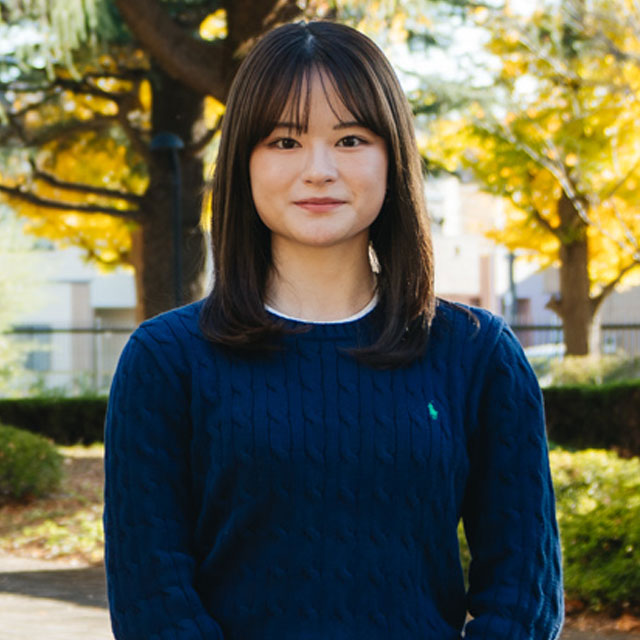


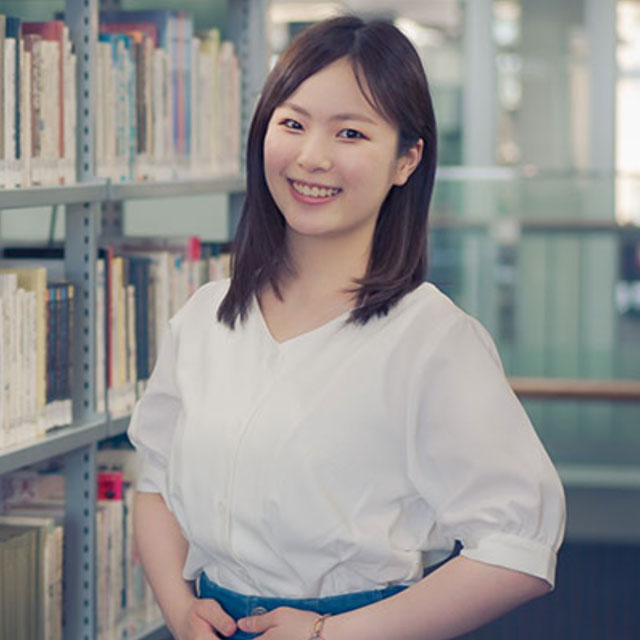
●Faculty College of Science and Engineering Department of Mechanical Engineering
Four years devoted to research in "biomedical engineering" that helped me find my future goalVIEW DETAILS →

● College of Science and Engineering Department of Industraial and Engineering
I want to improve efficiency. I learned machine learning and data analysis with that desire to make the world more convenient.VIEW DETAILS →