Cultivating an entrepreneurial mindset at Aogaku
~Entrepreneurship Education at Our University~
2025.10.24
Fostering entrepreneurial spirit in students and supporting students who aspire to start their own businesses.
Aoyama Gakuin University University has systematized the entrepreneurship education that its faculties and graduate schools had been independently pursuing, creating a system that allows students from all faculties to learn about it. The aim is not simply to cultivate entrepreneurs, but to nurture individuals who can create new value in various fields of society and forge the future. This special feature provides an overview of the university's entrepreneurship education, along with a dialogue between alumni and current students who are entrepreneurs.

INDEX
▼ Aoyama Gakuin University 's Entrepreneurship Initiatives
1. Background
2. Systematization of education and extracurricular activities
3. Future Initiatives – Three Pillars
4. Future Outlook
▼ Entrepreneur Talk: Like a Rolling Stone
~Don't be afraid of failure, make decisions of your own volition, and keep taking action~
■"I decided to start my own business after meeting entrepreneurs in a class at Aogaku. (Nakajima)"
"The value lies in the creation of something from nothing through video production. (Hoshino)"
■ Businesses with a "dream" naturally attract talent and funding.
■ Following in the footsteps of "cool adults" among alumni
▼ Current students and graduates who aspire to start their own businesses (AGU LiFE)
▼ Aoyama Business Plan Contest 2025
Aoyama Gakuin University 's Entrepreneurship Initiatives
Vice President (General Affairs and Industry-Academia-Government Collaboration)
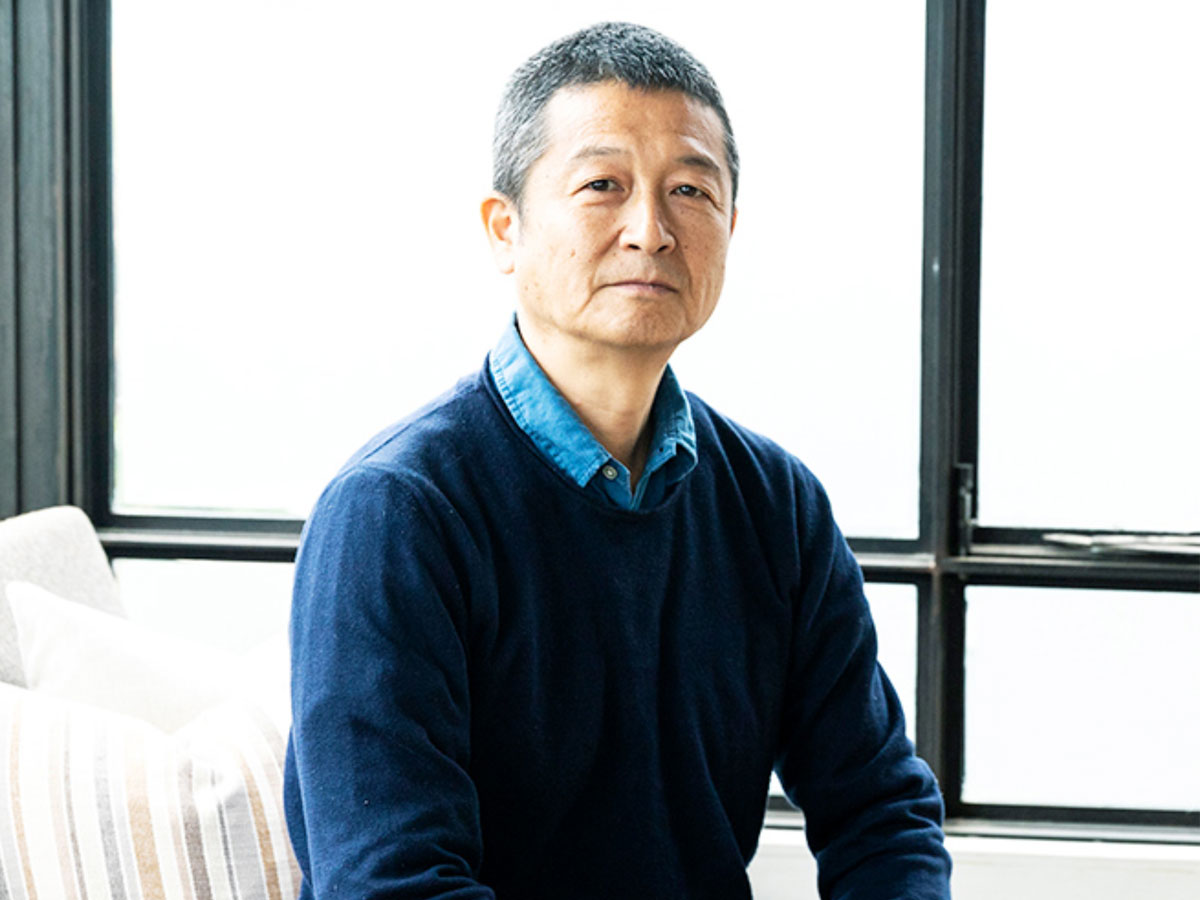
Munetaka Nakazato
Born in 1964. Completed a Master's program in Management Engineering at the Graduate School Graduate School of Science and Engineering Tokyo Institute of Technology. Master of Engineering (Tokyo Institute of Technology). Joined the Department of International Management, Department of Business Administration School of International Politics, Economics and Communication, Aoyama Gakuin University University in 1993. Transferred to Professional Graduate Schools Graduate School of International Management in 2001, and became a professor there in 2004. After serving Chief Academic Affairs Graduate School of International Management in 2007, he became the Dean of the Graduate School in 2019. In December 2023, he was appointed Vice President Aoyama Gakuin University (responsible for General Affairs and Industry-Academia Collaboration).
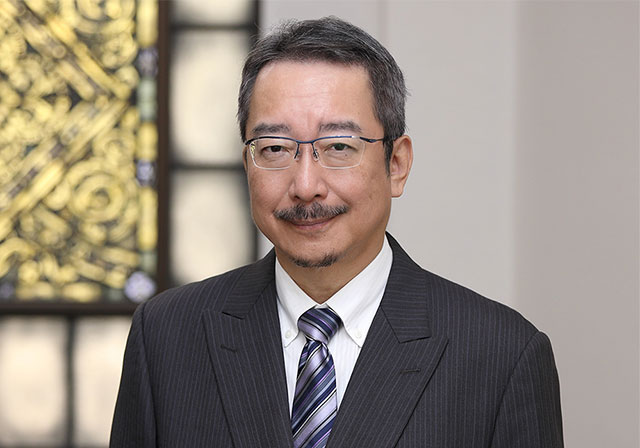
Aoyama Gakuin University University, based on its school motto "Salt of the Earth, Light of the World," is committed to nurturing individuals who can create new value for society. In recent years, the university has focused on "entrepreneurship education." In today's rapidly changing society and technologically innovative world, individuals who can identify problems and take on challenges to solve them are needed in all fields.
1. Background
Up until now, each faculty and graduate school at our university has independently developed initiatives to provide students with opportunities to cultivate entrepreneurship. School of Business has been conducted not only in faculties and graduate schools specializing in business management, such as the Graduate School of International Management (Aoyama Business School(ABS)), but also in a variety of faculties, including School of Cultural and Creative Studies, the Faculty of Science and College of Science and Engineering, School of Global Studies and Collaboration College of Community Studies, and the Faculty of Community and Human Sciences. For example, distinctive activities have been developed in each field, such as entrepreneurship exercises using social issues as the subject matter, business idea generation utilizing technology, and projects based on local communities, sports, and culture. While these activities have been valuable opportunities to stimulate students' creativity, they have not necessarily been managed systematically across the university as a whole.
In light of this situation, an Entrepreneurship Support Subcommittee was established within the Social Collaboration Promotion Organization in 2024, and the creation of a system to link regular education, extracurricular activities, and entrepreneurship support across the entire university began. Currently, the Entrepreneurship Support Subcommittee is at the forefront of accelerating the movement to promote entrepreneurship education throughout the university.
2. Systematization of education and extracurricular activities
From the 2025 academic year, entrepreneurship-related courses, including endowed courses, will be offered as The Aoyama Standard courses and will be available to all students. For example, "Introduction to Entrepreneurship" aims to foster a sense of challenge, while "Entrepreneurship Exercise" fosters practical skills to actually develop ideas into business plans. In addition, in "Perspectives on Venture Companies Unraveled from Entrepreneurial Stories", you can understand the actual situation of companies at each stage of growth and gain knowledge that is directly related to career development. In the future, we plan to further expand the advanced courses and systematize them as an entrepreneurship program in two years. In this way, entrepreneurship education will be positioned in regular education.
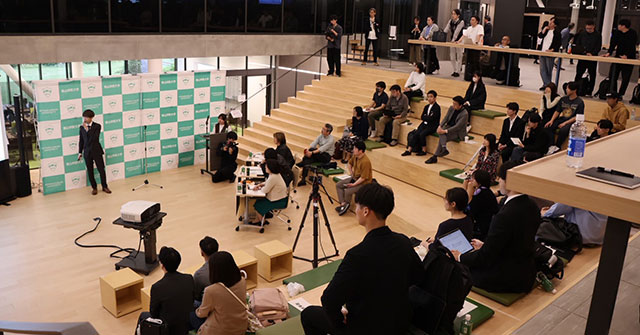
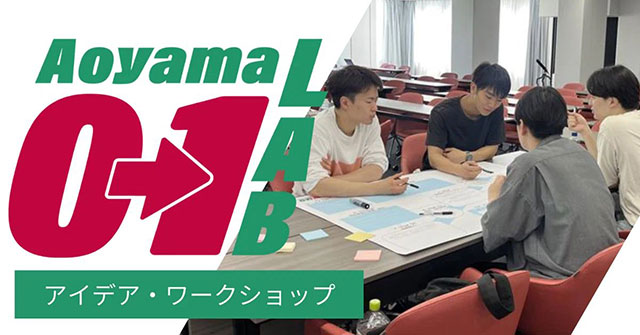
On the other hand, plans are also underway in activities outside of regular classes. The "Aoyama Business Plan Contest" has many students taking on challenges every year, and some of them are actually starting their own businesses. In addition, practical opportunities are being established, such as the "Aoyama 0→1 LAB" to encourage challenges from the idea generation stage, and the "Business Workshop" where you can learn from famous entrepreneurs. Through these extracurricular activities, we provide an environment where students can continuously refine their ideas.
3. Future Initiatives – Three Pillars
To further promote this trend, our university is preparing to establish an Entrepreneurship Center. The center's activities will be based on the following three pillars:
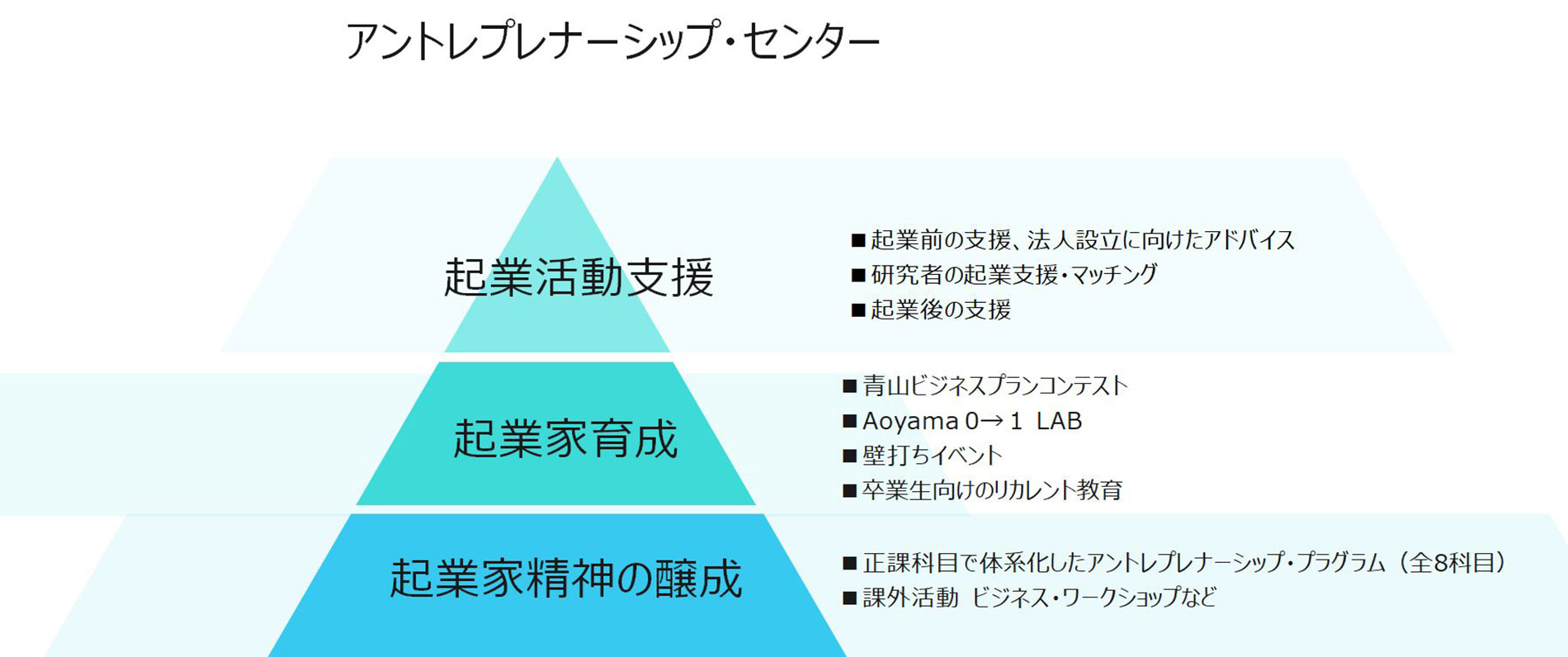
1) Fostering an entrepreneurial spirit
With the "The Aoyama Standard Subjects" starting in part from the 2025 academic year, we will develop a curriculum that allows students to learn systematically from introductory to practical work, creating an environment where everyone can acquire a foundation for challenges. We will also enhance extracurricular activities such as workshops.
2) Entrepreneur development
Through the "Aoyama Business Plan Contest" and "Aoyama 0→1 LAB", we provide many opportunities for students to actually take on challenges. We aim to create a cycle in which knowledge acquired through regular education is transformed into practical skills through trial and error.
3) Support for entrepreneurial activities
We will develop a system to support not only students, but also faculty members and alumni who take on challenges. We provide support that is directly linked to the actual creation of startups, such as advice on corporate establishment and fundraising, matching researchers with entrepreneurs, follow-up after starting a business, and even considering the establishment of a university fund.
4. Future Outlook
In 2026, we plan to establish an Entrepreneurship Center, creating a hub that integrates education, extracurricular activities, and business support. This center will function as a hub connecting faculties, graduate schools, alumni, and the local community, building an ecosystem that supports diverse challenges.
Aoyama Gakuin University University aims not merely to cultivate entrepreneurs, but to nurture individuals who can create new value in various fields of society and forge the future. By promoting interdisciplinary education, opportunities to encourage challenges, and mechanisms to support actual entrepreneurship in a unified manner, the university will paint a new picture as a "university that embraces challenges."
Entrepreneurial Talk: Like a Rolling Stone
~Don't be afraid of failure; make decisions and continue to act based on your own will~

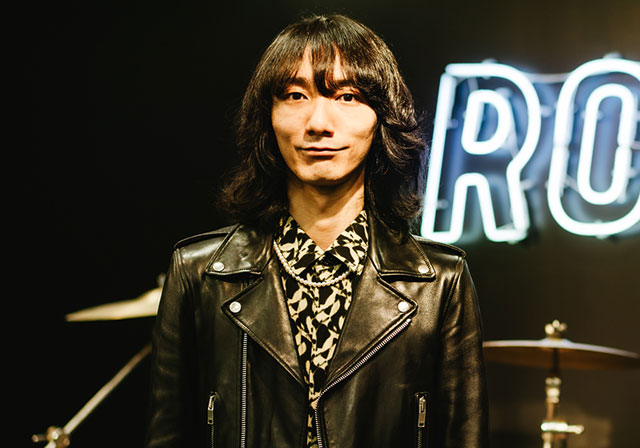
President and CEO of ROXX Co., Ltd.
Alumni of School of Business Department of Business Administration
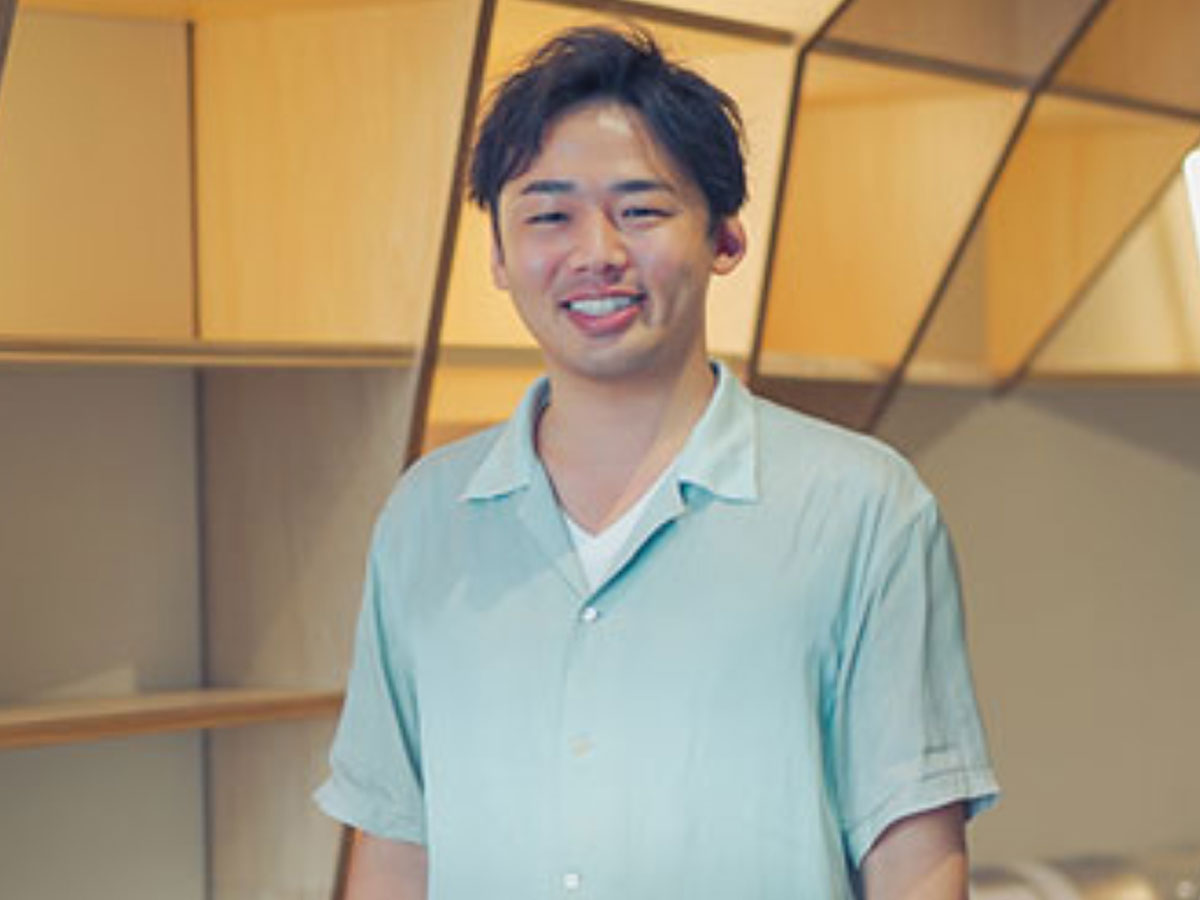
Taro Nakajima
He had formed a band and aimed for a major debut, but while attending Aoyama Gakuin University, he was captivated by the stories told by entrepreneurs who spoke weekly in a "Venture Business Management" lecture, and decided to start his own business. In 2013, in his third year of university, he co-founded the company that would become ROXX Inc. with a classmate from Aogaku. Currently, the company develops and provides multiple services in the HR Tech field, such as a cloud-based job posting platform for recruitment agencies and reference check (previous employment background check) services, to streamline HR operations. His achievements as a business leader have been recognized, and he was selected for "Forbes 30 Under 30 Asia 2021." In September 2024, he listed ROXX on the Tokyo Stock Exchange Growth Market, continuing his remarkable success.
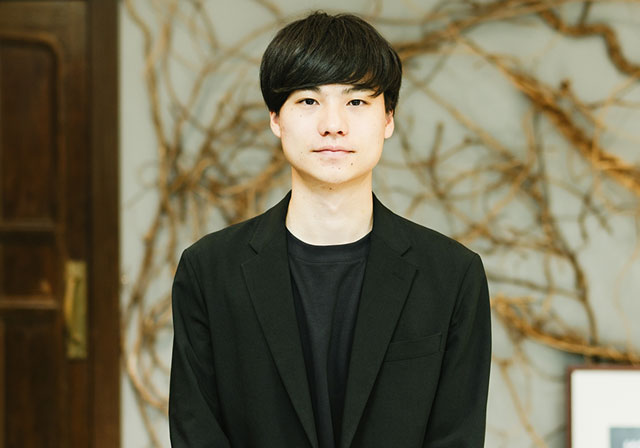
Third-year student in the Department School of International Politics, Economics and Communication Department of International Economics
(Currently on leave of absence as of October 2025)
ShortStop Co., Ltd. Representative Director
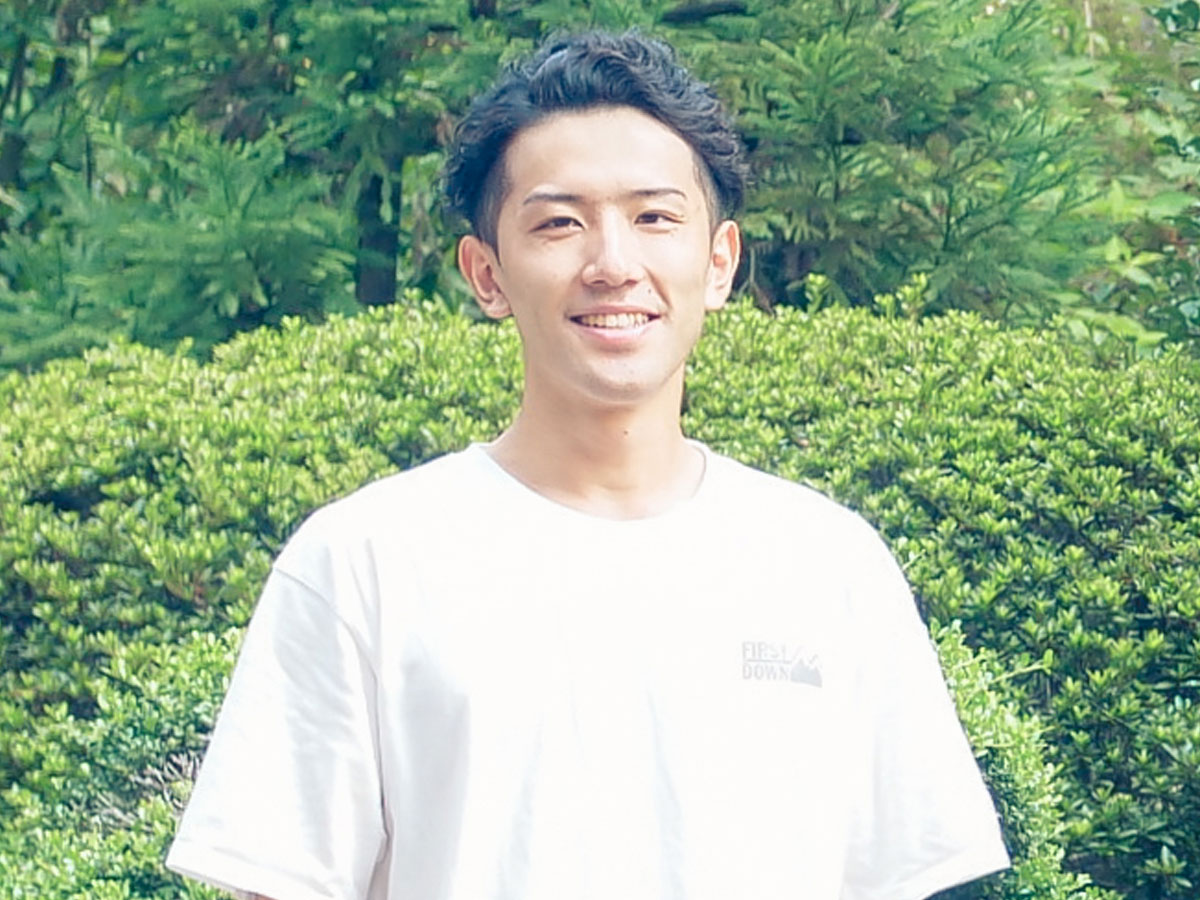
Satsuki Hoshino
During high school, he became engrossed in video production after planning an alternative event for the sports festival that was canceled due to the COVID-19 pandemic, and acquired the video and streaming skills that would later become his profession. After enrolling at this university, he acquired equipment and began working as a freelance video artist, and also participated in the production of "Aogaku TV". In his second year, he won second place in the "IDEA PITCH CONTEST 2023" hosted by Aoyama Gakuin University Graduate School Graduate School of Graduate School of International Management Association "ABS Alumni", and in 2024 he established ShortStop Co., Ltd. He is currently on leave of absence to concentrate on running his company.
■ "I decided to start my own business after meeting entrepreneurs in a class at Aogaku University. (Nakajima)"
"The value lies in the creation of something from nothing through video production. (Hoshino)"
Hoshino: Since this is such a great opportunity, there are many things I'd like to ask Mr. Nakajima, but first, I'd like to thank you for choosing me as your conversation partner. It's a great honor!
I met Hoshino-kun at
Aoyama Aogaku 's business idea event, "Aoyama 0→1 LAB," and I really wanted to talk to him. There are many students interested in entrepreneurship, but only a handful actually start a company. However, Hoshino-kun, like me, started a company while still in university. Have you always been interested in entrepreneurship?
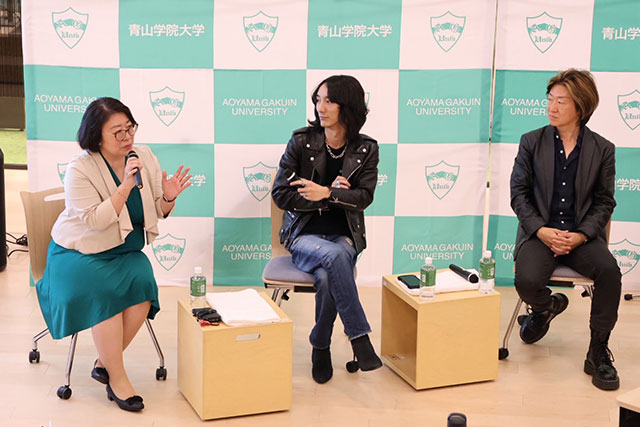 At "Aoyama 0→1 LAB". President Nakajima is in the center.
Hoshino: So, that's how I ended up starting my own business. However, I became fascinated with "video," which is our company's original business, when I was in elementary school, and since then I've been deeply involved in video production.
Nakajima, why did you choose "video"?
Hoshino: The trigger was the restrictions placed on all school activities due to the COVID-19 pandemic. At the time, I was a high school student and was looking forward to the school sports festival, but it was unfortunately canceled. Instead, I thought, "Let's try to hold a student-organized event that can be done remotely!" and learned video and streaming techniques. The experience I gained from designing websites and systems at that time would later prove useful, but I became so engrossed in video production that I failed my university entrance exams the first time around. After taking a year off to study, I entered Aogaku, and with the support of my family, I boldly purchased camera equipment worth about 700,000 yen and started working as a freelance video producer, thinking, "I'm going to start making videos seriously." Video production developed into entrepreneurship, and that's how I got to where I am today. Nakajima: I heard that you originally wanted to be a musician?
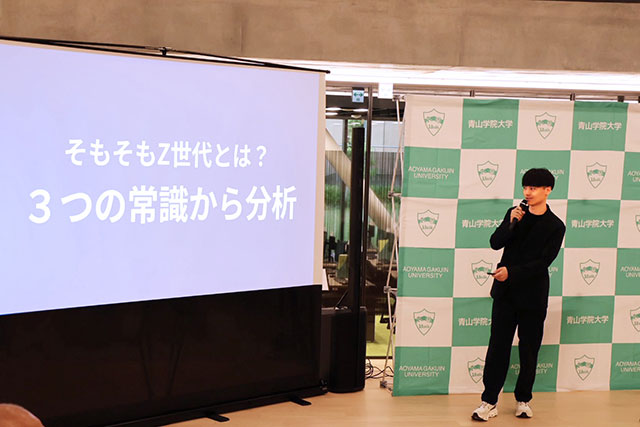 Hoshino-san, who will be a presenter at "Aoyama 0→1 LAB"
Nakajima loves hard rock from Europe and America in the 1970s and 80s, and was seriously pursuing a band career with the goal of making a major debut. In fact, he chose Aogaku 's School of Business because he thought it would be beneficial to understand business in order to make a living as a musician. In addition, he thought that Aogaku 's liberal atmosphere and the location of Aoyama campus Sibuya / Omotesando area, where it's easy to gather with friends, might be advantageous for pursuing a band. He never considered the option of going through the typical "job hunting" process and working for a company, and he didn't even consider starting his own business until his second year of university. However, in his third year, he took a "Venture Business Management" class where young entrepreneurs in their twenties took turns speaking each week and sharing their experiences, which inspired him. As he listened to their real-life stories, he began to think, "Maybe I could start my own business too." Starting a company and making it successful of his own volition...he thought that would be a very exciting and interesting challenge.
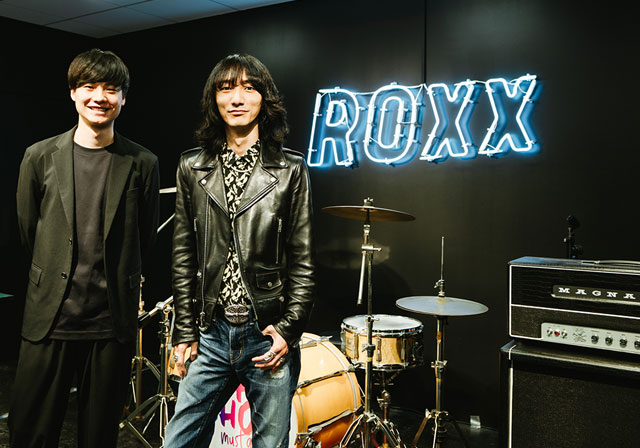 President Nakajima (right, with Hoshino on the left), who used to play guitar in a band, was inspired by a lecture by an entrepreneur in his "Venture Business Management" class and founded the company in 2013 while still a student at the university.
Hoshino: As a student staff member of "Aogaku TV," I continued to work on producing official Aogaku videos and video editing, and I realized my strong desire to "find value in creating something new from scratch rather than typical job hunting, and to continue doing that." Once I realized that, I couldn't think of anything other than starting my own business, in other words, "entrepreneurship." Also, I thought that even if I failed, the experience itself would be invaluable, so I decided to take the first step without putting too much pressure on myself. Nakajima: Wasn't it more difficult for students to start businesses in 2013, when you started your business, than it is now?
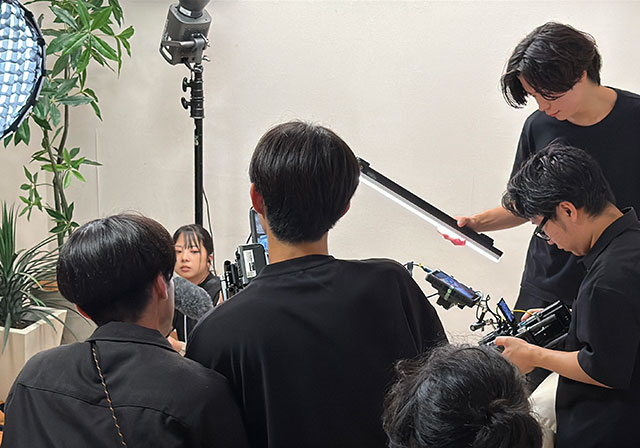 Hoshino started her own business while still a student and has been involved in a wide range of video production, including short dramas for social media and business videos.
The founding members of Nakajima were five classmates from Aogaku, and looking back now, I don't think starting a business itself was that difficult. Anyone can find out about the procedures for establishing a company and what is necessary for running a business if they do some research, and you can start a business if you clear those hurdles one by one. However, starting a business is just the starting line. The real challenge is what to do from there, and how to grow the business. We have revised our business plan many times and changed the company name twice to arrive at where we are today.
Hoshino: Indeed, as I've managed my company, the scope of my business has expanded beyond just video content to include AI-powered no-code development tools * and DX consulting. Currently, I'm taking a leave of absence from university to prioritize getting the company on track, and I'm constantly experimenting and trying different approaches to the company's future development.
* A tool that allows you to create web applications and business systems using mouse operations and drag-and-drop, without any programming required. It enables shorter development times and cost reductions.
Nakajima Hoshino should take advantage of the privileges of being a student and keep trying new things he wants to do. There's absolutely no need to be afraid of failure, and he has nothing to lose. Even if he ends up closing his company, it will be a valuable experience that will definitely be useful later on. Even if he ends up getting a job at a company, his entrepreneurial experience as a student will surely be a major plus. That being said, he shouldn't give up so easily just yet.
■ Businesses with a "dream" naturally attract talent and funding.
Hoshino: In the future, as my company expands its business, I believe we will need to raise funds on a considerable scale. When did you raise funds, Nakajima-san?
Nakajima: That's actually quite simple. To run a big business, you absolutely need funding. So, you ask companies that seem likely to invest and raise the money—that's really all there is to it. I had a dream of "making the company bigger" and a goal of "using promising technology to build a new business model in the human resources industry." I talked about these goals and diligently went around to find investors who would empathize with and support me, making it important to meet them in person and build trust and connections. Through trial and error, I gathered the necessary funds and personnel for the business. Fortunately, it was a time when there was a growing momentum to invest in student entrepreneurs, and I was able to raise about 15 million yen in about two years after establishing the company. Since then, we have raised a total of approximately 3.5 billion yen in funding.

Business activities of ShortStop Co., Ltd.
Hoshino Regarding our business activities, we continue to explore various options. We've ventured into human resources services like Mr. Nakajima's, as well as crowdsourcing services specifically for students, but currently our main focus is on no-code development tools. Frankly speaking, I still don't have a clear image of how I, someone who doesn't yet fully understand the structure of society and the economy, can run and grow this company.
Business activities of ShortStop Co., Ltd.
Nakajima Isn't that a problem that only student entrepreneurs face? At first, I didn't even know the accounting and legal aspects necessary for running a business, and it took me five years to get my company on track. During that time, things just didn't go as planned. It was difficult to grow the company by continuing with the business I had envisioned when I started. Feeling anxious and wondering, "What should I do then?", I challenged myself with new businesses. Initially, I struggled when I faced the realities of running a company, but I told myself, "Everyone experiences these kinds of hardships," and steadily moved the organization and business forward through trial and error. I believe that it was because of this period that my business mindset was honed and I was able to gather the necessary personnel for the company. Even now, I continue to face the challenges before me every day, but I have gained a certain conviction: Funding and talent naturally gather around a business that has a "dream." The way a dream attracts people's hearts and develops into a big wave is the same as the movement of a band whose cool music resonates with many people.
Hoshino I see! I also started my business with the feeling of "I'm going to do what I want to do!", so hearing you say that, Mr. Nakajima, really gives me courage.
Nakajima: I'm the same; I didn't aim to start a business from the beginning. In my case, I wasn't an outstanding student academically, but I was so eager to get my company on track that I ultimately chose to drop out. Nevertheless, thanks to encountering the idea of "entrepreneurship" at Aogaku University and expanding my network of contacts, I was able to envision the kind of business leader I wanted to be.
Among our alumni are Kentaro Kawabe (Chairman and CEO of LINE Yahoo! Japan Corporation) and Susumu Fujita (President and CEO of CyberAgent, Inc.), both of whom started their own businesses while still students. When I was in my twenties, I worked tirelessly, trying to follow in their footsteps and become a business leader like them. Even now, they look out for me as seniors and occasionally give me advice as business leaders, but I still feel like I'm watching them from afar.
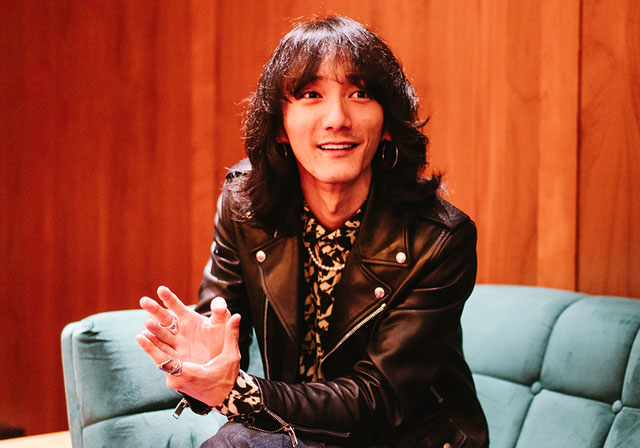
Hoshino: About two years ago, I had the opportunity to hear Mr. Kawabe speak directly, and I was greatly inspired. In addition, there are events held to support students who aspire to start startups, so being in such an environment further increased my motivation to start my own business.
Nakajima: It seems that there are now many more opportunities related to entrepreneurship, such as classes, lectures, and competitions, than when I was a student. I would say that Aogaku is currently in a very favorable environment for students who are interested in starting their own businesses.
Hoshino: Yes, I think so. That being said, running a company is actually quite difficult, and it's true that the thought of "going out of business" has crossed my mind. But I always tell myself, "I have no choice but to keep going!" and somehow I'm managing to hang on.
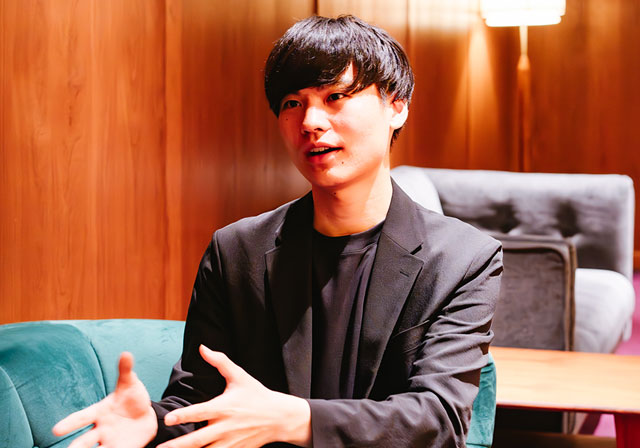
■ Following in the footsteps of "cool adults" among alumni
Why was Nakajima able to think, "I have no choice but to keep going!" even when the business was in dire straits?
Hoshino: The biggest factor was the presence of my colleagues who run the company with me. When I was feeling lost, their faces came to mind, and I realized that giving up here was definitely not the right thing to do. So, we reaffirmed our sense of unity as a team and restructured the business, and now our sales are gradually regaining momentum.
Nakajima: That's great to hear. In order to keep a business going, some kind of motivation is essential. For Hoshino, that was the "bond" with his colleagues, wasn't it? I also went through a period where my company wasn't doing well and I was worried. The reason I didn't give up then was because I had the ambition to "grow the business I started into something big," and that ambition continued to burn without fading. Even during difficult times, I kept gathering funds and personnel, and I overcame the situation by making continuous efforts to expand the company. If you keep problems simple and continue to make quick decisions as a manager, small worries will gradually disappear.
Hoshino, I've learned a great deal. But, do you think I can become a large-scale business leader like Mr. Nakajima?
Nakajima Hoshino doesn't need to be the same as me. I would just be happy if he could see me as a person, listen to what I have to say, and feel "something" from me. My own life has changed dramatically since meeting and becoming close to "cool adults" like Kawabe-san and Fujita-san.
When I was a teenager aspiring to be a musician, I was greatly inspired by interviews with famous artists that I read in music magazines, but I found that interacting with "real people" was even more stimulating and rewarding. There are many "cool adults" who are working on interesting things, not only among Aogaku alumni, but also in the business world. I think that by finding such people, meeting them directly, and listening to their stories, you will begin to see the stage where you should pour your passion and burn brightly.
While the use of AI in business will become commonplace in the future, the value of "human connection" and the importance of interacting with real people will remain unchanged even in the age of AI.
Hoshino: I completely agree. Just listening to Mr. Nakajima, who is truly a "cool adult" to me, speak to me like this, I feel my perspective expanding more and more. In any case, I've renewed my resolve to work on new businesses and value creation while cherishing "what I truly want to do."
Nakajima, that's great! The best part of starting a business is being able to "produce it yourself," and I believe Hoshino can do that. I'm also looking forward to the day when Hoshino himself will be admired by many younger people as a "cool adult."
Hoshino: Those are very kind words. I would love to hear more from you in the future.
Nakajima, you're always welcome!
 Current students and graduates who aspire to start their own businesses (AGU LiFE)


*Unless otherwise noted, the content published in "AGU LiFE" is generally based on information available at the time of the interview.
Aoyama Business Plan Contest 2025
Our university will hold the final judging round for the "Aoyama Business Plan Contest 2025" on Saturday, November 29th. The purpose of this contest is to foster entrepreneurship among Aoyama students, support startups to create an environment for challenging new businesses, and cultivate ventures originating Aoyama.
As of the deadline of October 4th (Saturday), we have received 56 applications. We will conduct a document review and select 5 finalists to advance to the final round. Please come and see the presentations by the finalists at the venue.
Click here for details on the contest overview.
Click here for details on "Audience Recruitment".