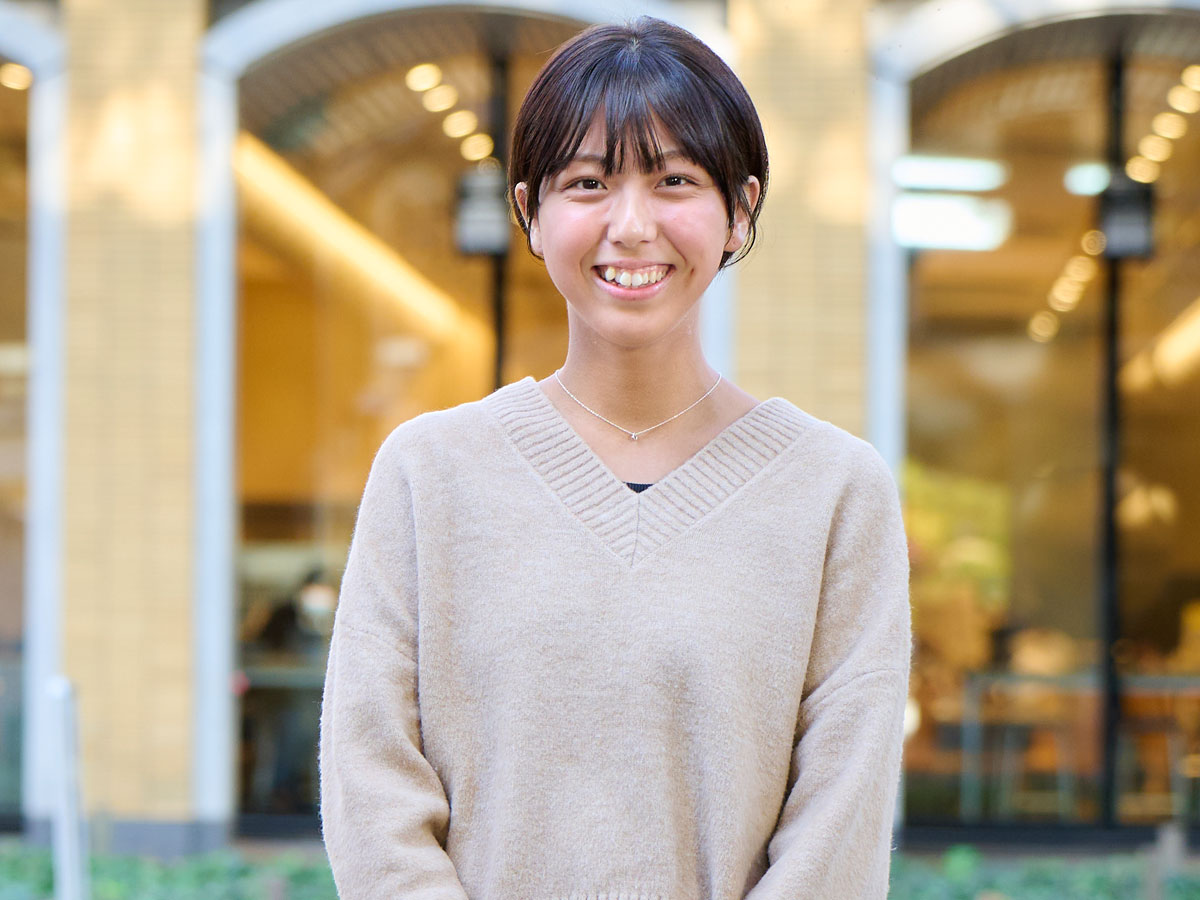
A "Civic Engagement Center" that supports service-learning and social contribution activities.
2026.1.22

Addressing local issues in the field
Supporting social contribution activities
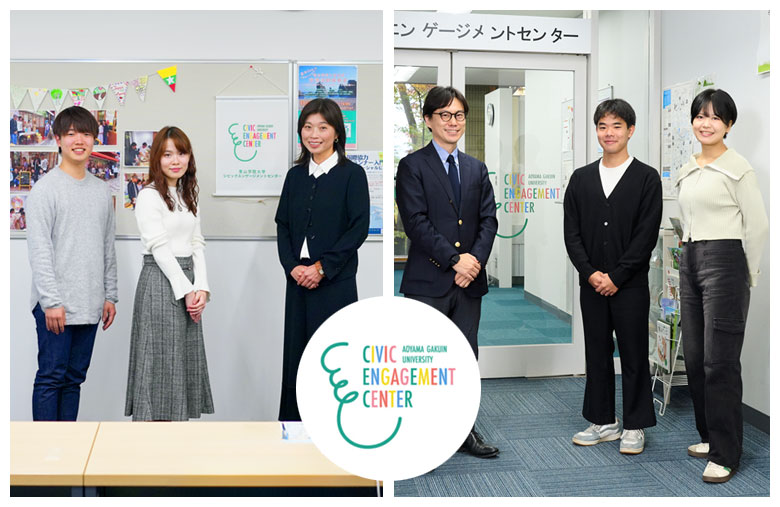
The Civic Engagement Center (CEC) serves as a hub for supporting students' social contribution activities, disseminating information and providing other support. Furthermore, students can learn about "service-learning" and social contribution through regular The Aoyama Standard courses. Students and faculty members utilizing the CEC at both Aoyama and Sagamihara campuses discussed these "service-learning" courses and social contribution activities at the university.
INDEX
▼ CEC's initiatives, activity reports, and appeals
<Background of establishment>
<CEC's Mission>
<Features of CEC>
◆Citizen Collaboration Project
◆Learning and practice in regular subjects
<Collaborative initiatives spreading throughout Aoyama >
▼ [Aoyama Campus] Roundtable Discussion between Coordinators and Students
■ "I want to know about the world" was the starting point for my activities.
■ Deepen your learning through "service-learning"
■ If you have even the slightest interest, take the first step.
▼ [Sagamihara Campus] Roundtable Discussion between Coordinators and Students
■ The "Fujino Project" operates in rural areas.
■ Collaborating with local people through events
■ Our footsteps will pave the way for the activities of those who come after us.
CEC's initiatives, activity reports, and appeals
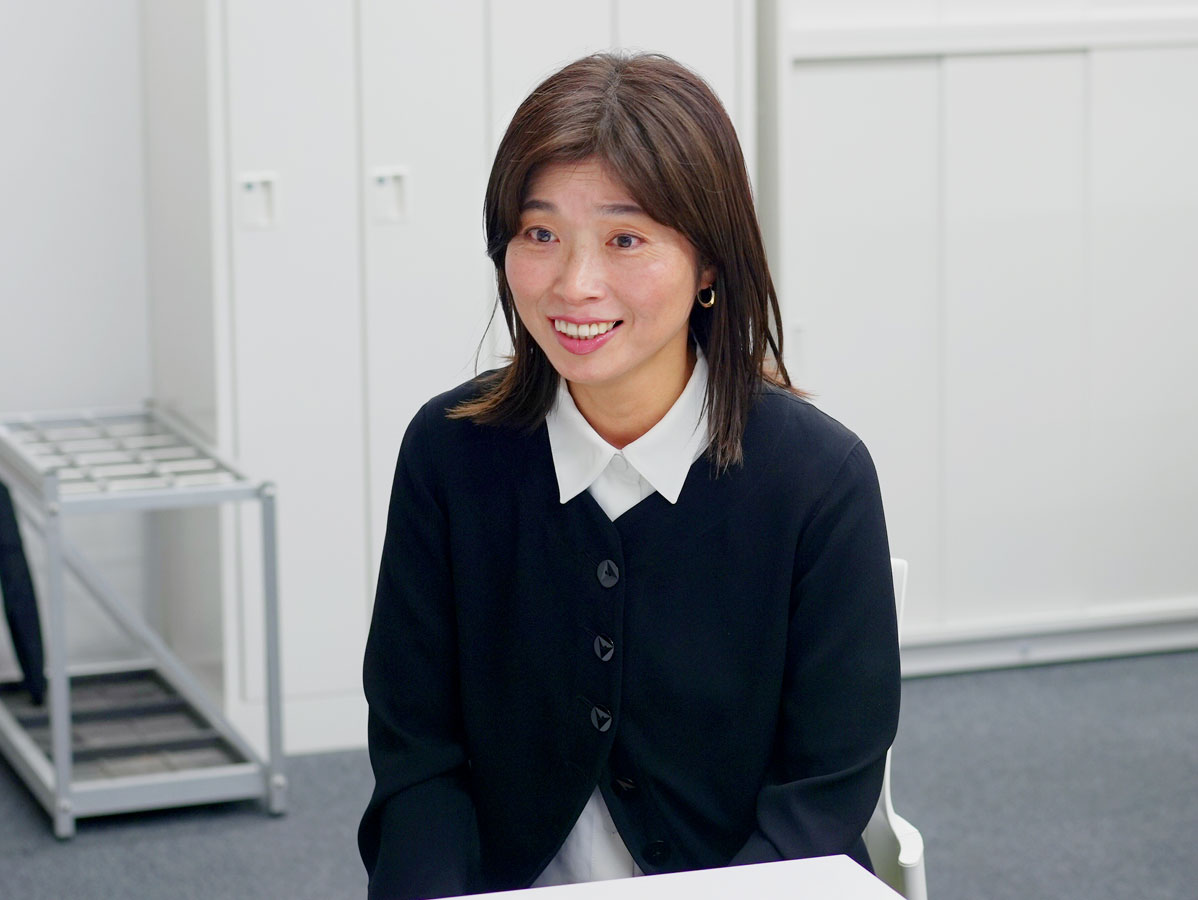
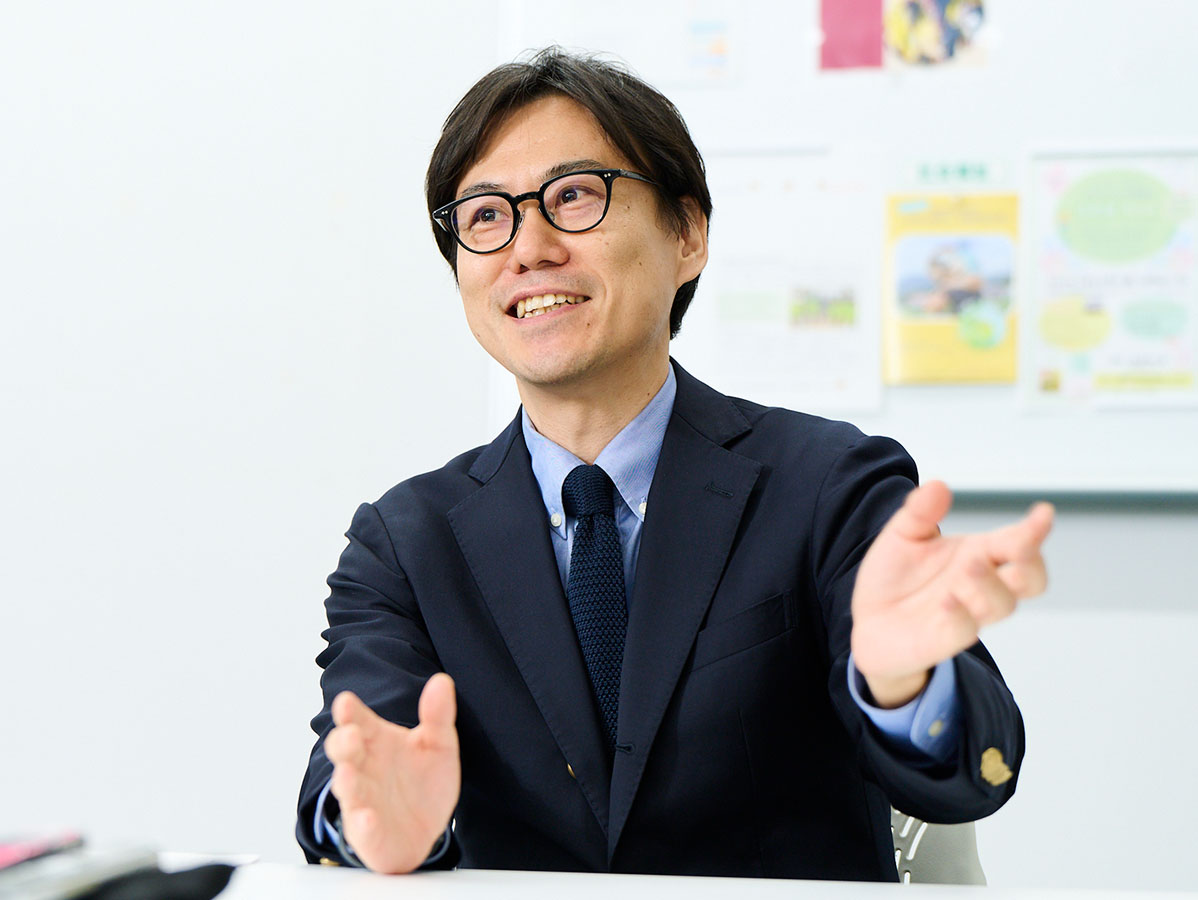
Director of Civic Engagement Center
Makoto Kawami
Graduated from Waseda University Faculty of Law. Withdrew from the doctoral Graduate School of Law of Law after completing the required coursework. Holds a PhD (Academic).
Her specialties are legal philosophy and bioethics. She previously served as a professor Aoyama Gakuin Women's Junior College and is currently a professor College of Community Studies Aoyama Gakuin University.
He will assume the position of Director of the Civic Engagement Center from April 2025.
<Background of establishment>
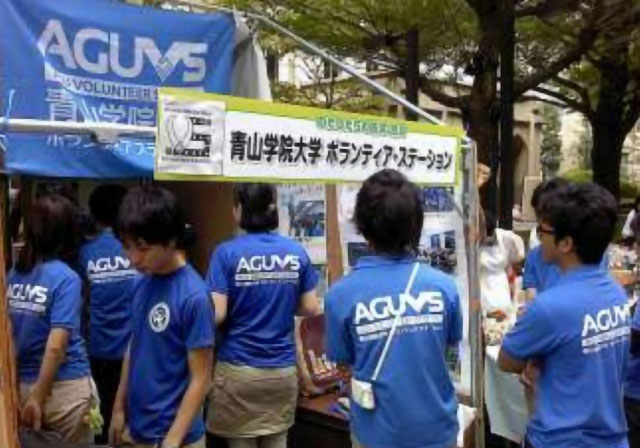
CEC celebrated its third anniversary in 2025. Its origins lie in a volunteer station established by students in the wake of the 2011 Great East Japan Earthquake. This expanded, and a volunteer center was opened on Aoyama campus in 2016, followed by another on Sagamihara campus in 2018.
Upon its establishment, the Volunteer Center's support for volunteer activities was positioned as "service-learning" (learning the attitude of serving). This is based on the AOYAMA VISION, declared in 2015 following the 140th anniversary of Aoyama founding, which sets "cultivating servant leaders" as a goal for Aoyama as a whole institution. Therefore, developing and cooperating in the implementation of "service-learning" related courses within Aoyama Gakuin University curriculum will also become a cornerstone of the Volunteer Center.
The Volunteer Station that was the origin of CEC
<CEC's Mission> Aoyama Gakuin University Civic Engagement Center | Aoyama Gakuin University
Under these circumstances, the Volunteer Center was reorganized in 2022 to create CEC, and it embarked on a new start with the following three missions.
① Creating connections between universities and society
② To create a better society
③ Learn from society and turn it into your own strength
The term "Civic Engagement" can be translated as "citizen collaboration." CEC was reorganized and launched with the aim of becoming a base for active "collaboration" between universities and society, and for students and others involved in the activities to grow into "servant leaders" as "citizens."
Civic Engagement Center Launched | AGU NEWS
<Features of CEC>
Therefore, CEC positions and supports volunteer activities as something that is "connected to society." For example, the previous volunteer grant system (commonly known as "Volunteer Support") has been renamed the "Volunteer and Social Contribution Project Support System." This system requires volunteers to engage in volunteer activities from the perspective of "social contribution." Furthermore, the scope of "citizen collaboration" is broad, and programs have been launched to connect students with social businesses and pro bono activities (social contribution activities that utilize professional skills and experience).
◆Citizen Collaboration Project
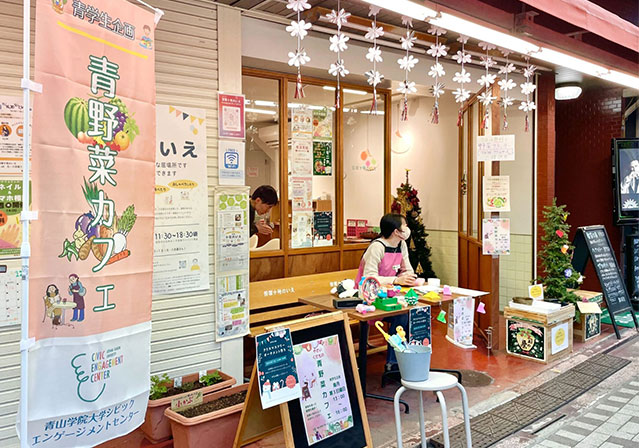
As of 2025, CEC has launched its own civic collaborative projects to "create a better society," including the "Sasazuka Project" (in collaboration with TEN-SHIP Association), in which students participate in community development in a shopping district community space; "Wakaba," a community revitalization project in Chuo Ward, Tokyo (), which identifies and communicates local attractions from the perspective of students; and the "Sasazuka Project" (in collaboration with the Chuo Ward, Tokyo (). Association), the "Sagamihara City Chuo Ward Community Revitalization Project 'Wakaba'" (Sagamihara in collaboration with City Chuo Ward), in which students discover and communicate local attractions from a student perspective, and the "Sagamihara Wine Project" (Sagamihara in collaboration with City Chuo Ward and Kent Winery), in which students design labels for wine that is now grown and brewed in the city as part of a special zone certification program to communicate local vitalization. The "Fujino Project" (in collaboration with the Shinobara Gardening Market Executive Committee and the Fujino Tourist Association), in which students experience Satoyama and participate in a gardening market in the Fujino area of Midori Ward, Sagamihara, known as a town of art and the closest satoyama to the city center.
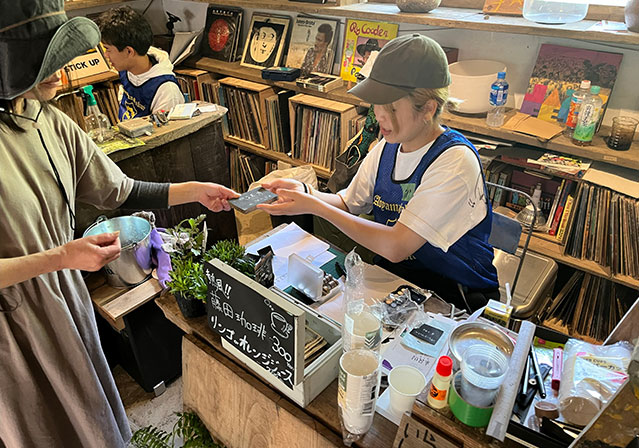
"Aoyasai Cafe" (Green Vegetable Cafe) hosted by members of the "Sasazuka Project"
◆ Learning and Practice in Regular Courses | Aoyama Gakuin University
Upon its establishment, CEC launched "Volunteerism and Citizen Collaboration" as a The Aoyama Standard course in 2022. Every year, numerous students enroll, learning about citizen collaboration from the perspective of servant leadership. Furthermore, starting in 2024, the center has been developing and continuing a course previously offered by School of Social Informatics, titled "Understanding Sagamihara Through Local Administration," which is also being studied by many students.
In response to these challenges, "Service Learning" related courses are conducted in small groups, allowing students to engage with the activities of NGOs, NPOs, and social businesses, and to acquire a service-oriented attitude that serves society and people through practical experience. The content is diverse, ranging from supporting children with foreign connections to overseas internships in Cambodia and the Philippines. In the 2025 academic year, five courses bearing the "Service Learning" name will be offered at Aoyama campus and two at Sagamihara campus, demonstrating a commitment to enriching education that culminates in "learning from society and turning it into one's own strength."
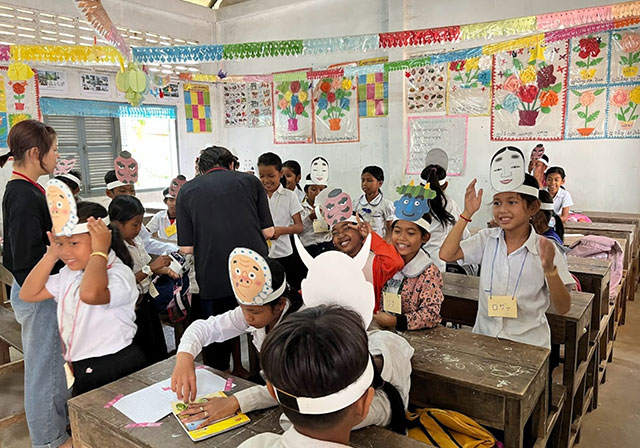
"Service-Learning III" (A class introducing Japanese culture at a free school in Cambodia)
<Collaborative initiatives spreading throughout Aoyama >
CEC is a center that supports not only university students but also "students, children, kindergarteners, and faculty and staff of Aoyama." As a center open to the entire Aoyama, from Kindergarten Building to university, new initiatives are emerging. For example, in Miyako City, Iwate Prefecture, with which CEC has a comprehensive partnership agreement, Kindergarten Building, elementary school, junior high school, high school, university, and alumni have continued exchange activities since the Great East Japan Earthquake, but until now there had been no opportunity to share and discuss these rich activities and achievements with each other. Therefore, on November 29, 2025, the center organized the "Aoyama x Miyako City Exchange Activity Presentation -Aoyama x Miyako Day." Based on the cooperation and collaboration within the school, citizen collaboration throughout Aoyama has also begun.
Aoyama Gakuin University has set "building an open community integrated with the local area to solve social issues" as one of its medium- to long-term goals. As a base for this, CEC will move even further forward.
Sustainability Report 2025: Conceptual Diagram of the Medium- to Long-Term Plan | Aoyama Gakuin University
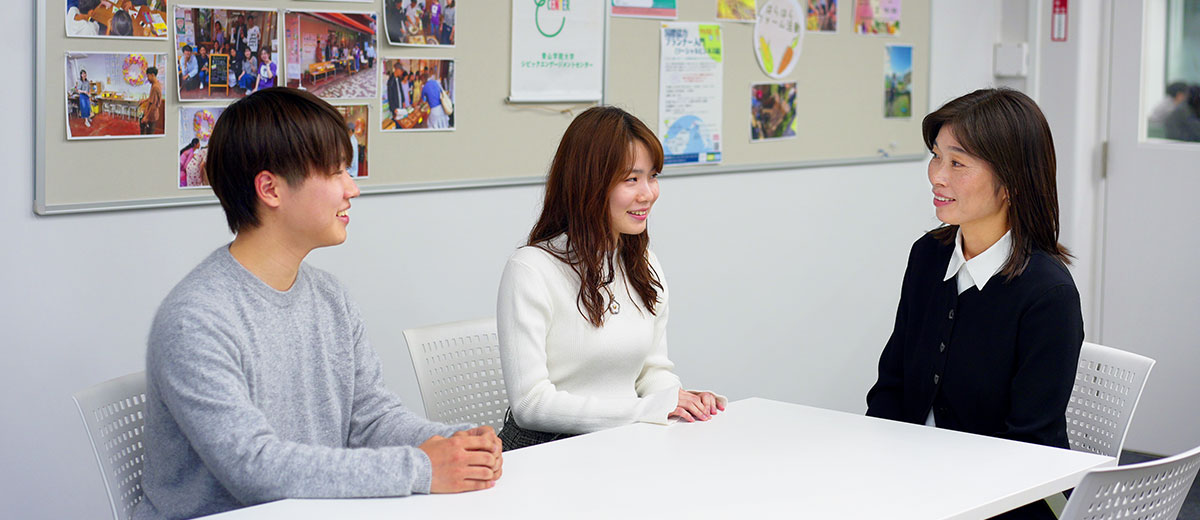
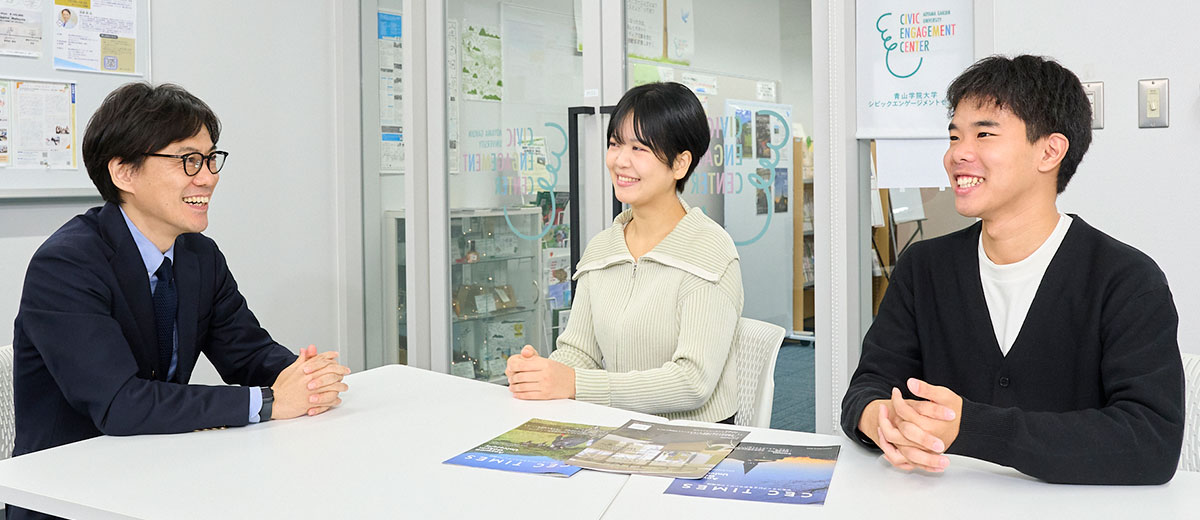
[Aoyama Campus] Coordinator x Student Roundtable Discussion
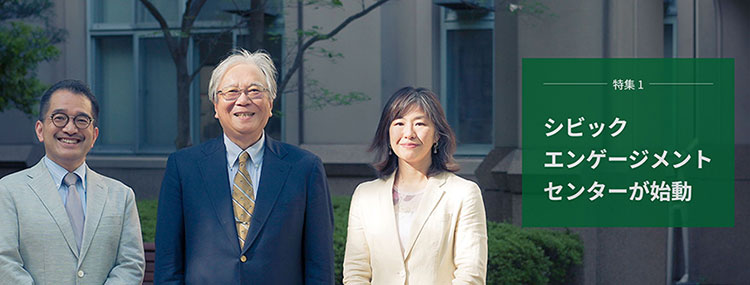
(From left to right in the photo)
School of International Politics, Economics and Communication
Department of International Politics 2nd year
(Service Learning Course Students)
Tokyo, Private Aoyama Gakuin Senior High School From
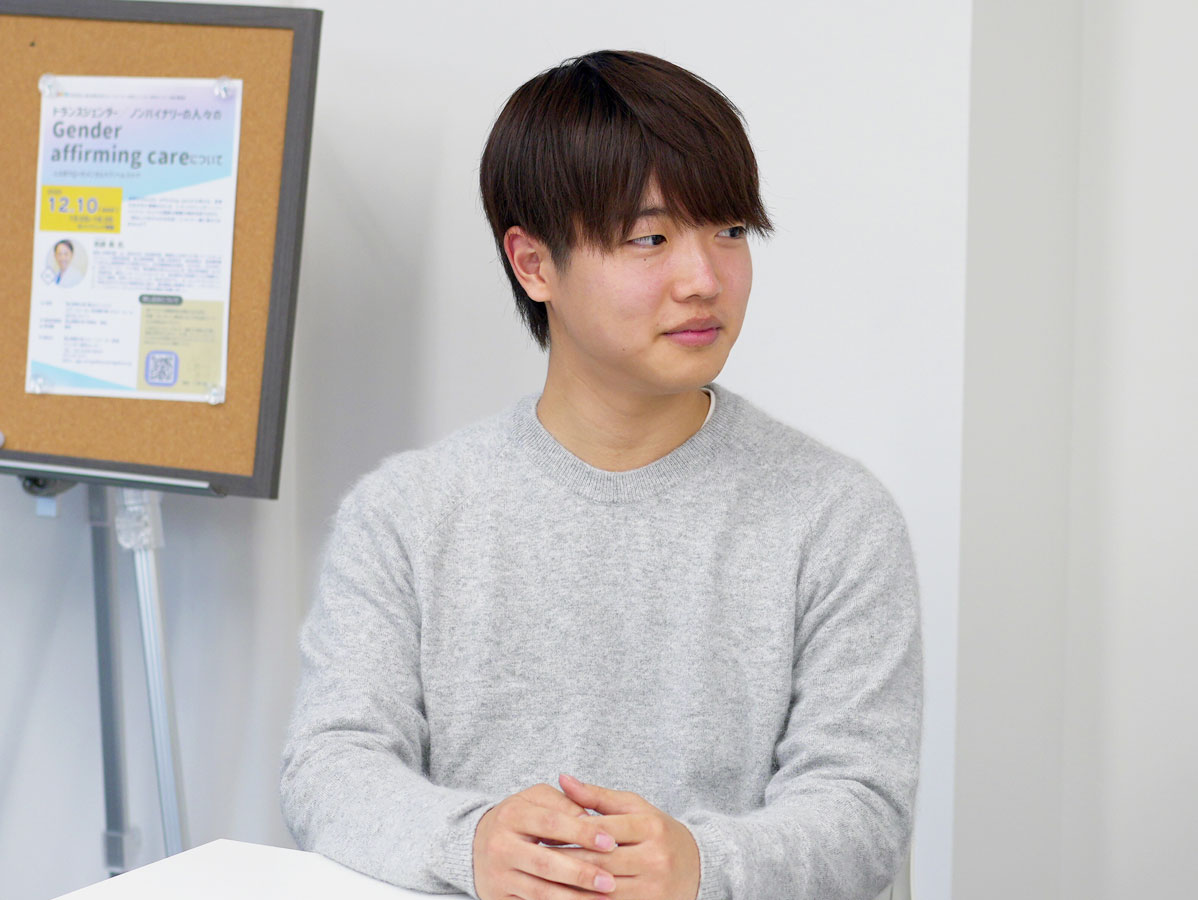
Takumi Shibata
Faculty of Law
Department of Human Rights 2nd year
(Belongs to the student organization SEEDs)
Tokyo, Private Aoyama Gakuin Senior High School From
NAKAJIMA Yuzuka
Assistant professor
coordinator
Midori Akimoto
■ "I want to know about the world" was the starting point for my activities.
Akimoto University students engage with society in a wide variety of ways, not just through volunteering, but also through classes, internships, and more. CEC supports students' activities in these diverse forms and fields. In addition, at our university, we offer "Service Learning," a "The Aoyama Standard Subject," where students learn about volunteer work and social contribution, and then put that knowledge into practice in the field. Ms. Shibata and Ms. Nakajima are also actively involved in these activities.
Shibata: Having spent my elementary and junior high school years in Shanghai, China, I began to take an interest in the differences between Japan and other countries, as well as issues like poverty. I wanted to do volunteer work once I entered university, so I went to CEC with a friend, and my first experience was a study tour to the Philippines. In my second year, I participated in a program called "Volunteer Activities as Service Learning," where I helped support the studies of children with foreign connections. Also, as part of SANDS, an officially recognized student organization in the Faculty of School of International Politics, Economics and Communication, we are working to consider and implement what university students can do to achieve the SDGs by 2030, and I am the project leader of the My Bottle Project, which promotes the use of reusable water bottles and works to reduce environmental costs.
Nakajima: My first encounter with social issues was when I participated in a Philippines visit program in the fifth grade of elementary school. When I saw the situation in the Philippines, I was surprised to find that it was different from the image of poverty I had imagined, and that the people seemed cheerful. That experience sparked my desire to get more involved with the Philippines and poverty issues. In high school, I started a student group called the Philippines Project, and I was fortunate enough to visit the Philippines again and see local support activities firsthand. I wanted to continue these activities even after becoming a university student, so we started a volunteer circle called SEEDs. In this group, we expand our target areas both domestically and internationally, and we are learning and working on the theme of "child support."
Akimoto: After encountering real-world social issues, have your views or perspectives on those issues changed?
At my internship site at
Shibata Service Learning, I was involved with children whose one or both parents were from another country. I initially thought the main challenge would be providing learning support due to their insufficient understanding of Japanese. However, after actually working with the children, I realized that language barriers were not the only issue. Through this experience, I felt that there are challenges that are not easily visible to outsiders, and that it is necessary to understand the complex situations of children from diverse backgrounds.
During a visit to the Philippines as a
primary school student, I witnessed firsthand the thorough support provided by local aid organizations to the children. They were all cheerful, and their enthusiasm as they spoke of their future dreams was palpable; in fact, they seemed more positive than Japanese children. It was then that I first realized that poverty is not just a matter of money, but also relates to one's state of mind, and I became interested in providing emotional support to children. Throughout middle and high school, I continued my support activities in the Philippines, which led me to consider, "What kind of support is truly needed?" At university, I wanted to learn about the current situation of children in Japan, so I interned at a child self-reliance support facility through the Tokyo Metropolitan Government and studied delinquent children in my Faculty of Law. Through these hands-on experiences, I have come to realize that the problems and challenges children face are complexly intertwined with various factors such as family environment, the characteristics of disabilities, and poverty.
■ Deepen your learning through "service-learning"
While the two
Akimotos were able to cultivate an important multifaceted perspective through their activities, simply participating in one-off volunteer activities often makes it difficult to understand the background of local issues, the efforts of the government and civic organizations, and to deeply consider the impact of those activities on the community. Our university's service-learning courses implement an experiential learning framework that allows students to consider their own connections to society and to be aware of how it can lead to lifelong learning. Classes that involve understanding local issues through literature and data, pre-learning through direct interviews with people working in the community, on-site activity experiences, and critical reflection through post-activity review can all be conducted within the scope of the course.
Shibata: I participated in the activities of "Minna no Ouchi," a non-profit organization located in Shinjuku Ward. There, I helped elementary, middle, and high school students with foreign backgrounds with their homework and test preparation, and sometimes we played card games together. In my pre-work preparation, I learned about children with foreign backgrounds from a macro perspective, and I also heard directly from people at "Minna no Ouchi." After that, when I interacted with each child individually, I began to see characteristics and challenges that cannot be expressed in numbers, and I felt the importance of the connection from pre-work preparation to the practical work and post-work reflection.
Akimoto: That's wonderful. From the journal Shibata kept during her internship, I could really see how sincerely she engaged with the children.
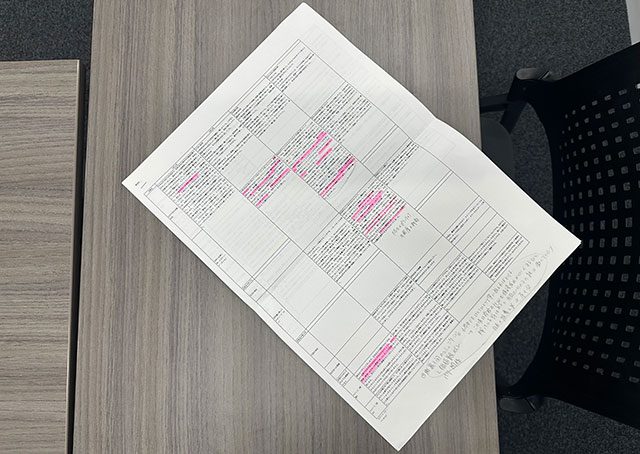
This is a journal kept by Ms. Shibata about her service-learning experience. It meticulously records her activities, observations, and insights from her internship.
Akimoto and others offer service-learning courses such as the "Sibuya Ward Children's Table" program, which is run by Sibuya Ward Social Welfare Council and supports local children, as well as programs in Cambodia and the Philippines, which Nakajima will be participating in.
Nakajima: The program I'm participating in involves visiting Globe Jungle, a certified NPO that operates orphanages and free schools in Cambodia. Right now, as part of my preparation, I'm learning about the situation in Cambodia by receiving lectures from NPO staff and listening to stories from seniors who have experience visiting the country.
Regarding
Akimoto 's activities abroad, while he emphasizes the importance of learning locally, he also believes it's crucial to become aware of Japan's challenges and one's own position by experiencing life outside the country. While it's difficult to fully grasp this in Japan, going abroad allows one to become more aware of the environment in which they receive their education as a university student and the challenges facing Japan. He hopes that such experiences will broaden their global perspectives.
Shibata: I feel that my on-the-ground experience through service learning has expanded my learning in undergraduate studies. In the "Introduction to Development Economics I" class, I learned about the residence status (specified skills) for accepting foreign workers who possess certain expertise and skills and can immediately contribute to the workforce. In Japan, where the working-age population is declining, the acceptance of foreign workers will increase to alleviate labor shortages. If this happens, we will eventually need to consider the challenges and support for children with overseas roots who will be living in Japan. In this way, through practical training in the community, I was able to connect two issues: "children with foreign connections" and "labor shortages and foreign workers."
■ If you have even the slightest interest, take the first step.
Akimoto While there are relatively few students involved in civic engagement activities, I feel that Aogaku has many students like Ms. Shibata and Ms. Nakajima who can find their own themes and take initiative. What kind of insights or changes have you felt have occurred within yourself through these activities?
Shibata I think it's about the "ability to understand others," which includes communication and listening skills. In our activities with children with foreign connections, we built trust by getting to know each child's perspective, asking about their everyday school life and how they spend their holidays, and showing interest in their culture by asking questions and learning from them. I believe these activities led to a step towards understanding the issues at their core.
Nakajima The area where I feel I've grown the most is my "ability to take action." Up until high school, activities were carried out smoothly with the support of teachers, but in university, we had to do everything ourselves—planning, communication, coordination, everything. It was much harder than I expected, and there were many setbacks, but that's when my mindset changed to "nothing will start unless I keep taking action, even if things don't go well." Now, I think I've become able to proactively approach things without hesitation, without getting discouraged even when things don't go well.
Akimoto At Aoyama Gakuin University, students can deepen their awareness of social issues, which arises from volunteer activities and various forms of social connections, through service-learning. Furthermore, CEC (Community Education Center) provides support for applying the knowledge gained from service-learning and undergraduate courses to practical applications in the community. However, many students find it difficult to translate these ideas into action. Could you both offer some advice?
Shibata Many people feel a desire to contribute to society but find it difficult to actually take action. I think it's a good idea to take the first step by visiting CEC, even if you go with a friend. By talking with a coordinator at CEC, I was able to realize what I wanted to do and even imagine what the actual activities would entail. Also, for high school students aiming for Aoyama Gakuin University University who are even slightly thinking about "doing social contribution activities at university," I highly recommend starting early. When you actually participate in activities, you will be able to think about things from a different perspective than what you see and hear in classes or on the news, and university students will have more opportunities to engage in social activities than before. If you are interested, please give it a try.
Nakajima: I also encourage anyone who finds even the slightest interest in something to try. Activities that allow you to directly engage with those in need of support can greatly broaden your perspective and deepen your understanding of society. I myself wasn't particularly interested in such activities until I participated in a Philippines visit program when I was in elementary school. However, interacting with children on the ground gave me a new perspective, and that experience has greatly influenced my current way of thinking, my activities at SEEDs, and my future career path. Social contribution activities can be a catalyst for you to become interested in unexpected directions, and they can also be an experience that helps you discover what you "want to do" and build confidence in your ability to "do" it. In any case, I recommend taking the first step.
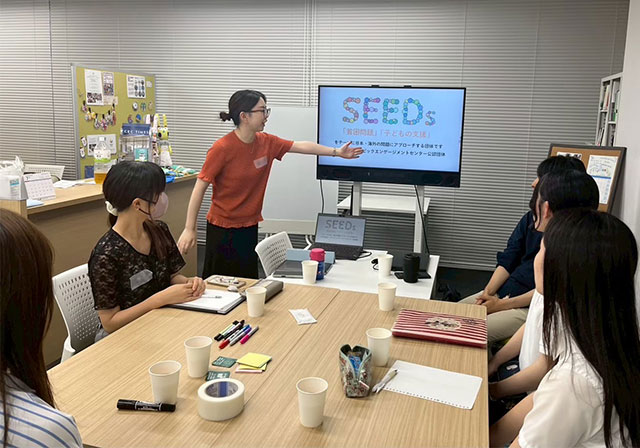
At a SEEDs workshop. The group is primarily composed of members from Faculty of Law and School of International Politics, Economics and Communication
At Akimoto University, the relationship between students and faculty tends to be fixed as that of learner and teacher. However, when engaging with the local community and putting things into practice, they become partners in teaching and learning from each other. The appeal of these activities lies in the fact that they allow people to empathize with and inspire one another, transcending age, position, and gender, fostering mutually beneficial relationships. I sincerely hope that the two of them will continue to create their own original activities in the future.
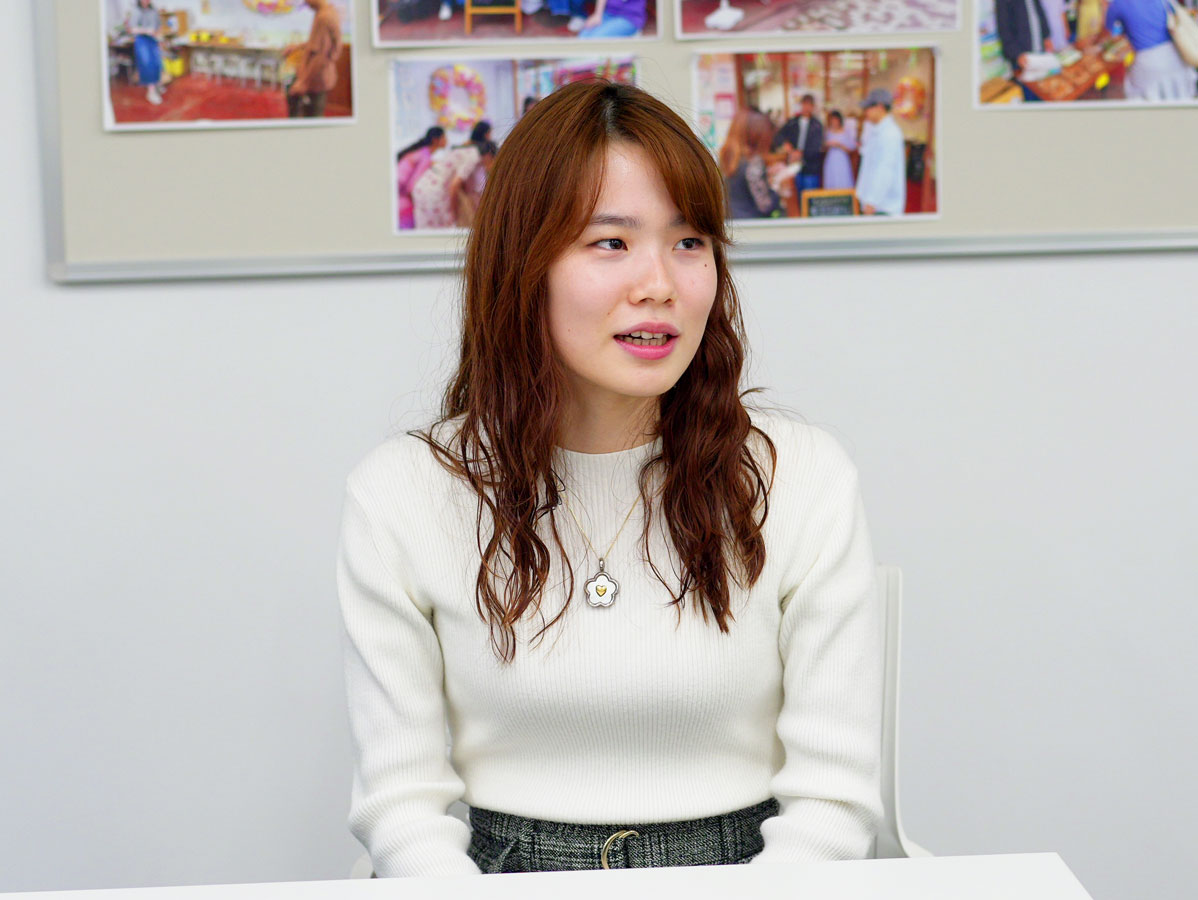
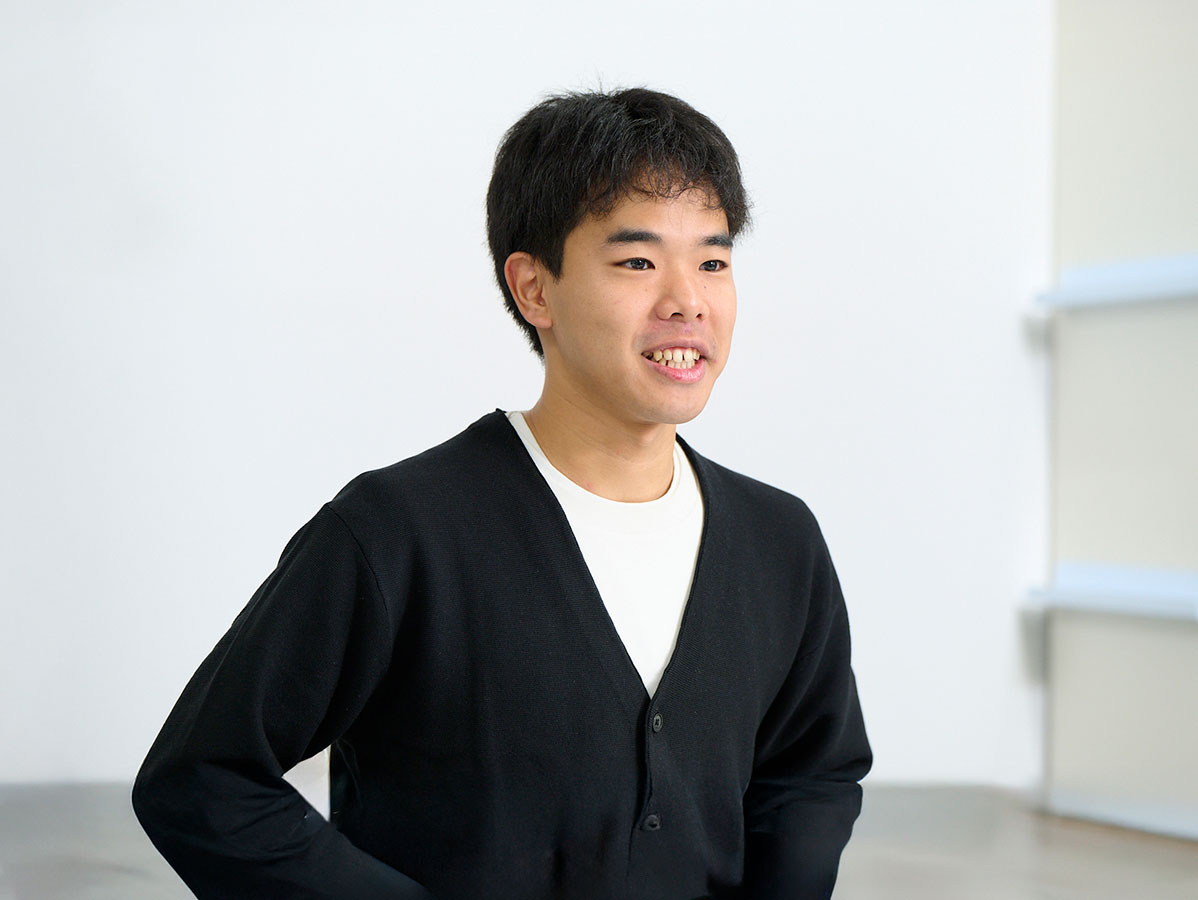
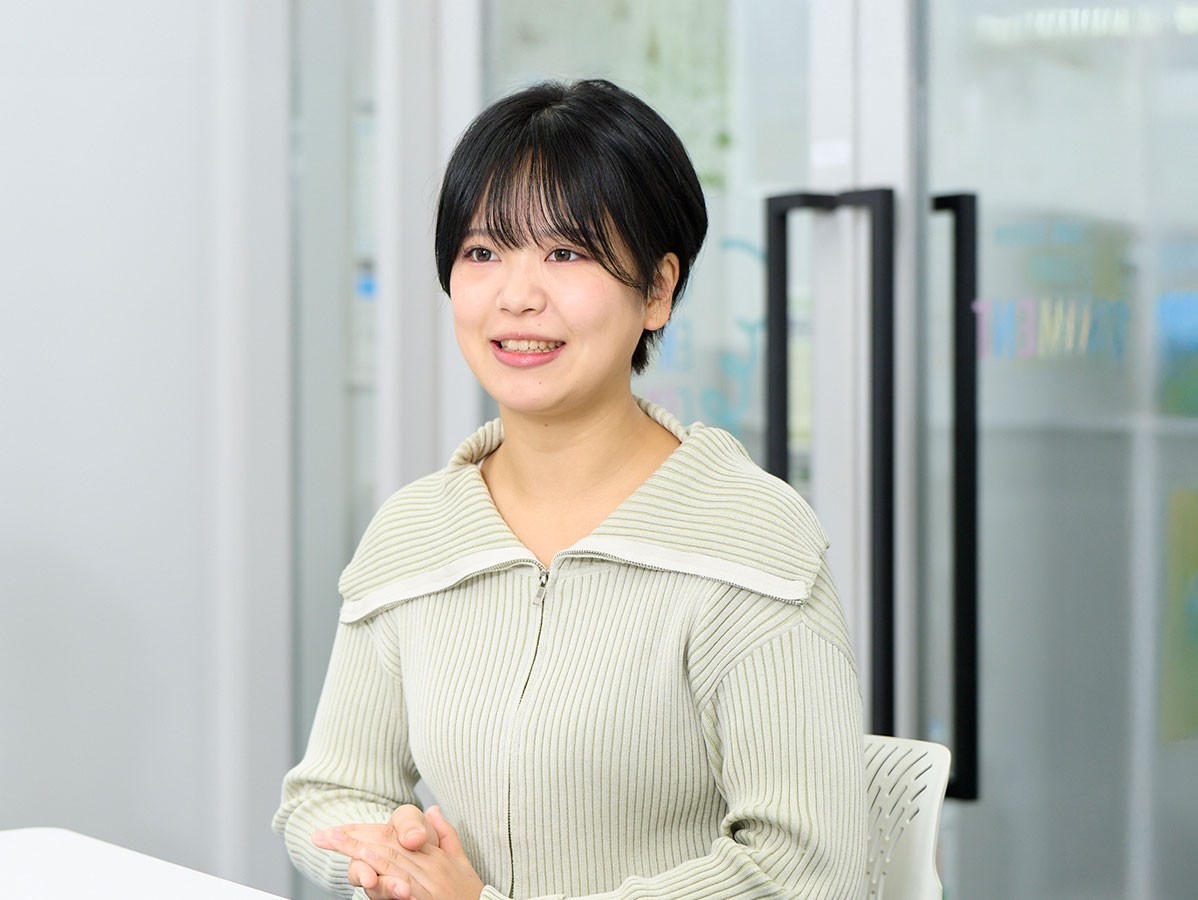
[Sagamihara Campus] Coordinator x Student Roundtable Discussion
(From left to right in the photo)
Assistant professor
coordinator
Kenichi Mikami
College of Community Studies
Third year Department of Community Studies
(Fujino Project)
Graduate of Aomori Prefectural Hachinohe High School
Ayuri Sasaki
College of Community Studies
Fourth year Department of Community Studies
(Fujino Project)
Graduated from Toyama Prefectural Toyama Chubu High School
Fuyuki Daigo
■ The "Fujino Project" operates in rural areas.
At the CEC on the Sagamihara Campus, we are developing projects that take advantage of the unique characteristics of the Sagamihara Sagamihara (formerly Fujino Town, Tsukui District), which is also known as the "town of art" and "the closest satoyama (traditional rural landscape) to the city center." In this project, we have participated in the "Fujino Satoyama Experience Tour" to experience life in a satoyama, and have been involved in the preparation and operation of a community-based event called the "Shinobara Gardening Market." How did Ms. Fuyuki and Ms. Sasaki come to participate in the Fujino Project?
When I first enrolled at Fuyuki University, I had a friend who enthusiastically invited me to join CEC activities, but I kept refusing because I felt that volunteer work wasn't suited to me. I thought that volunteer work was something for more highly motivated students, unlike casual sports clubs. However, in the summer of my second year, I heard that they were recruiting volunteers for community revitalization in the Fujino area, and I thought I'd like to try working in a mountainous area, so I decided to participate. Before participating, I didn't even know where Fujino was, and all I could picture was mountains.
Sasaki: In my first year, I participated in CEC's "Sagamihara City Chuo Ward Charm Discovery, Creation, and Dissemination Project (nickname: Wakaba)" (now Sagamihara City Chuo Ward Regional Revitalization Project "Wakaba"). The Wakaba Project is an activity to discover and disseminate the charms of Sagamihara City Chuo Ward, where the campus is located, and I was involved in activities to promote wine produced in Sagamihara City Chuo Ward. That activity was fulfilling, but in my second year, I wanted to try something new, so I decided to participate in the Fujino Project. As I am from Aomori Prefecture, I was attracted to the idea of working in a lush, green area. In addition, I was interested in the characteristics of the satoyama (rural mountain) areas of Kanagawa Prefecture, and I wanted to compare them with satoyama areas in other rural areas. Before participating, my image of Fujino was that even though it's a satoyama area, it's in Kanagawa Prefecture, so I thought it would have better transportation, supermarkets and convenience stores, but I was surprised to find that it was actually a satoyama area far away.
The Mikami-Fujino Project is a project that emphasizes balancing "local needs" with "activities that students find appealing." What kind of activities did the two of you do in Fujino?
Fuyuki: Rather than having a strong desire to volunteer, I simply wanted to get into the mountains and get to work. I've always loved mountains, and when I first visited Fujino, I was touched by its abundant nature, felt the fresh air, and thought that I wanted to work there. I started by cutting down the overgrown bamboo at the site of the "Shinobara Gardening Fair," then I did some weeding, and as the fair approached, I helped with setting up the venue and making small items to sell on the day.
The Mikami "Shinobara Gardening Market" is an event where people can rediscover and enjoy the beauty of natural materials that lie dormant in the satoyama (rural landscape) and its surrounding areas, and its theme is "making use of what we have." They sell bamboo crafts, charcoal, wreaths, and other items made using materials from the satoyama, right?
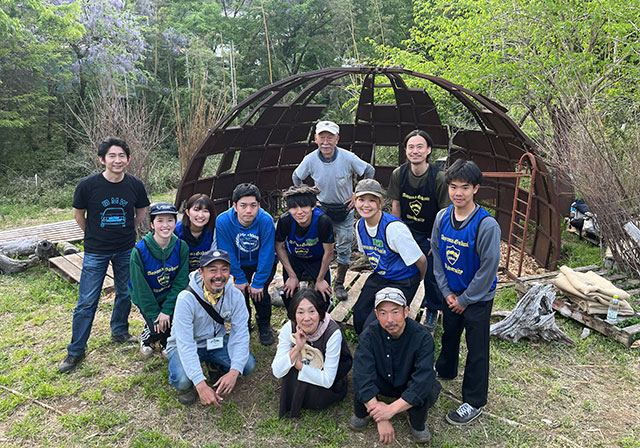
A group photo taken on the second day of the Shinobara Garden Fair held in April 2025, featuring members of the Fujino Project, the Shinobara Garden Fair Executive Committee, local residents, Coordinator Mizutani, and Professor Mikami.
Sasaki: The experiences unique to the rural area, such as mowing grass and leveling the land, which I don't usually do, were refreshing. However, my first impression of Fujino was, "It's so far away!" (laughs). Initially, a local resident came to pick me up at the station, and we drove from there, but I remember being in the car for quite a long time. When we arrived at the site, the grass was overgrown, and I remember feeling a sense of determination, realizing that creating the venue from scratch here was not just a superficial activity.
■ Collaborating with local people through events
When
the Mikami Fujino Project started, there was no plan for continuous activities, but one-off activities grew into ongoing involvement. However, the situation remains fluid, with changes in the structure of the host organizations, and relationship building is still ongoing. I feel that this process of adapting to changes is the real appeal of collaborating with the community, but have you encountered any difficulties in this process?
To be honest, when I first participated, I felt a kind of barrier between the local people and us students. We often worked together with the local people from the preparation stage, but many of them frequently asked us things like, "Is this activity required for the course?" or "Will this activity count towards my credits?" They were sometimes surprised when I told them that it was a completely volunteer activity, unrelated to credits or coursework.
Sasaki: I was often asked that too. I don't think they meant any harm, but when they asked me that, I felt a distance between us and it made me feel a little lonely. But after working together a few times, they started to remember my face and name and began to talk to me.
We wanted the students from
Mikami to not only learn about and understand local issues and efforts to solve them, but also to cultivate an attitude of engaging as "partners who think and act together." Were they able to collaborate effectively?

At the Shinobara Gardening Fair held in April 2025, Ms. Sasaki was in charge of sales at her booth.
Sasaki participated in the Gardening Fair by setting up the venue and running a stall, collaborating to make the event a success. Although there is a difference in our positions—the NPO and local people are the ones who accept volunteers, and we students are the ones who are allowed to participate—we believe that collaboration comes from proactively working together with the same desire to make the event a success and to convey the charm of Fujino. At meetings for the gardening fair, the people of Fujino would frankly ask for our opinions, such as "What would the students like to do?", and I felt that the characteristic of collaboration lies in transcending positions.
At the Shinobara Gardening Fair held in April 2025, Ms. Sasaki was in charge of sales at the storefront. Many
Aoyama Gakuin University Aogaku live around the university campus, such as in Sagamihara City's Chuo Ward, so they have few opportunities to experience life in mountainous areas like Fujino, but the Fujino Project has given them so many first-time experiences. It is experience that brings about unknown lifestyles, new ways of thinking, and new perspectives. I think we have been able to value the process of experiencing the area, getting to know it deeply, and then participating in revitalization activities.
Mikami: I think it's essential to understand the context of local culture and human relationships, and to take the initiative to reach out to them. On top of that, it's a crucial first step to get them interested in building connections with society through their activities, and to build relationships while deepening mutual understanding, and I imagine that's where the difficulties lie.
■ Our footsteps will pave the way for the activities of those who come after us.
At CEC in Sagamihara
, in addition to the Fujino Project, we are implementing numerous other initiatives in collaboration with Sagamihara City, where the campus is located, such as the Wakaba Project and Sagamihara Wine Project, in which Ms. Sasaki participated.
Sasaki: That's something I've always valued when it comes to volunteer work. I'm only in Sagamihara City for the four years I'm a university student, but since I've been given the opportunity to live here, I think it would be a waste to just attend university. By participating in community activities, I've been able to develop an interest in and affection for Sagamihara City.
Fuyuki: I also have a strong attachment to Sagamihara campus. Since I'm from a rural area, I feel at ease in places with lots of nature, and in that sense, I was able to enjoy the Fujino Project every time. It was tough because it took a long time to get there, but once I arrived and started moving around, I felt a great surge of energy.
The Mikami Fujino Project has always aimed to provide participants with an opportunity to consider how they can utilize their expertise, such as their academic field or special skills, to benefit society through their activities. What did the two of you gain from this project?
In the Fuyuki College of Community Studies course, we have seen many examples of regional revitalization, so when considering how to interact with local people and developing new projects, we were able to refer to the case studies we had learned so far. Conversely, through this project, we were able to experience the fulfillment of working together with peers, the sense of accomplishment from a successful event, and develop a more proactive approach.
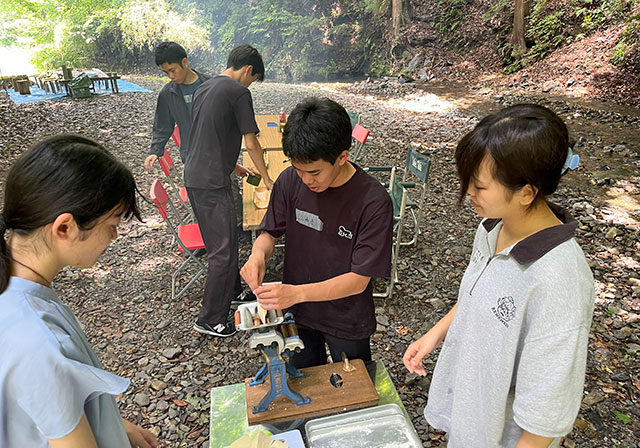
During the Fujino Satoyama Experience Tour held in July 2025, participants made udon noodles, a local dish, on the grounds of a host family's home (Ms. Fuyuki is in the center, Ms. Sasaki is on the right).
Sasaki: College of Community Studies has classes where we learn about volunteering and NPO organizations, but having hands-on volunteer experience deepened my understanding and my own thinking. I've always been interested in the preservation of regional culture and belong to a seminar that deals with that, but through the Fujino Project, I discovered that there are various perspectives on preservation, not only of culture but also of the local climate and the livelihoods of people that have continued from the past.
During the Fujino Satoyama Experience Tour held in July 2025, participants made udon noodles, a local specialty, on the grounds of a host family's home (Ms. Fuyuki is in the center, Ms. Sasaki is on the right).
To summarize, I believe that building trust is the foundation for the sustainability of projects in collaboration with the local community. I also want the students to understand that their activities are not just for one generation, but will be passed on to the next generation Aogaku. What they do leaves a trail that remains among the local people, and future Aogaku and their successors will follow in that footsteps.
Fuyuki: During my job search, I considered jobs related to regional revitalization. Ultimately, I decided to work in an industry that is not directly related, but the Fujino Project was such a valuable experience that it will become a future option for me. Therefore, I would like to encourage future students and juniors to take initiative. When starting anything new, it's natural to feel a little scared, but once you take that first step, the anxieties you initially had disappear. You will all be able to have many new experiences and meet new friends.
Sasaki: I hope to eventually return to my hometown of Aomori Prefecture and contribute to regional revitalization and cultural preservation. My activities at CEC were meaningful in relation to that future dream, and it was also a great opportunity to learn about the charms of Sagamihara Aogaku University's campus is located. What I want to tell my juniors is that even if you start out alone, if you have the enthusiasm and action to support the social contribution activities you want to do, you will be able to make friends and create an environment where you can support each other. I think that long-term activities are something you can only do when you are a university student, when you have more free time, so I encourage you to take that first step.
About CEC
Aoyama Gakuin University Civic Engagement Center | Aoyama Gakuin University
Aoyama Gakuin University Civic Engagement Center was established in April 2022.
This organization was reorganized from its predecessor, the Volunteer Center, based on the AOYAMA VISION, which was formulated to cultivate servant leaders who embody Aoyama 's school motto, "Salt of the Earth, Light of the World." Building upon the volunteer activities that Aogaku have proactively undertaken since the 2011 Great East Japan Earthquake, it strengthens the connection with the regular curriculum and engages in servant leadership education.
[Aoyama Campus]
Opening period: Year-round, excluding summer and winter holidays.
Opening hours: Monday to Friday 10:00 to 11:30
12:30 - 18:00
Location: 1st floor of Building 10
Free space capacity: Approximately 20 people
Equipment and materials:
40-inch TV monitor
LCD projector
iPad
• Speakerphone
Webcam
• Easel (3 legs)
• Movable whiteboards (3 units)
・Non-contact thermometer
[Sagamihara Campus]
Opening period: Year-round, excluding summer and winter holidays.
Opening hours: Monday to Friday 10:00 to 11:30
12:30 - 18:00
Location: F building 2nd floor
Free space capacity: Approximately 10 people
Equipment and materials:
40-inch TV monitor
LCD projector
iPad
• Speakerphone
Webcam
·easel
• Movable whiteboards (2 units)
・Non-contact thermometer
• Walkie-talkies (4 units)
*Please check our website for details and the latest information.
Students engaged in volunteer activities (AGU LiFE)
● Aogaku International Children's Cafeteria / Yumedoko / Student Staff
College of Community Studies Department of Community StudiesShin Ako
Community issues revealed through volunteer work.
Even if it's something small, I want to take action first.
VIEW DETAILS →
*Affiliation and grade level are as of the time of the interview.