Welcome to the forefront of College of Science and Engineering!
From Setagaya to Sagamihara: The Future Inside the Lab
2026.5.21
College of Science and Engineering celebrates its 60th anniversary. It will showcase its cutting edge.
On February 23, 2026 (Monday, national holiday), we held the "College of Science and Engineering 60th Anniversary x Meet up in AGU@SAGAMIHARA." "Meet up in AGU" is a forum aimed at widely disseminating the university's research and creating opportunities for industry-academia collaboration and social contribution. This year's 60th anniversary event was themed "Welcome to the Cutting Edge! ~The Future in the Lab~," and featured a multifaceted introduction to the "present and future" of the Faculty of College of Science and Engineering.

INDEX
▼ Event report: 60th anniversary College of Science and Engineering x Meet up in AGU @SAGAMIHARA
▼ Pre-event
▼ [Special Plenary Lecture] Memories from my time at Aogaku University
▼ Introduction to "Riko FUTURE" (a new fundraising project)
▼ Latest Research Topics
■ [Presentation] Chemical Biology Targeting Cancer Hypoxia
■ [Presentation] When the Brush Begins to Move
Fusion of hand-drawn style and computer graphics
■ [Poster Session] Unraveling the "Recipe for Space" with X-rays
■ [Poster Session] Design of a storage and deployment structure for a deployable aeroshell for Mars landing
■ [Poster Session (FEP Scholarship Recipient)] Improving the dynamic range of corrosion detection of reinforcing steel in reinforced concrete structures using the Brewster angle with the 10GHz Doppler effect
Event report: 60th anniversary College of Science and Engineering x Meet up in AGU @SAGAMIHARA
Dean College of Science and Engineering
Professor, Department of Department of Electrical Engineering and Electronics College of Science and Engineering Engineering
Shinji Huang
In 2000, he completed his doctoral studies in Applied Physics at the Graduate School of Engineering, The University of Tokyo, earning a PhD in Engineering from the University of Tokyo. After serving as an assistant professor at the University of Tokyo, Tohoku University, and Nara Institute College of Science and Engineering Technology, he became an associate professor in the Department Department of Electrical Engineering and Electronics, Faculty of Science and Engineering, Aoyama Gakuin University University in 2013, and a professor in 2018. He is also the director of the Nanocarbon Device Engineering Laboratory. His specialty is the crystal growth and device applications of functional materials. He is engaged in research and development on transparent conductive films using graphene (a sheet-like material composed of carbon atoms) and their device applications. He is a member of academic societies such as the Japan Society of Applied Physics, the Carbon Society of Japan, and the New Diamond Forum.
In the 2025 academic year, College of Science and Engineering Aoyama Gakuin University celebrated its 60th anniversary. It was established at the Maesawa Campus in 1965, renamed the Setagaya Campus in 1971, and moved to Sagamihara Campus in 2003 when College of Science and Engineering Setagaya and Atsugi Campuses were closed.
The 60th anniversary event, held on February 23, 2026 (Monday, national holiday), was planned with the hope that alumni would visit Sagamihara Campus and see the current state of the Faculty of College of Science and Engineering. We also wanted to inform them about our research, so we held it in conjunction with the Meet up in AGU, a research seed presentation event held annually by the Liaison Center.
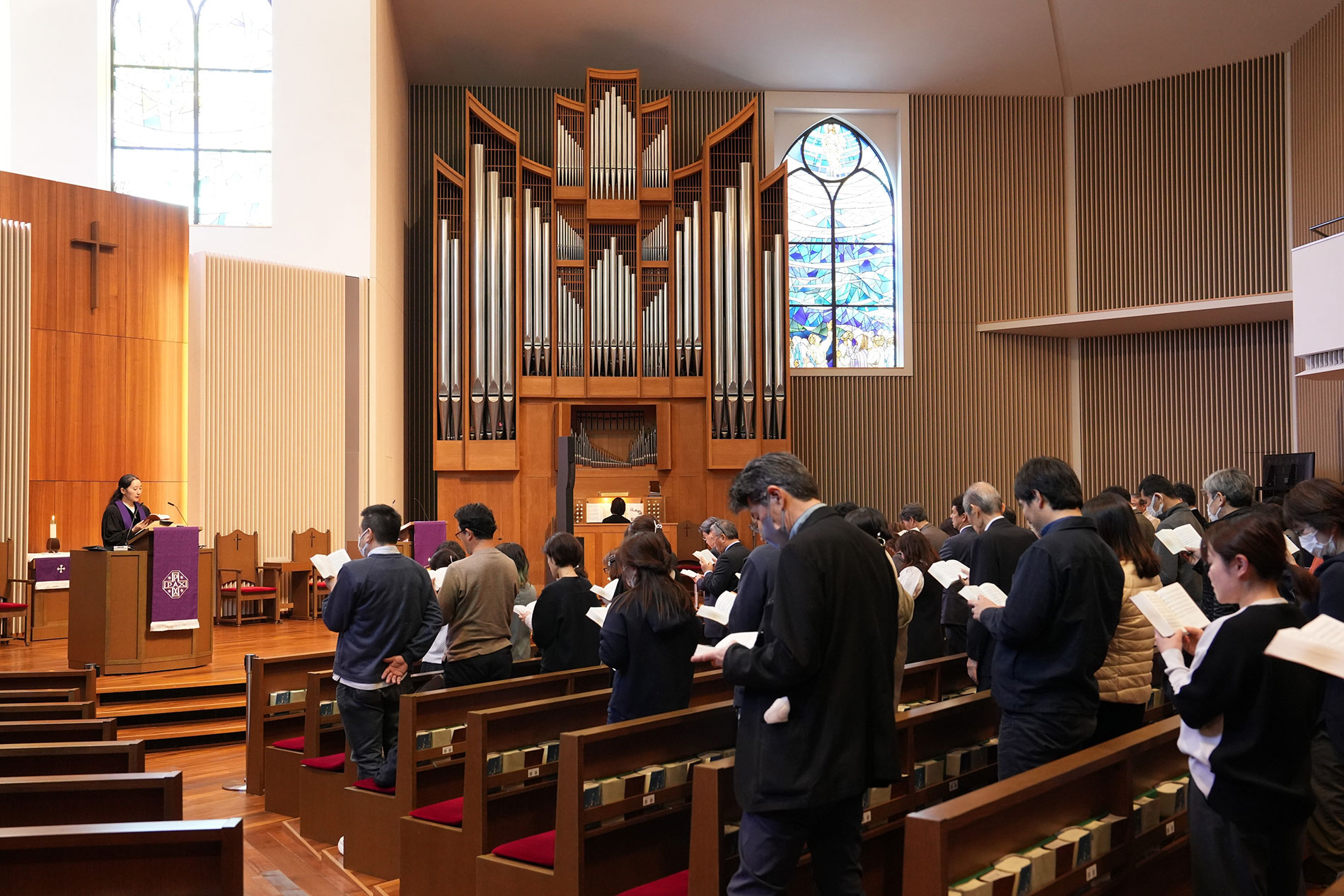
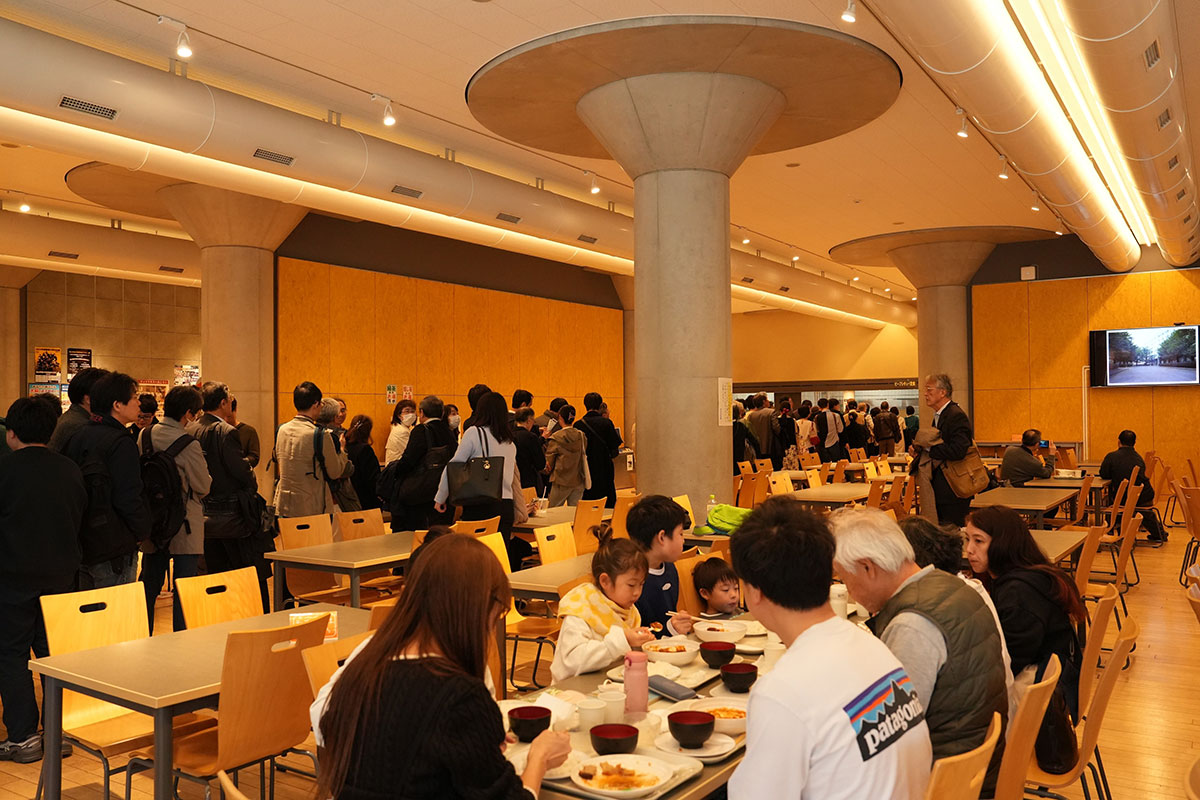
A pre-event was held on the morning of the main event. During the research facility and laboratory tour, the Instrumental Analysis Center and 10 laboratories were open to the public, allowing visitors to see a part of the research environment of the Faculty of College of Science and Engineering. At Wesley Chapel, Professor Yuka Wadera, the university's religious Chief, conducted the 60th anniversary service, which was well-attended. In her sermon, Professor Wadera used the word "takeover." The stained glass and pipe organ in Wesley Chapel were inherited from the Atsugi campus, and it made us reflect on how the Faculty of Science and College of Science and Engineering has inherited various things from Setagaya and Atsugi to reach where it is today. In the cafeteria, nostalgic menu items from the Setagaya era were offered, allowing many people to enjoy a special lunch. Although we had announced in advance that a nursing and diaper changing space would be available, many alumni came with their families and young children. Many alumni from the Setagaya era were visiting Sagamihara campus for the first time, and we were able to welcome alumni from a wide range of generations. We distributed programs at Main Gate, and we were blessed with so many visitors that all 500 copies we prepared were gone.
The main event, a lecture, was held in the afternoon. At the reception, we distributed 60th-anniversary commemorative clear files to attendees. The clear files, which feature a motif of the periodic table of elements, were conceived and produced by Professor Miki Hasegawa of Department of Chemistry and Biological Science, and designed by illustrator Agetoritori. The commemorative clear files were very well received by the attendees.
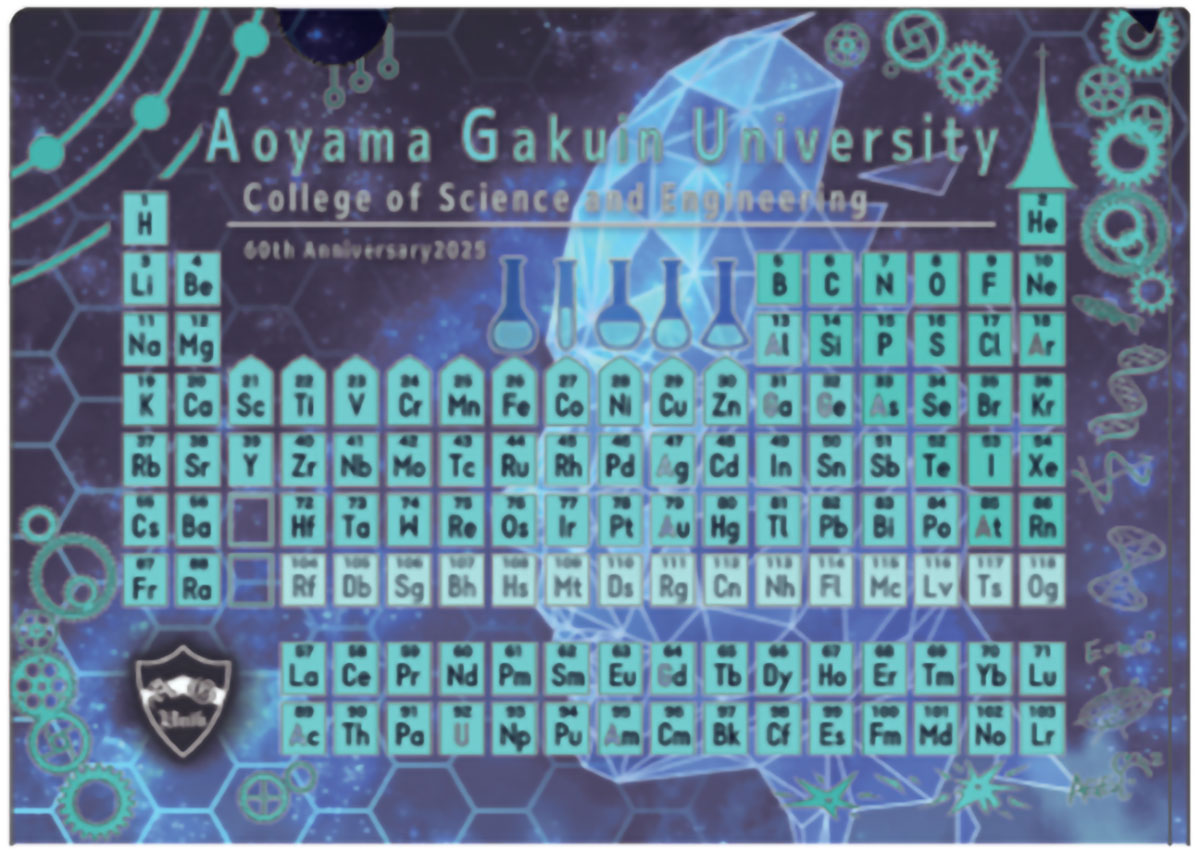 College of Science and Engineering 60th Anniversary Commemorative Clear File
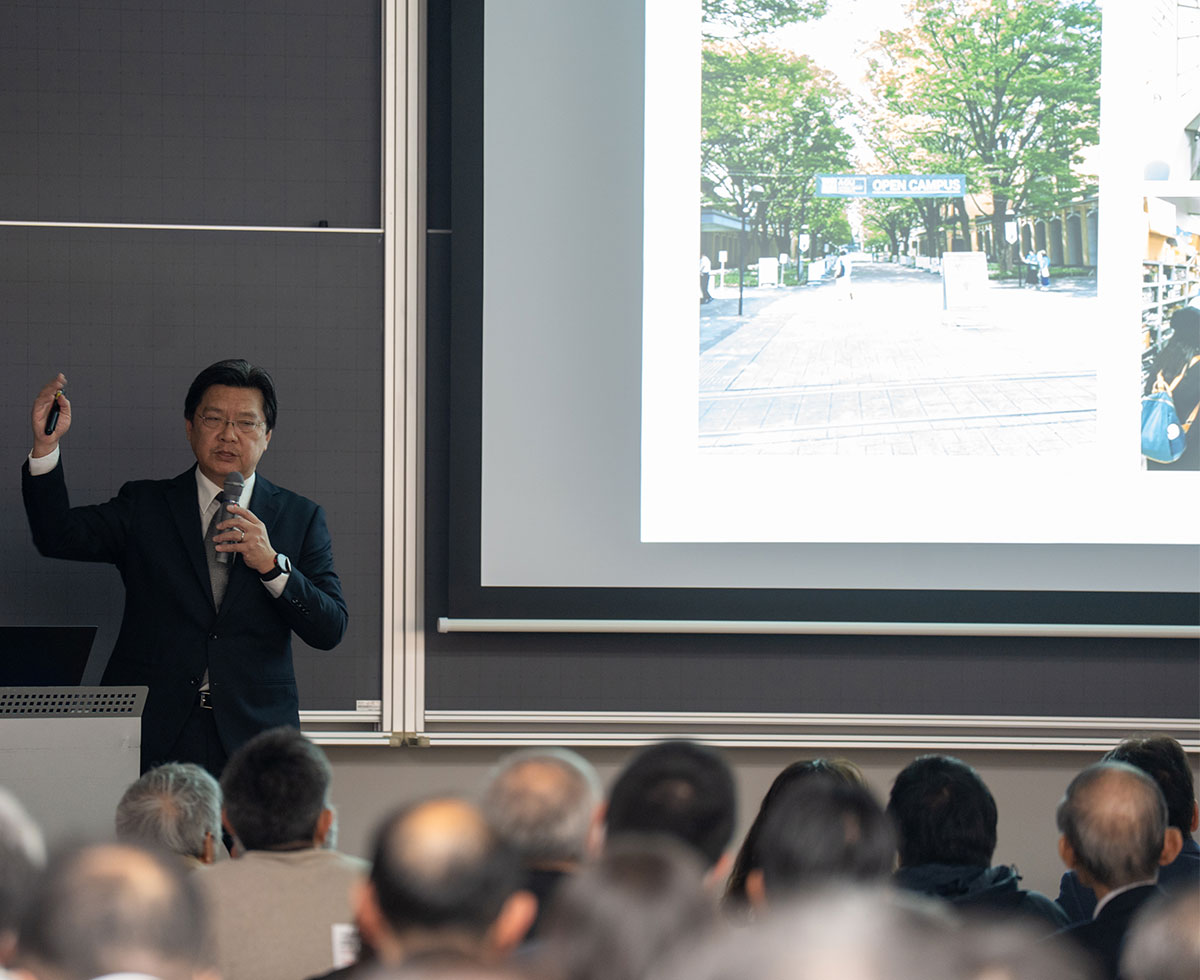
In the plenary session in the first half of the lecture, Prof. Yoshito Tobe, Director of the Liaison Center, opened the session, INAZUMI Hiroshige President and College of Science and Engineering Makoto Ukai, a 12th year student of Executive Trustee, followed by a lecture by myself, an academic General Manager, titled "The Present Location and Future of Aoyama Gakuin University College of Science and Engineering". I introduced the efforts to revitalize the graduate school of science and engineering, and explained that as a result of the development of various support systems such as tuition waiver, the percentage of students entering the Master's Program (Master's Program) in the university exceeded 50%, the number of students in the Doctoral Program has dramatically increased, and these have led to the revitalization of research throughout College of Science and Engineering and internationally highly acclaimed The lecture also introduced that the number of doctoral students has increased dramatically, leading to the revitalization of research at as a whole, and that internationally acclaimed research is being actively conducted. He also introduced efforts to increase the ratio of female students, such as the special entrance examination for women in science and engineering that started from the 2026 entrance examination. 2025, the ratio of female students at College of Science and Engineering was about 20%, which is a significant increase compared to the Setagaya period, but still low internationally, and we aim to further increase the ratio of female students through continuous efforts. We aim to further increase the ratio of women through continuous efforts.
Related link: AGU NEWS Special Feature《Depart from Stereotypes and Turn Your "Love" into Learning》.
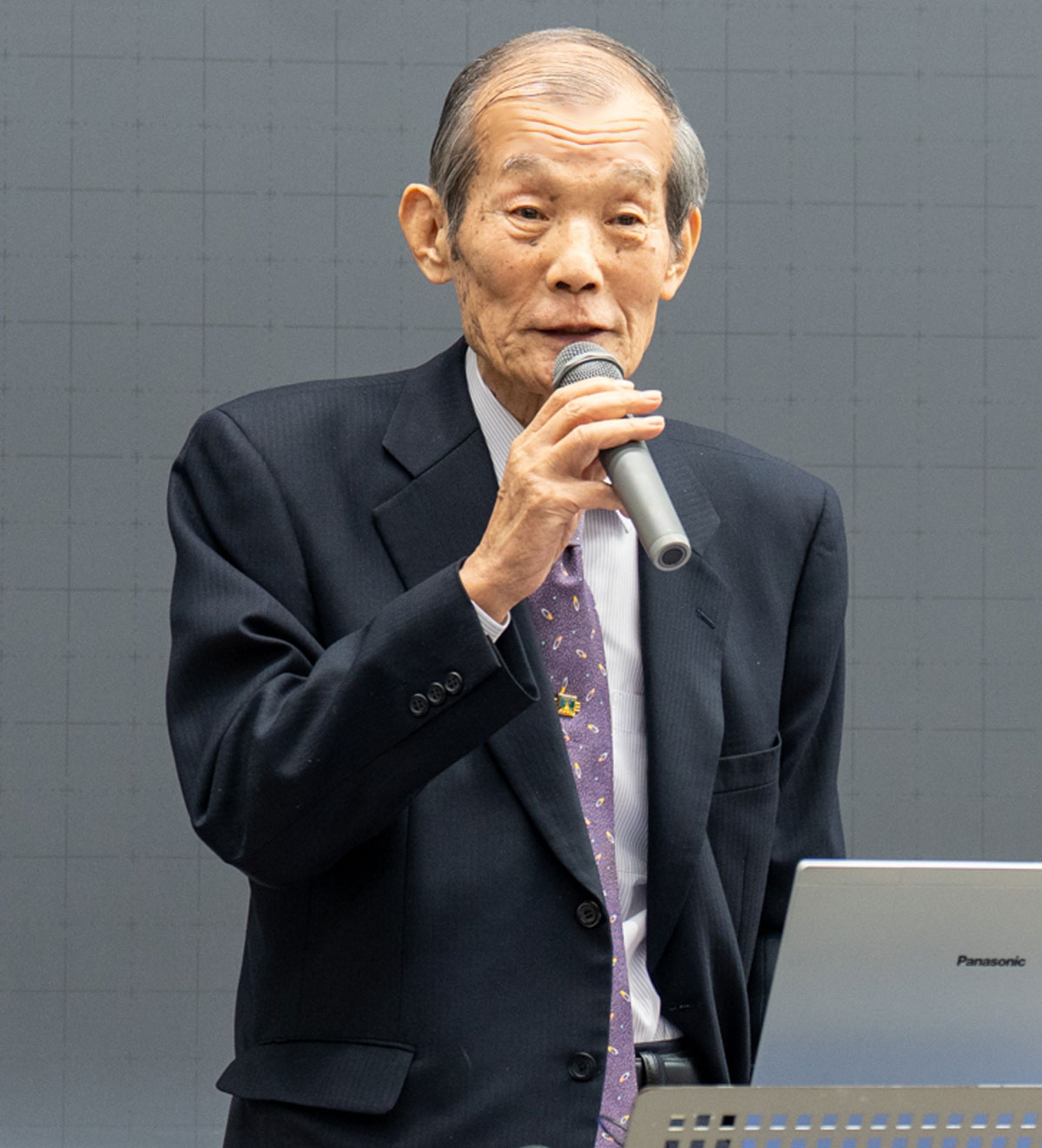
As a special plenary lecture, Professor Jun Akimitsu, Professor Emeritus of Aoyama Gakuin University, gave a lecture entitled "Memories of My Time Aoyama Gakuin University." Professor Akimitsu spoke about his specialty, superconductivity research, and in particular, the topic of the iron-based superconductor MgB₂ (magnesium diboride), which was discovered in the Akimitsu Laboratory in 2001 and attracted great international attention, was powerful and conveyed the passion of that time. Many people from the Akimitsu Laboratory were in attendance, and the atmosphere was warm and gentle as Professor Akimitsu spoke about his memories of his time Aogaku, conveying that many wonderful results were produced within the trusting relationship between Professor Akimitsu and his students. Finally, he said that "the superconducting transition temperature (the temperature at which superconductivity occurs) is determined by luck x perseverance x ideas," and it felt as if he was encouraging us to "have the perseverance (not to give up) to obtain excellent research results."
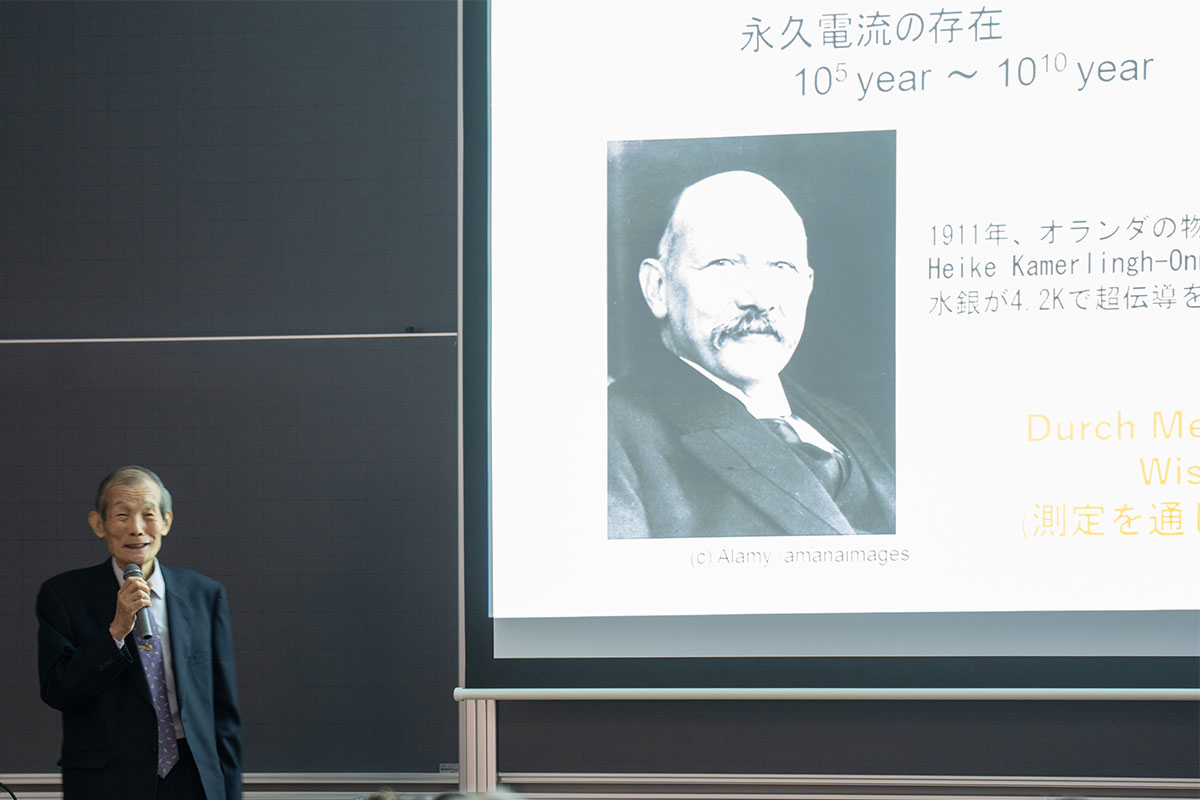 Special plenary lecture by Professor Emeritus Jun Akimitsu
At the end of the plenary session, we introduced "Riko FUTURE," a donation program for College of Science and Engineering that started last year, and asked for support. The 60th anniversary commemorative video "Riko FUTURE" that was screened at the time is now available on YouTube, so please take a look. The plenary session was held in a classroom with a capacity of 300 people, but we were blessed with a large turnout, and it was such a great success that we had to bring in chairs from other classrooms to accommodate everyone.
The second half of the lecture series was a "Meet Up in AGU" event featuring "Introduction to the Latest Research Topics." Research presentations were given in four venues across seven departments, and alumni from each department listened attentively to the latest research findings. Following this, a poster session was held, with presentations by 17 faculty members, as well as 11 doctoral students receiving support from the Japan Science and Technology Agency's "AGU Future Eagle Project," a program supporting next-generation researchers. While there were lively discussions in front of the posters, there were also moments of lively conversation between faculty and alumni, making for a vibrant poster session.
Following the lecture, a commemorative reception was held at a hotel in Machida. Approximately 120 people gathered, including alumni, donors, retired faculty and staff, and current faculty and staff. We asked Executive Trustee Hiroshi Komoda, a member of the first graduating class of the College of Science and Engineering, to give a toast. He recounted, "When I went to the Maesawa Campus the day after the entrance ceremony, there wasn't even a sign, and it looked like a construction site, so I didn't realize it was the Faculty of Science and College of Science and Engineering," which brought smiles to everyone's faces. The reception was a pleasant time filled with interaction among the participants, including speeches by distinguished individuals and a chorus of the college song.
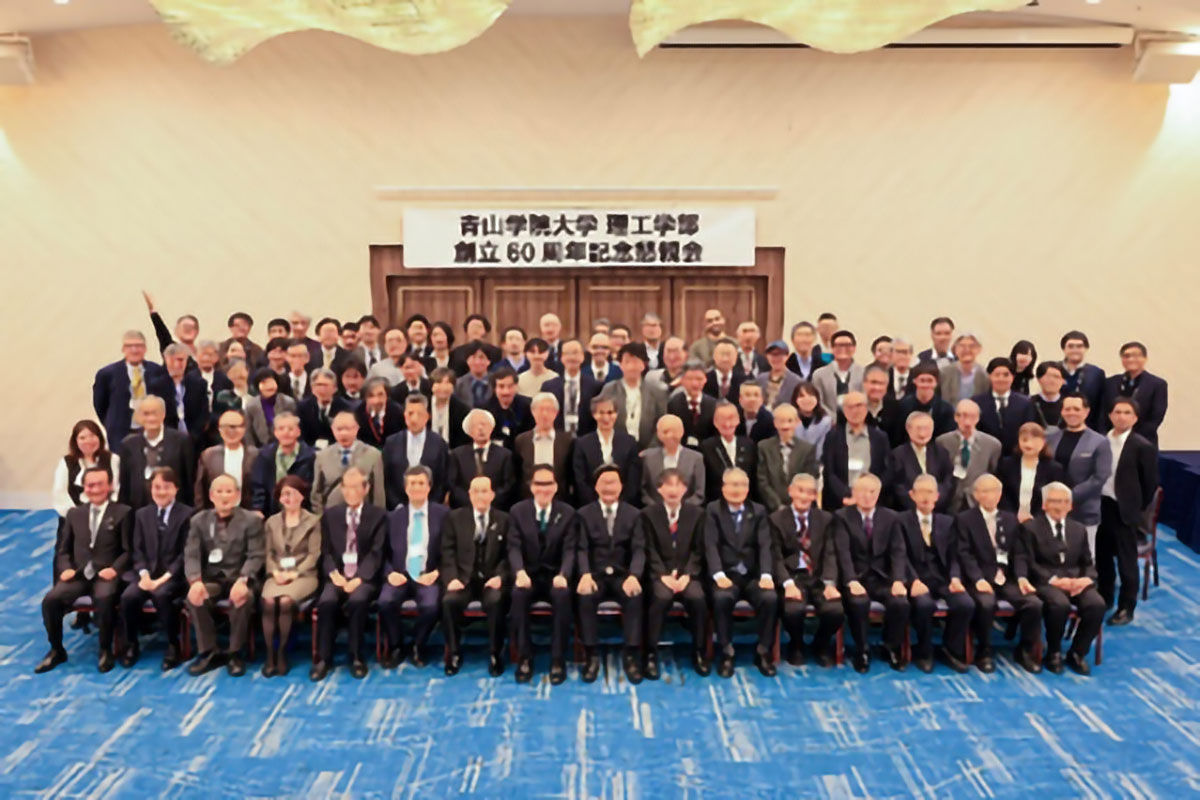
This year's event commemorating the 60th anniversary of the Faculty College of Science and Engineering was a great success, thanks to the support of many faculty members and administrative staff, including faculty members who are alumni of the Faculty of Science and College of Science and Engineering. We would like to express our sincere gratitude to Professor Jun Akimitsu, who kindly agreed to give a lecture, and to everyone who cooperated. We intend to do our utmost to ensure that the College of Science and Engineering can continue to develop for the next 75, 100 years and beyond, and that we can pass on its legacy to the future. We would appreciate your continued support for College of Science and Engineering.
Pre-event
Prior to the main event in the afternoon, the morning included a "Research Facility and Laboratory Tour" and a "College of Science and Engineering 60th Anniversary Commemorative Service." A "Service Lunch" was also provided in the cafeteria, setting a lively start to the afternoon's program.
Research facility and laboratory tours
Many people, including alumni and their families, attended the event, providing a valuable opportunity for them to directly experience the cutting-edge research being conducted by our university's Faculty of College of Science and Engineering.
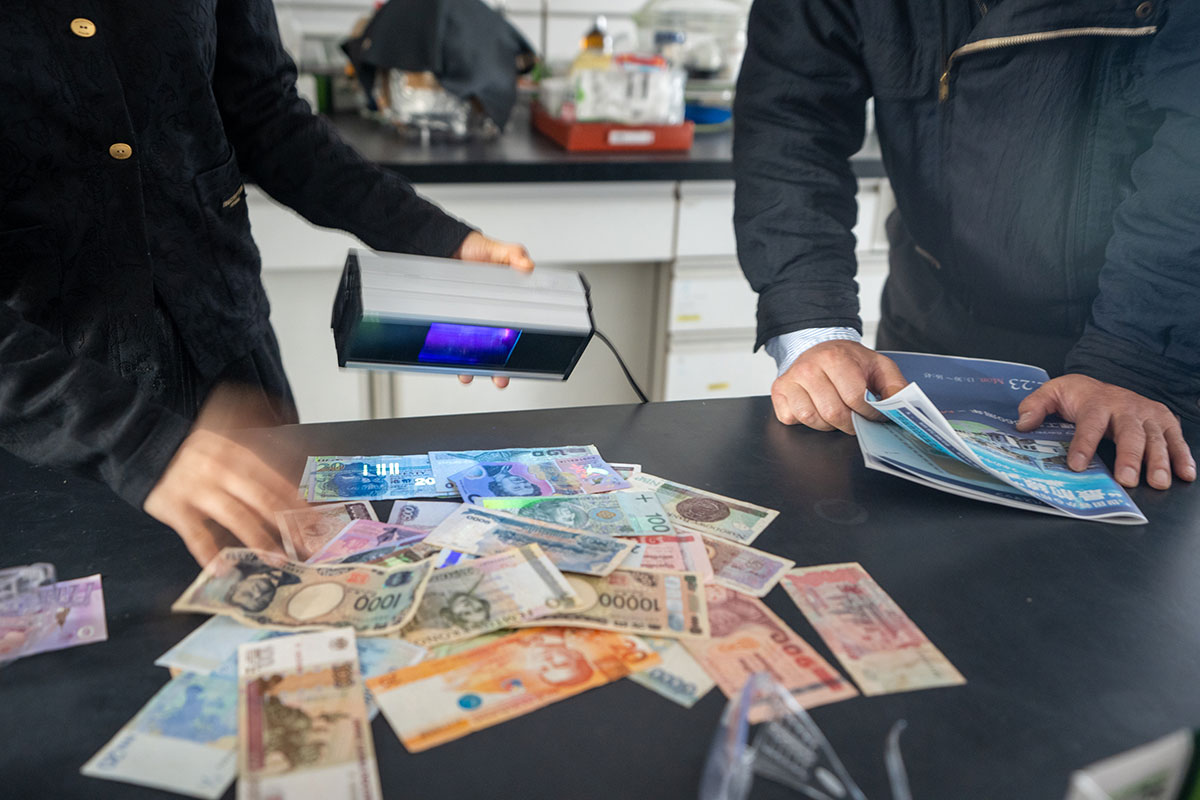 Hasegawa Laboratory, Department of Chemistry and Biological Science
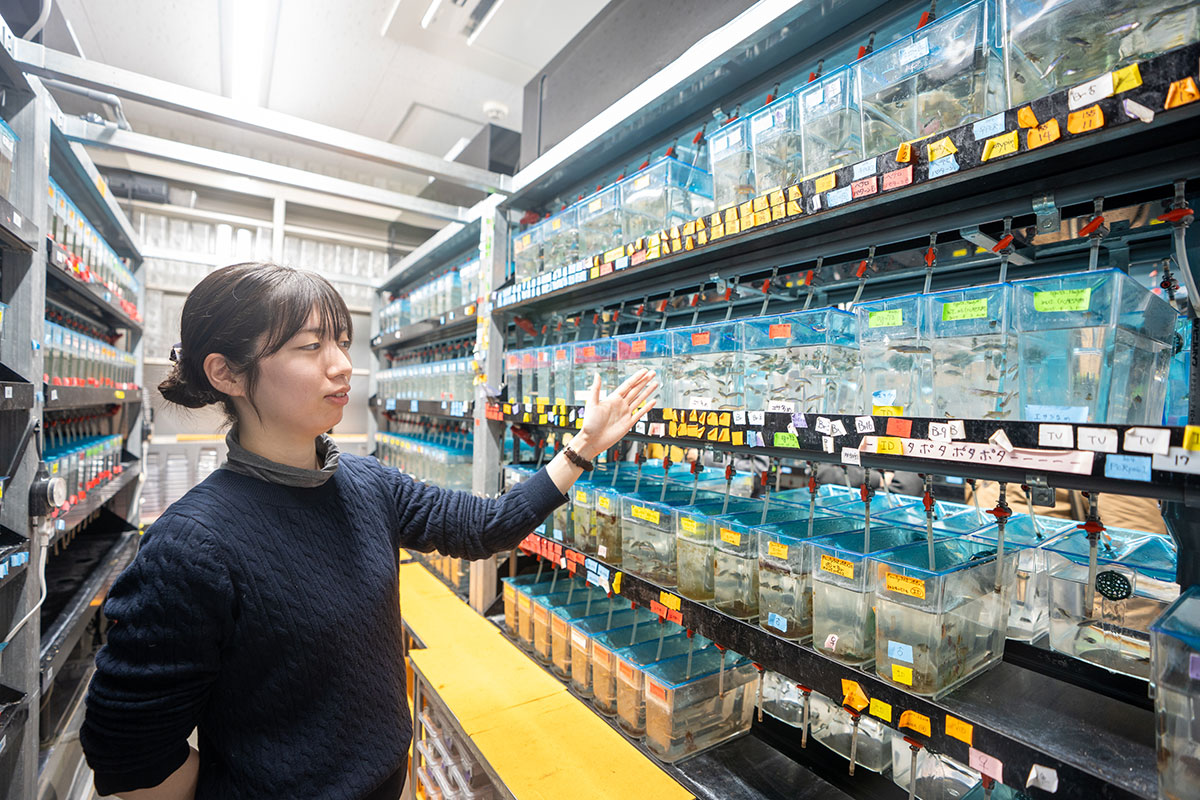 Hirata Laboratory, Department Department of Chemistry and Biological Science
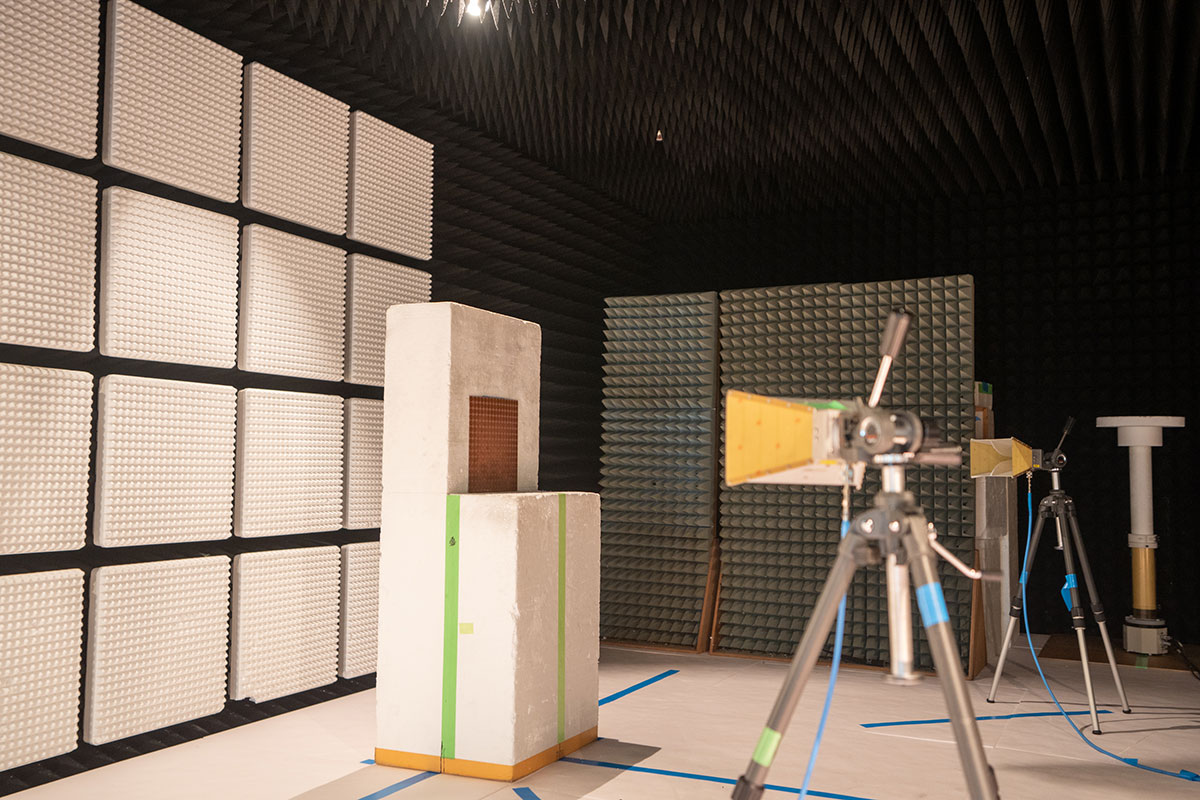 Suga Laboratory, Department Department of Electrical Engineering and Electronics
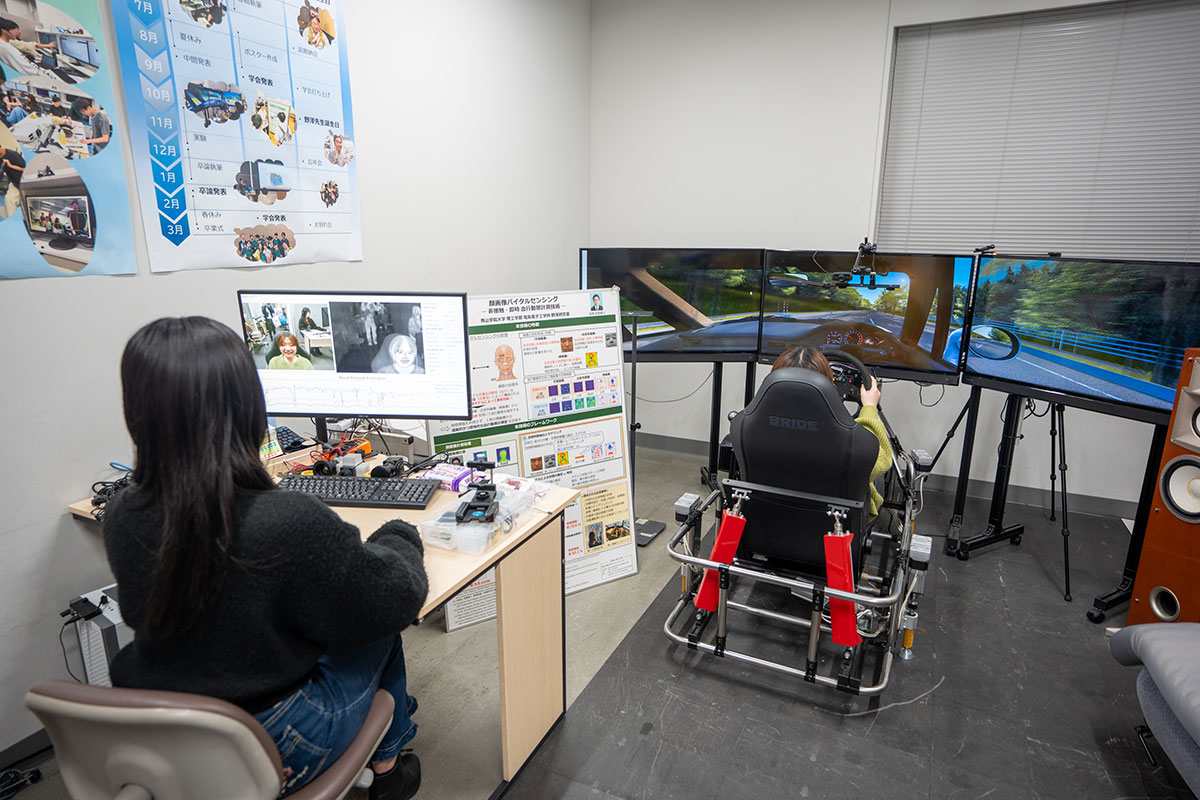 Nozawa Laboratory, Department Department of Electrical Engineering and Electronics
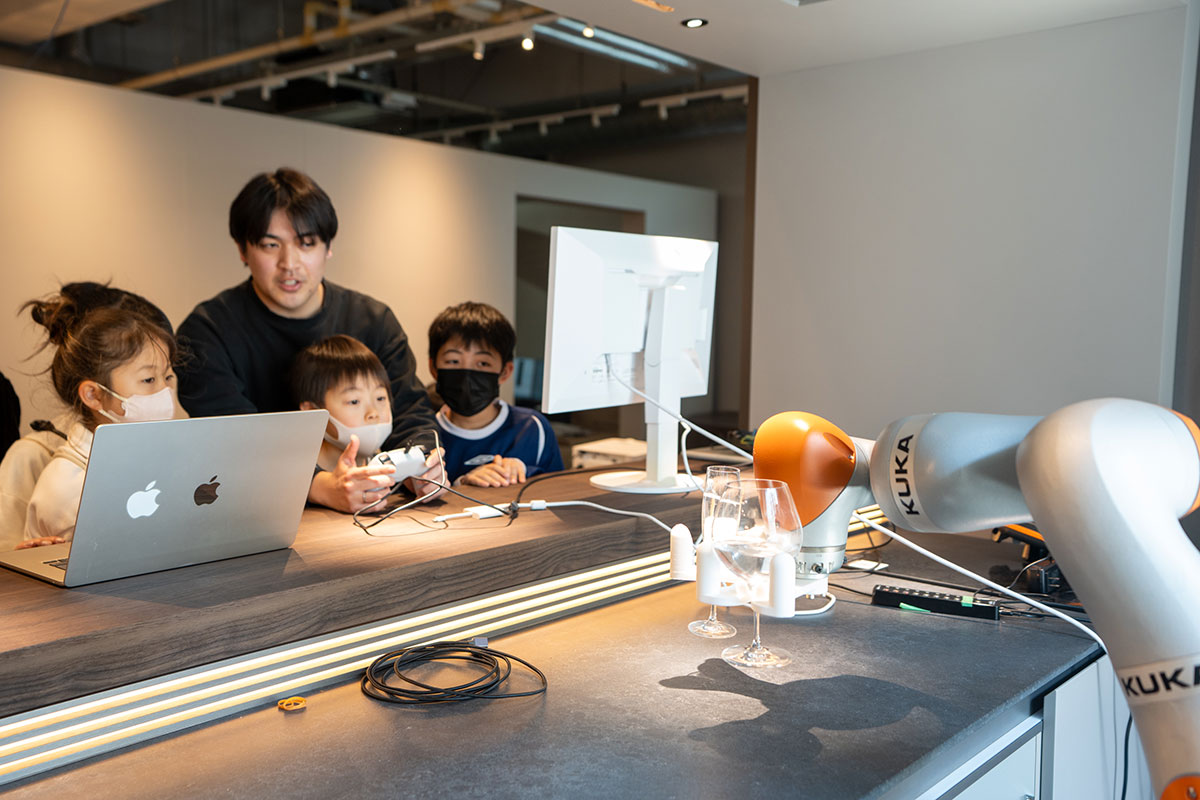 Department Department of Mechanical Engineering Tasaki Laboratory
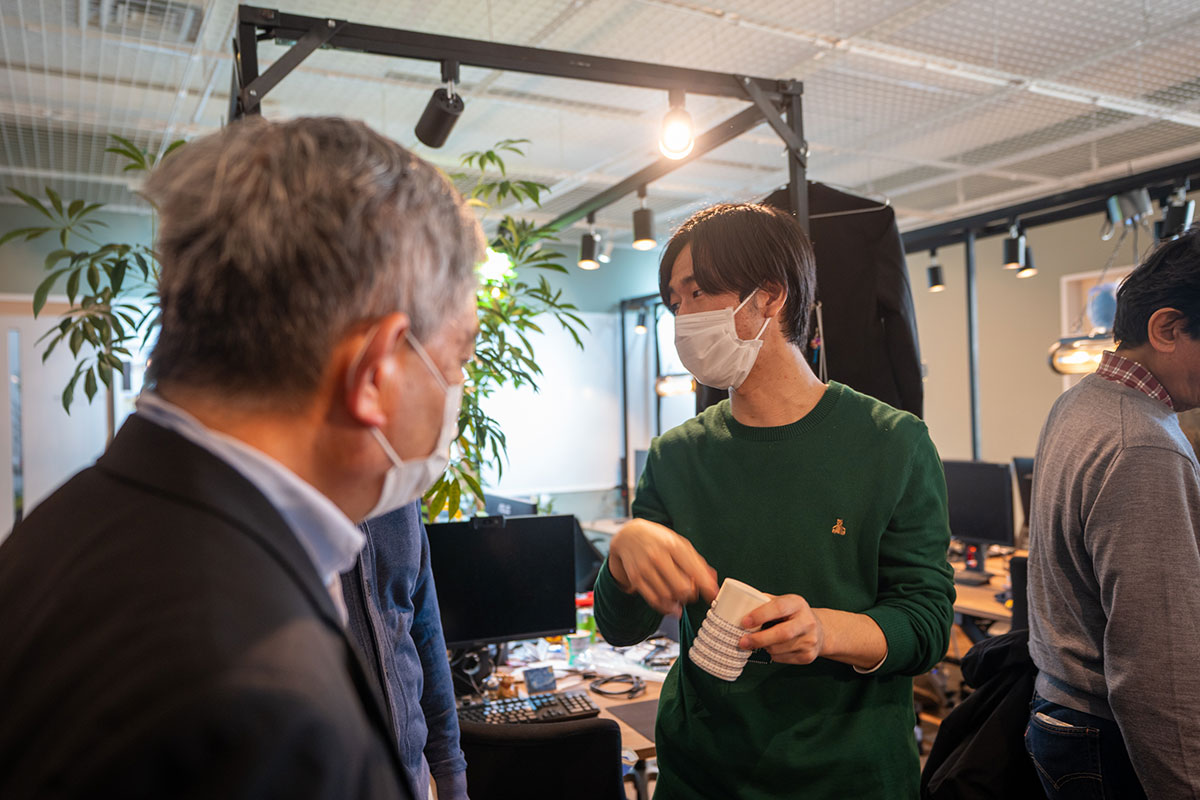 Ito Laboratory, Department Department of Integrated information technology
College of Science and Engineering 60th Anniversary Service
Associate Professor Yuka Wade, Chief religious affairs for College of Science and Engineering, conducted a commemorative service College of Science and Engineering 60th anniversary at Wesley Chapel.
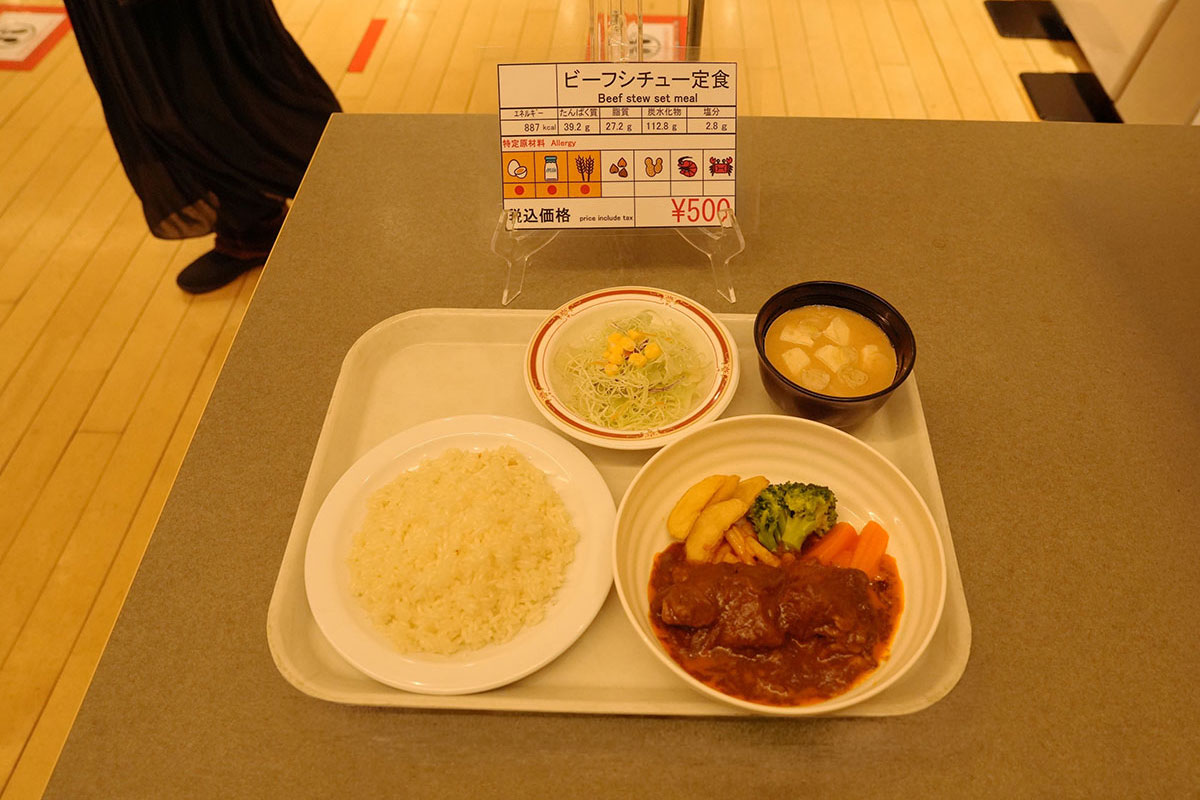
Service lunch
In the cafeteria, we offered a service lunch that included beef stew, a recreation of a menu item from the cafeteria during the Setagaya campus era.
[Special Plenary Lecture] Memories of my time at Aogaku University
Professor Jun Akimitsu, Professor Emeritus of Aoyama Gakuin University, gave a special plenary lecture. He shared fond memories of his time at the Setagaya campus, and the packed venue was filled with a warm and friendly atmosphere.
Memories from my time at Aogaku University
Professor Emeritus, Aoyama Gakuin University
Specially Appointed Professor, Okayama University
Visiting Professor, University of Electro-Communications
Jun Akimitsu He withdrew from the doctoral program at the Graduate School of Science, University of Tokyo in 1970. After serving as an assistant at the Institute for Solid State Physics, University of Tokyo, and as an associate professor and professor Aoyama Gakuin University University, he became Professor Emeritus Aoyama Gakuin University in 2025. He is engaged in research on superconductors and magnetic materials.
Today, I would like to share some memories from my time Aogaku, along with my research in my field of specialization, "superconductivity."
My research career began during my doctoral studies, when I measured the two-dimensional quasi-elastic scattering of the magnetic material MnTiO3 using neutron diffraction. Later, I became an assistant at the Institute for Solid State Physics, University of Tokyo, where I set up a polarized neutron diffraction apparatus with Associate Professor Ito and conducted research on various magnetic materials. In that research, I succeeded in directly verifying the intriguing phenomenon of orbital alignment in the two-dimensional ferromagnet K2CuO4.
After that, I became an associate professor at Aoyama Gakuin University, but I felt it was difficult to provide many students with research topics using only large-scale equipment for neutron diffraction research, so I gradually shifted the research theme to "the search for new superconductors." On the other hand, I realized the joy of teaching students through the classes I taught. After that, I made many memories, such as going out for drinks with students, holding research presentations at the Shonan International Village Center and other venues, and inviting them to my home once a year.
My pride and joy during my time at Aogaku Aogaku University was probably that my research lab produced the most master's students at the time, and that many of them went on to doctoral programs. My lab had a diverse group of students, including not only high-achieving students but also students who had to repeat a year, and they all conducted their research freely. Many couples from the lab got married, and my research life surrounded by such unique students was truly enjoyable.
Now, I'd like to talk a little about research on "superconductivity."
Superconductivity is a phenomenon in which a particular material loses its electrical resistance when cooled to a certain temperature (the superconducting transition temperature Tc). It is important to note that most metals we know have resistance, and Ohm's law applies to them. Therefore, the property of zero resistance only appears in specific materials, and the superconducting phenomenon cannot be explained by classical physics; in other words, it is a quantum phenomenon. This phenomenon was discovered in 1911 by physicist Heike Kamerlingh-Onnes [Figure 1] in experiments using mercury, and under superconductivity, the Meissner effect, or perfect diamagnetism (simply put, the inability of a magnetic field to penetrate the superconductor), also appears. This property, which is also applied to linear motor cars, was discovered in 1933 by W. Meissner and R. Ochsenfeld.
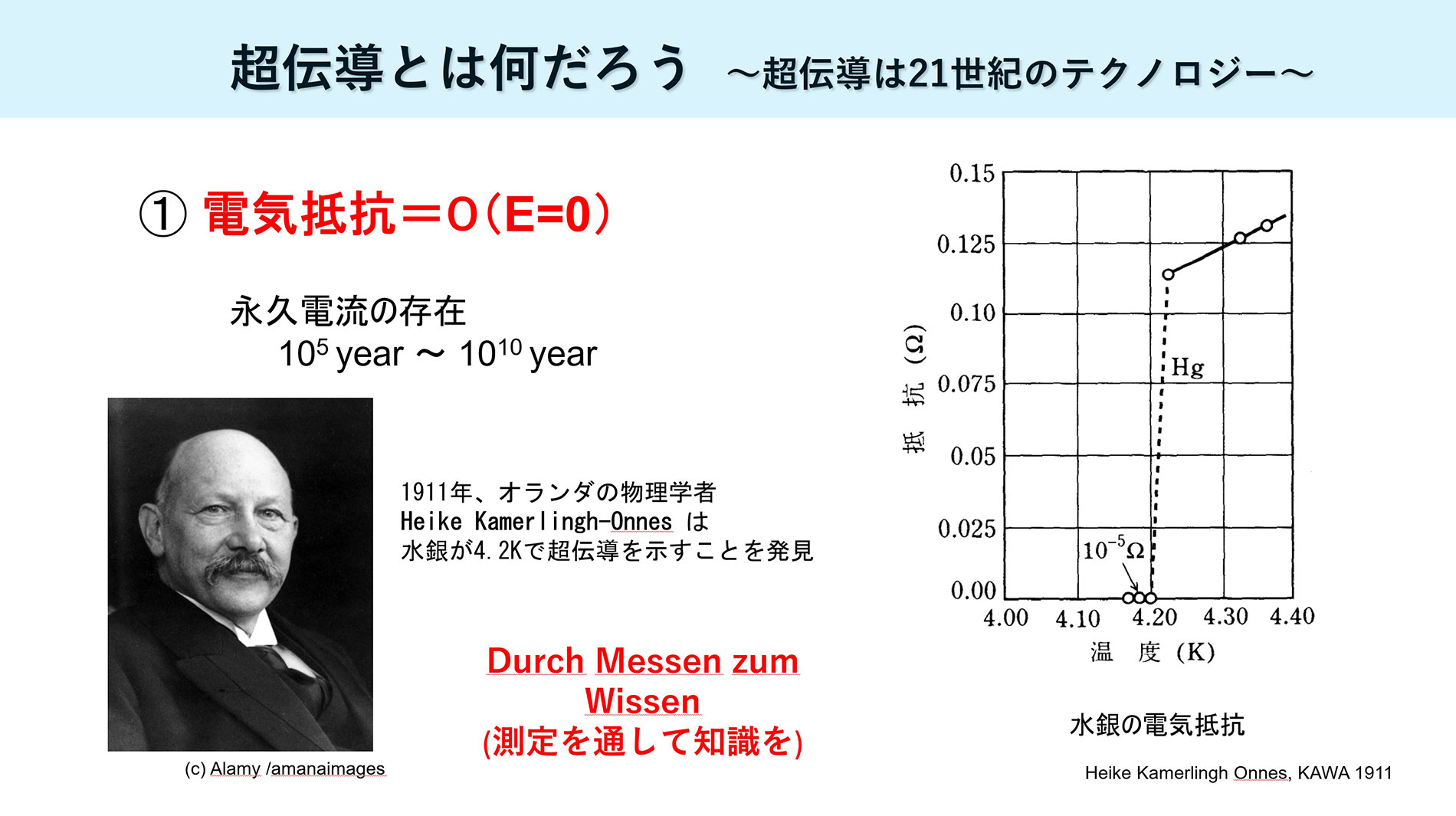 Figure 1
Since then, many researchers have continued to strive to discover superconducting materials. In the search for materials, the guideline set by American physicist Bernd T. Matthias that "oxides are unsuitable" was considered important, but in 1986 a major event occurred. JG Bednorz and K.A. Muller of IBM Zurich Research Laboratory discovered a new superconductor from copper oxide [Figure 2].
Furthermore, Paul Ching-Wu Chu discovered an oxide superconductor called YBa₂Cu₃ > Oₙ-δ, which caused a great stir in the world of physics [Figure 3].
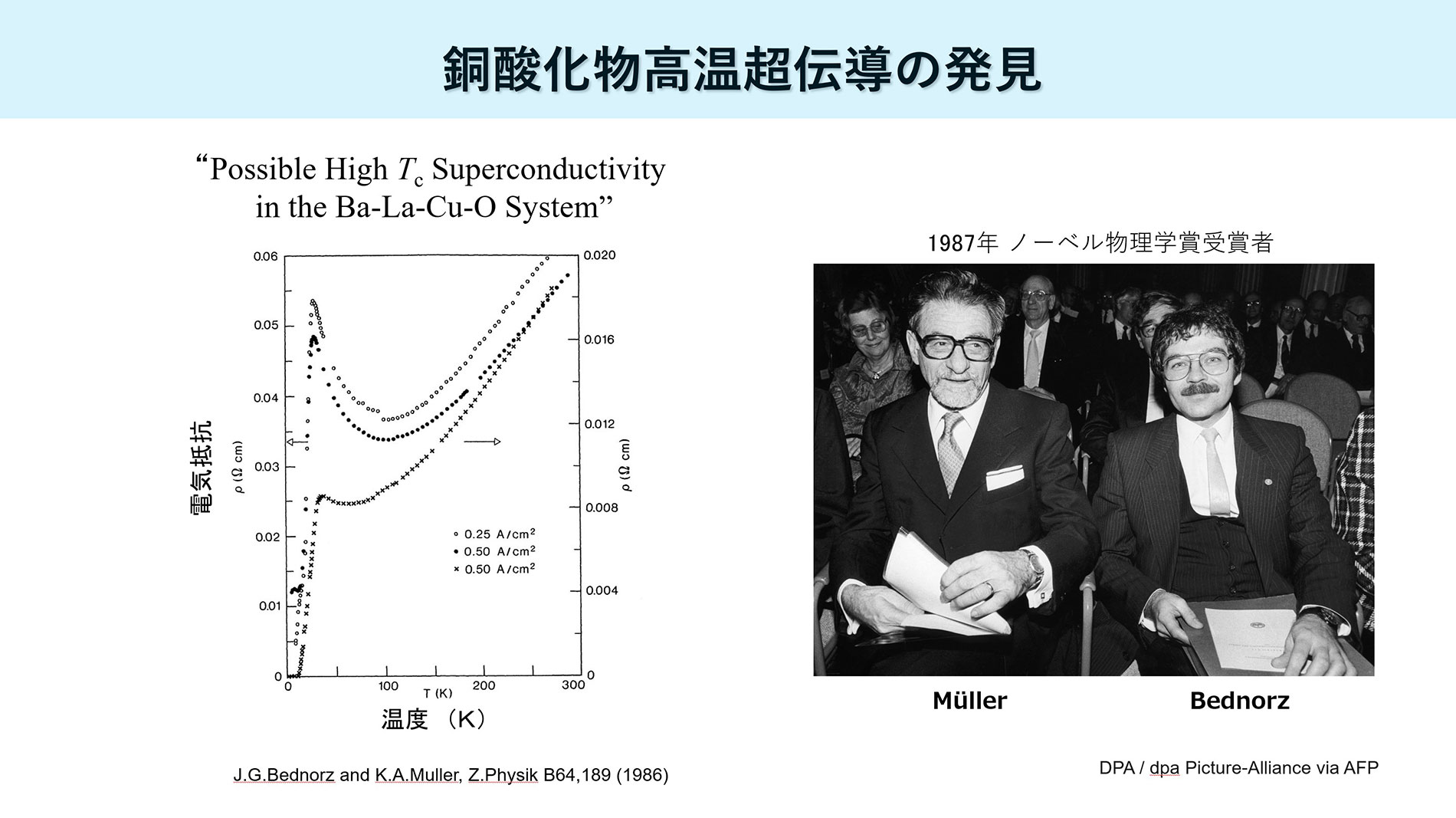 Figure 2
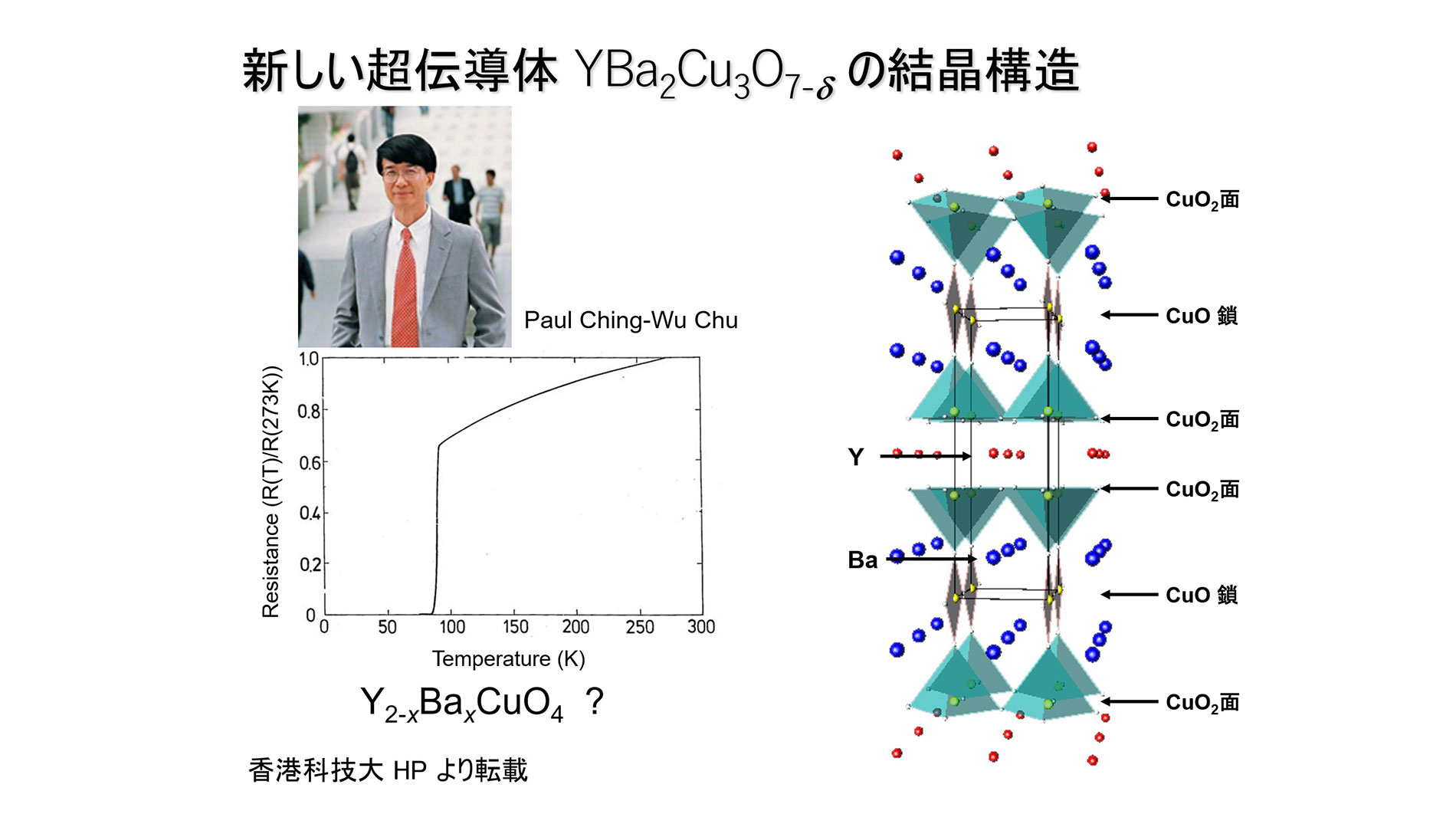 Figure 3
As you can see in [Figure 4], the discovery of this copper oxide demonstrates just how rapidly the Tc value increased.
When I considered what to do next, the first thing I thought of was whether I could create similar compounds using substances with similar ionic radii, such as La³⁺ and Ba²⁺ [Figure 5].
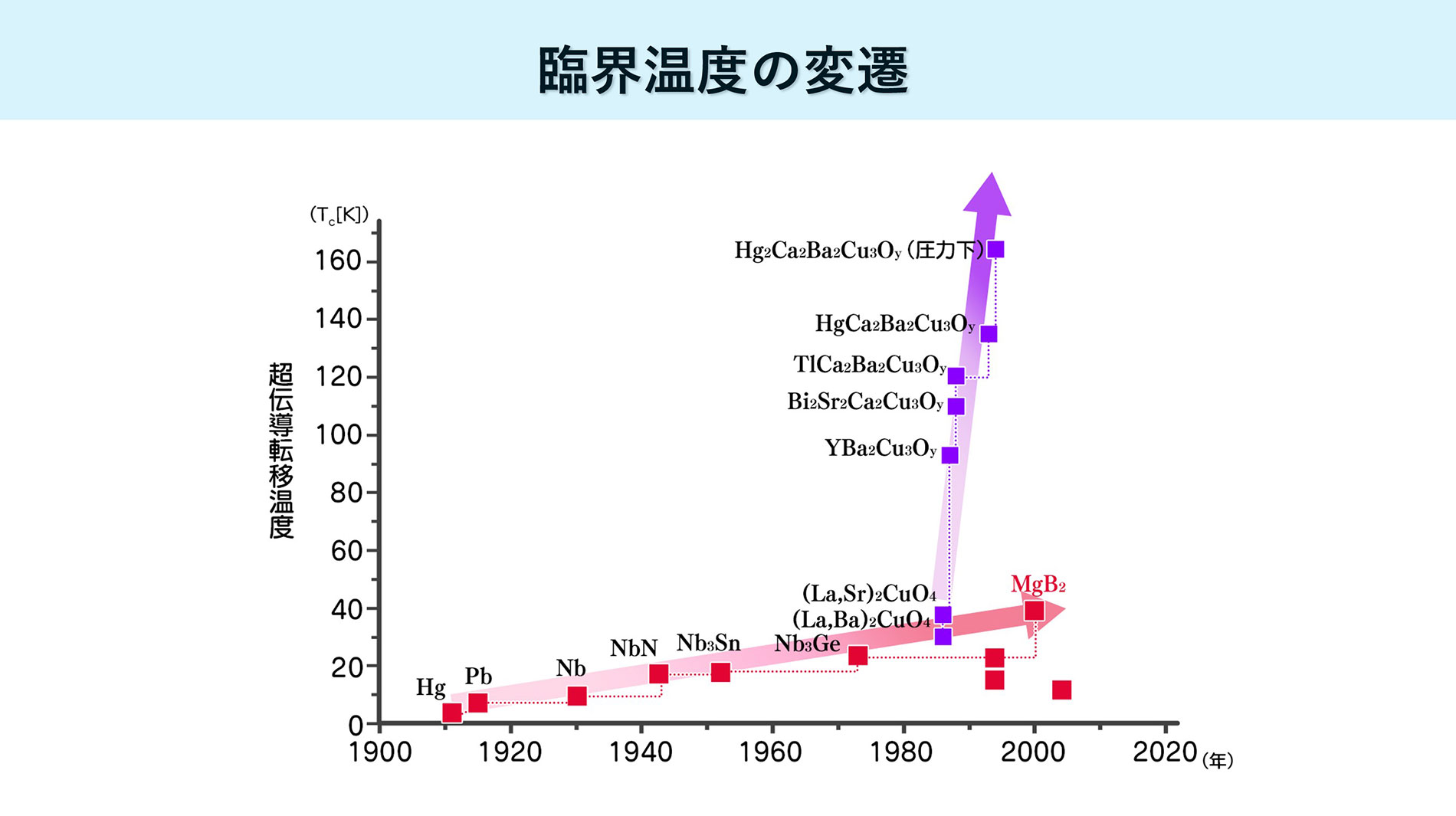 Figure 4
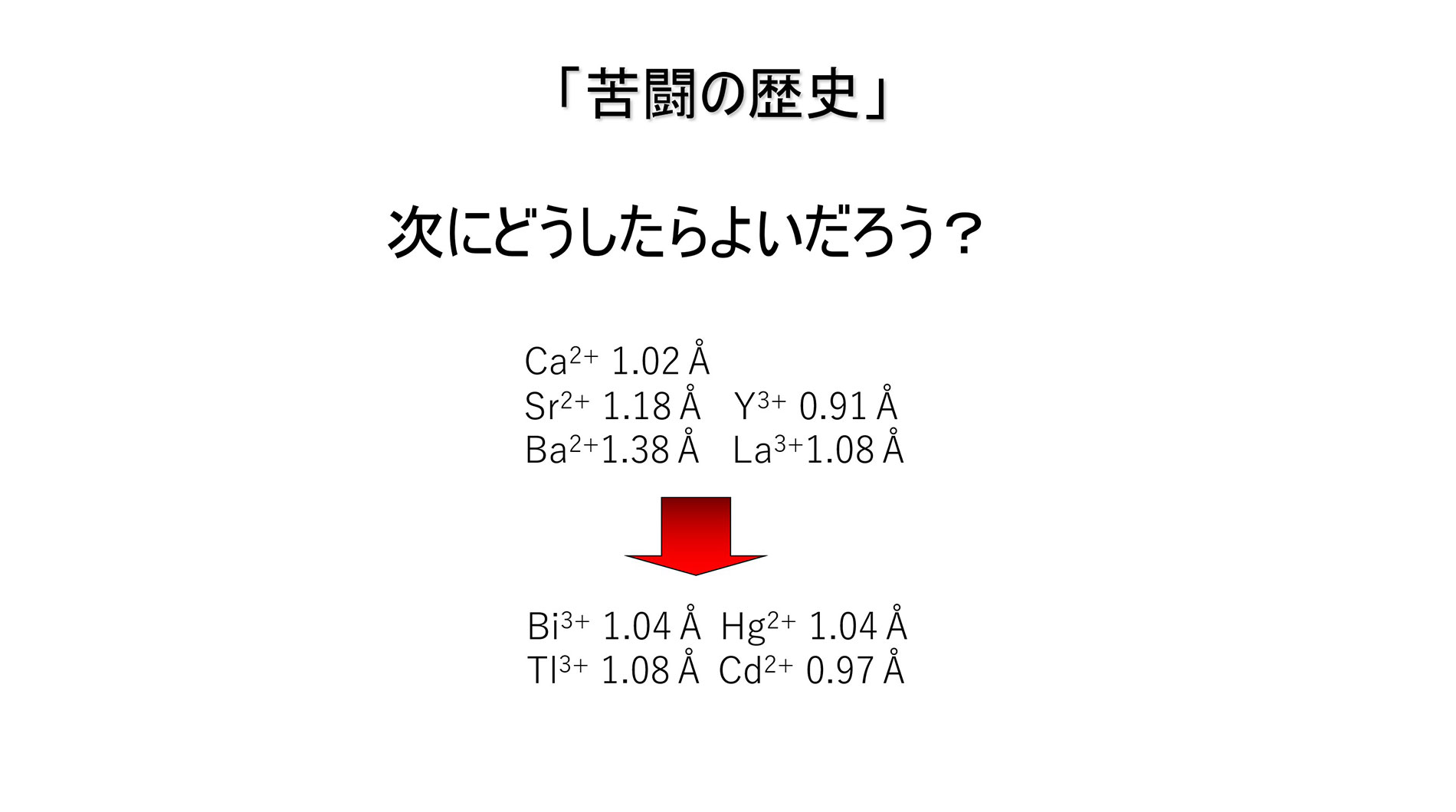 Figure 5
Unfortunately, however, candidate ions such as Hg²⁺, Tl³⁺, and Cd²⁺ are toxic, and because of the risk of accidents occurring in a research lab with many students, we decided against trying them, and only Bi³⁺ was attempted [Figure 6]. In this experiment, we found a superconductor called Bi₂Sr₂CuO₆ with a Tc of 8K, but this Tc was so low that it attracted little attention.
However, Maeda later discovered a superconductor with Tc = 110K using Bi-Sr-Ca-Cu-O [Figure 7]. In fact, before this announcement, a student in my lab suggested adding Ca, but at the time I was convinced that adding Ca²⁺ to Sr²⁺ would result in the two ions forming a solid solution and no new material being created, so I did not conduct the experiment. This was a great regret for me, as I was trapped by the conventional wisdom of the time.
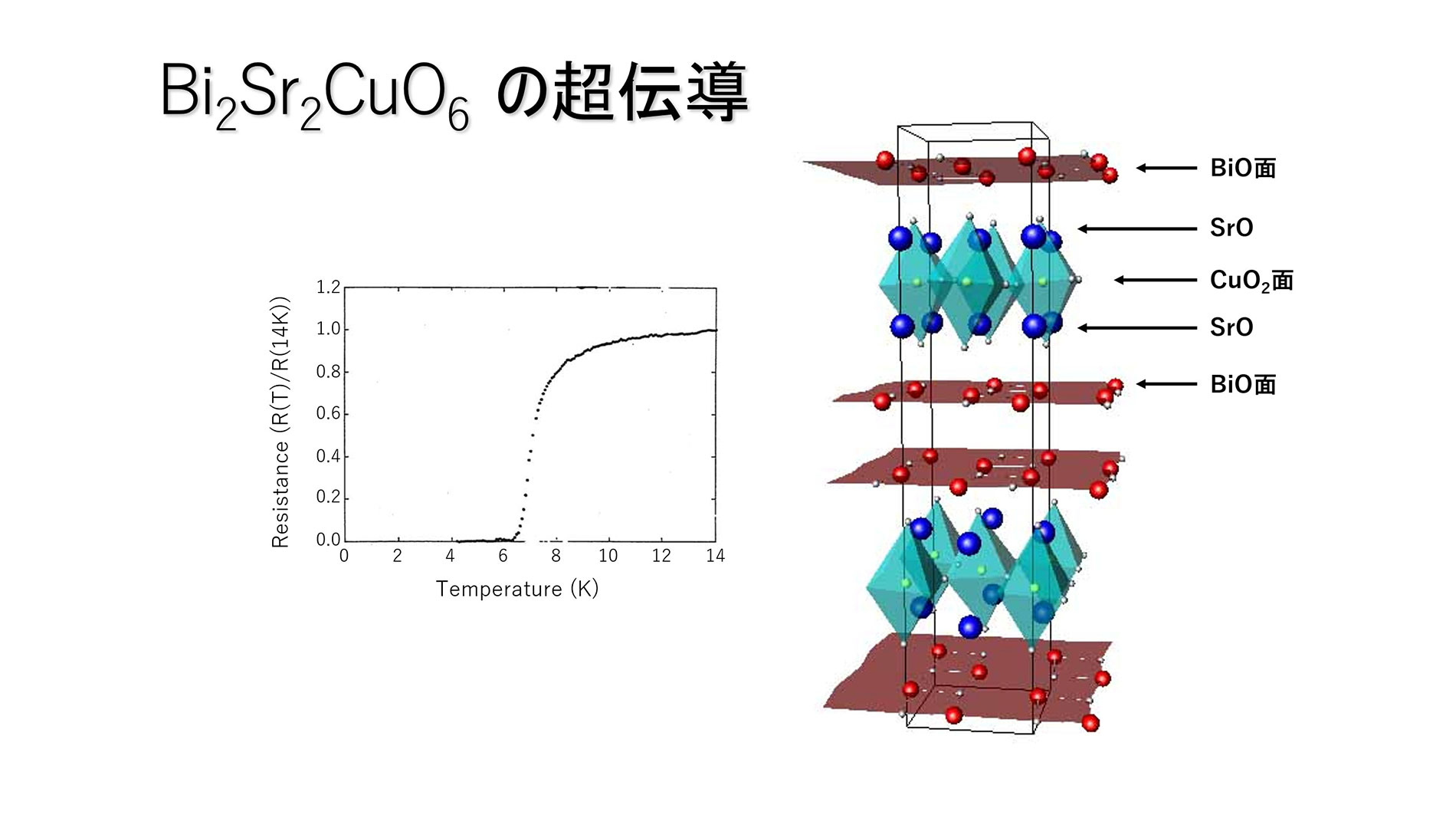 Figure 6
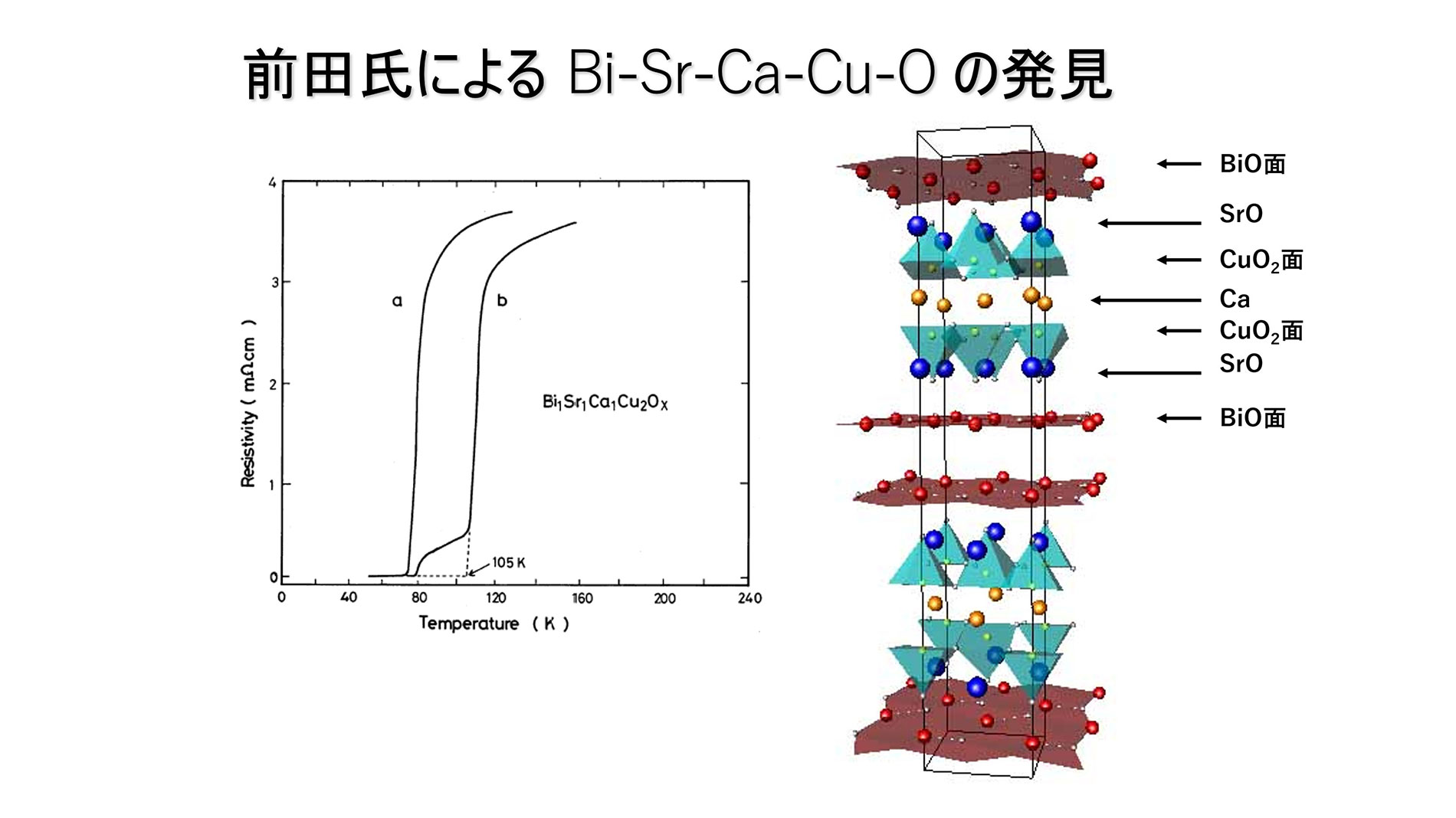 Figure 7
So, we decided to change our approach and, as a research group, shift our focus from limiting ourselves to oxides alone to exploring superconductors with a broader perspective. This proved successful, leading to numerous discoveries [Table 1] [Table 2].
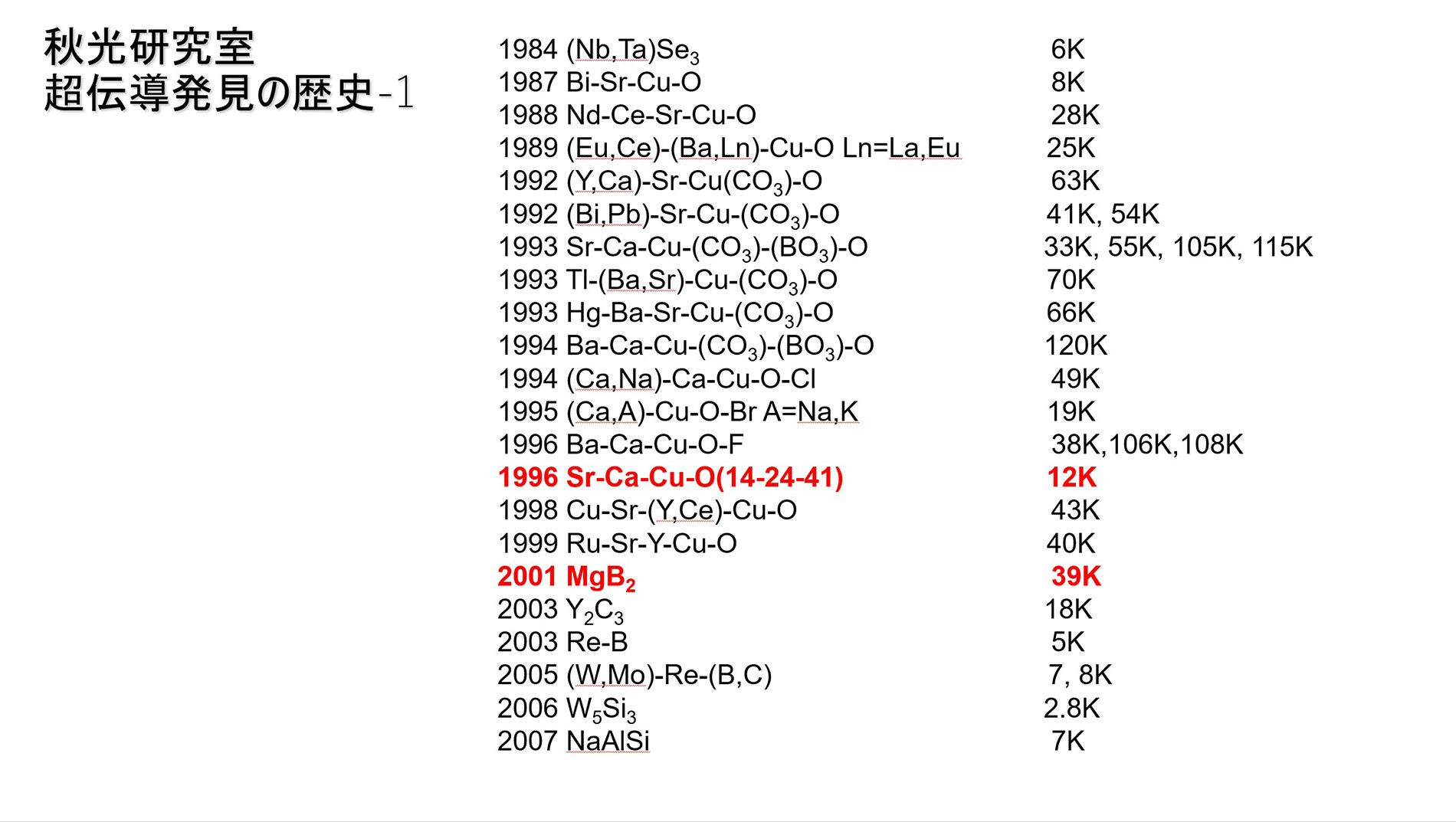 Table 1
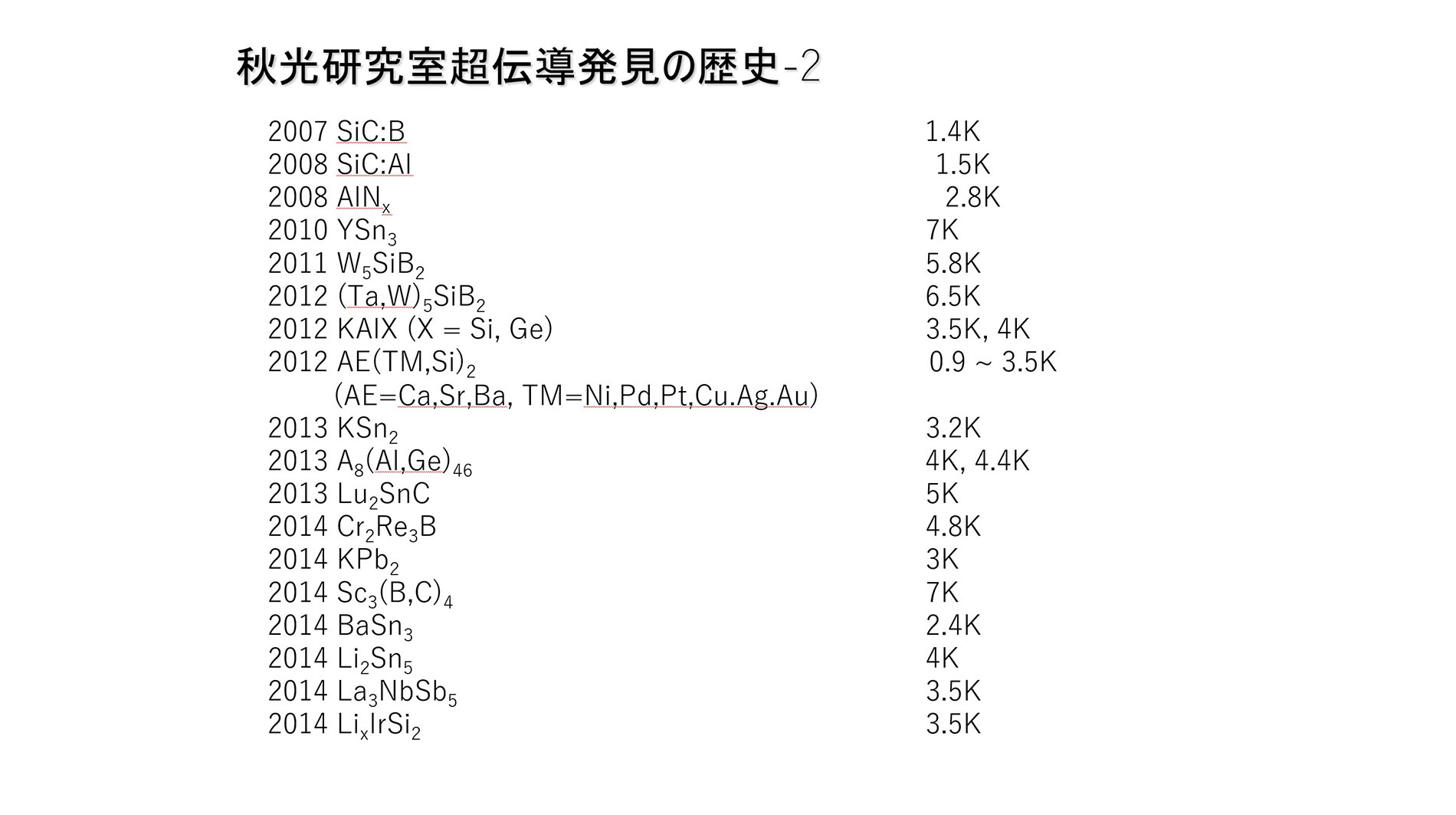 Table 2
A prime example is the superconducting material MgB₂. This crystal has a honeycomb lattice structure and exhibits superconductivity at a relatively high temperature of 39K absolute. The research members at the time were Yuji Zenitani, Takahiro Muranaka, Akio Nakagawa, and Jun Nagamatsu, who discovered this material. I remember Nagamatsu rushing into the lecture hall where I was teaching and telling me, "Professor, we've found it!" The students in the classroom gave a big round of applause [Figure 8][Figure 9].
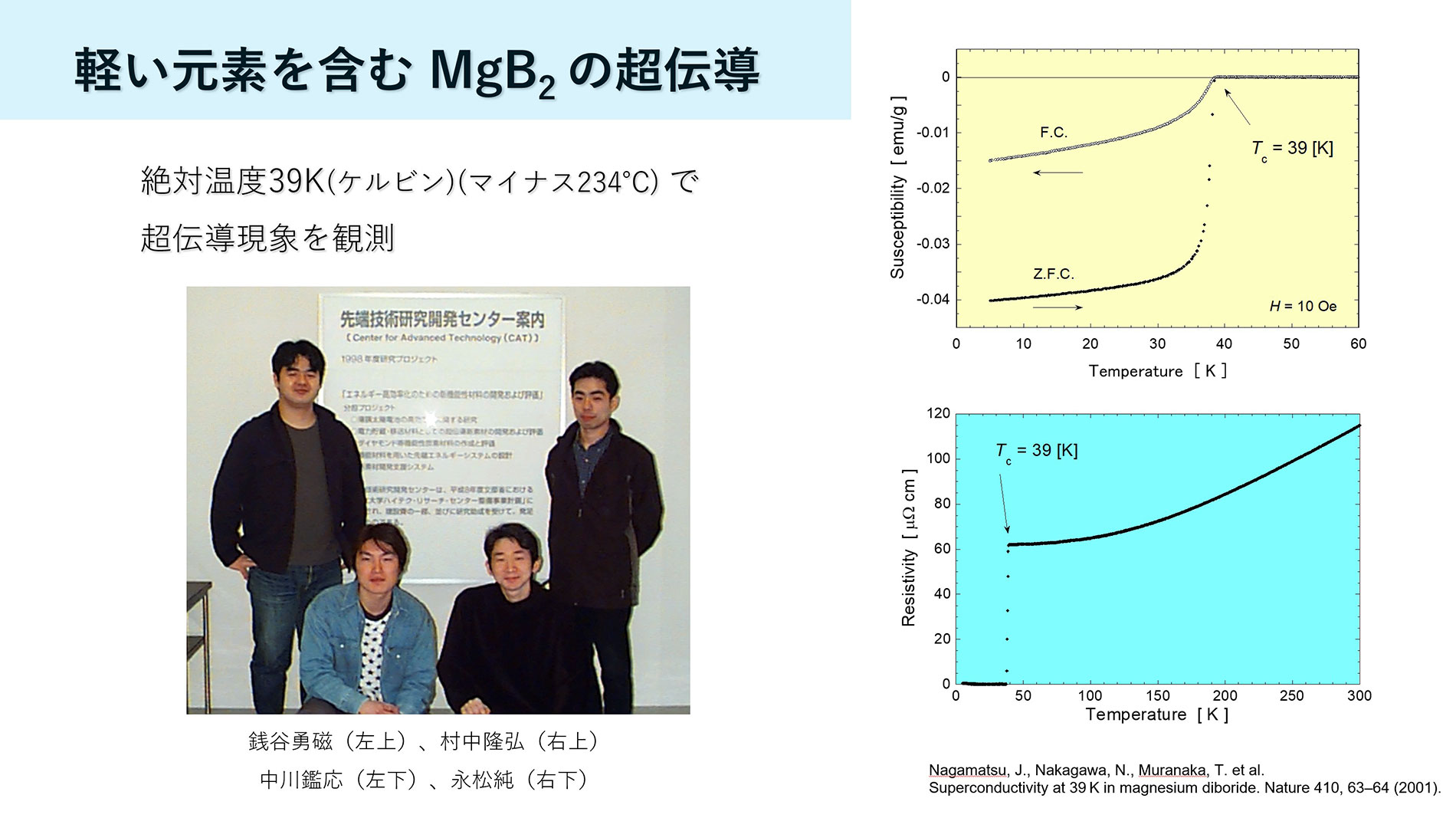 Figure 8
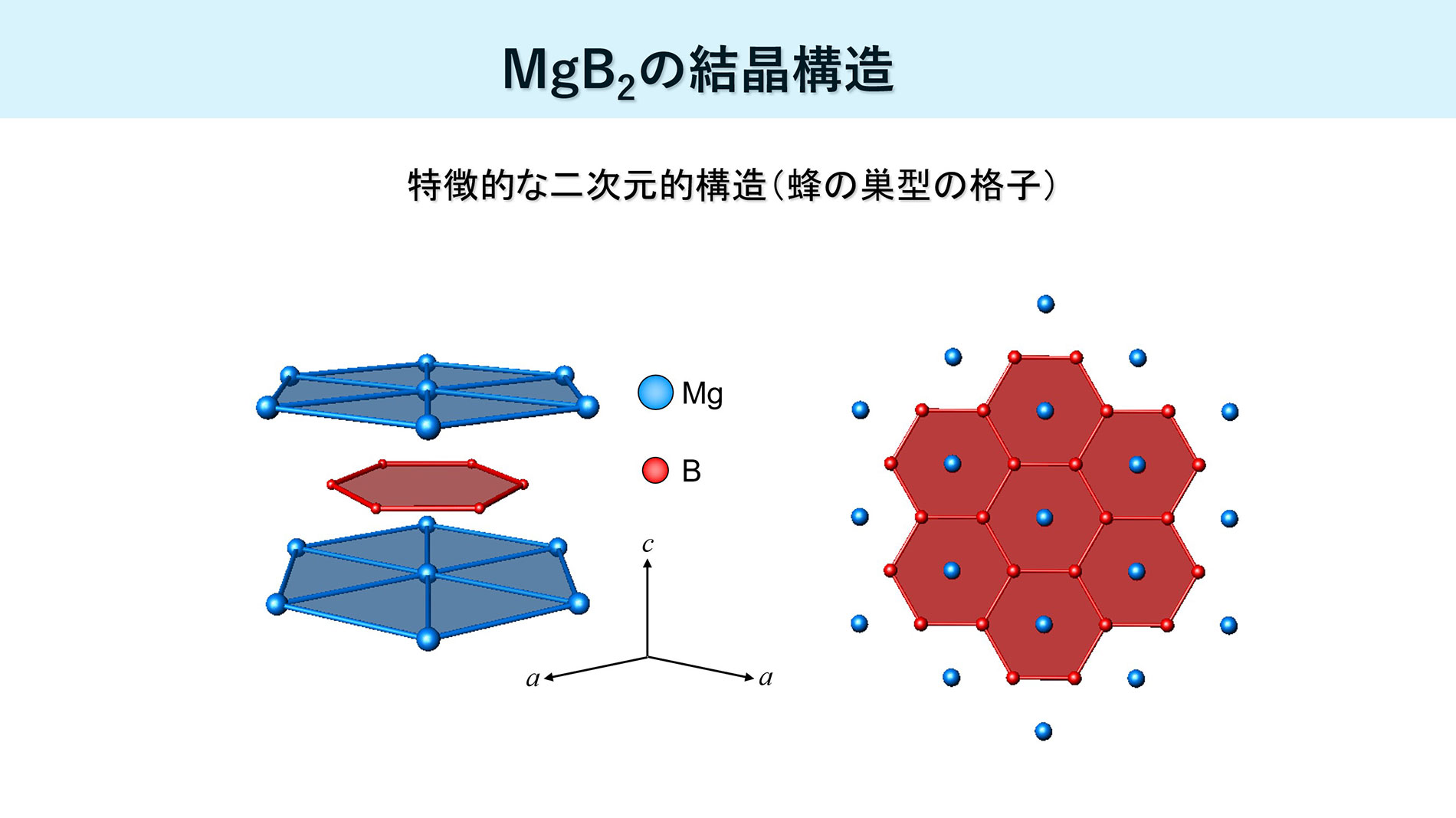 Figure 9
Incidentally, Bernd T. Matthias had studied almost all metal diborides (MB2 type), but for some reason, MgB2 was the only one he overlooked. It could be said that this led to the current discovery, so it seems that "luck" also plays a role in research [Figure 10].
The applications of superconductivity are diverse, including medical technologies such as MRI, transportation such as maglev trains, and information technology. In particular, in the energy sector, it is attracting great attention as a fundamental technology for a "superconducting Earth power network" that efficiently utilizes renewable energy [Figure 11].
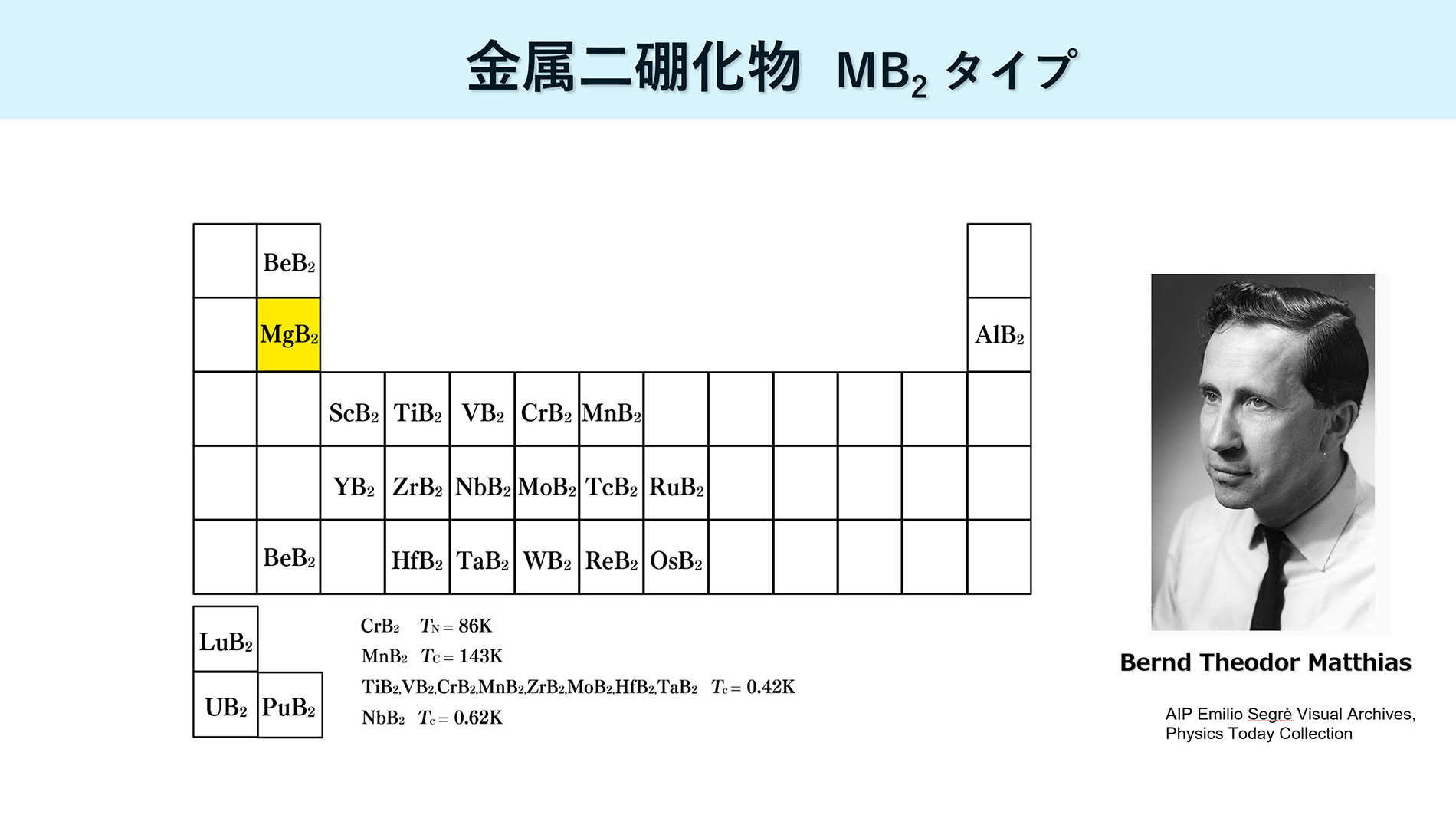 Figure 10
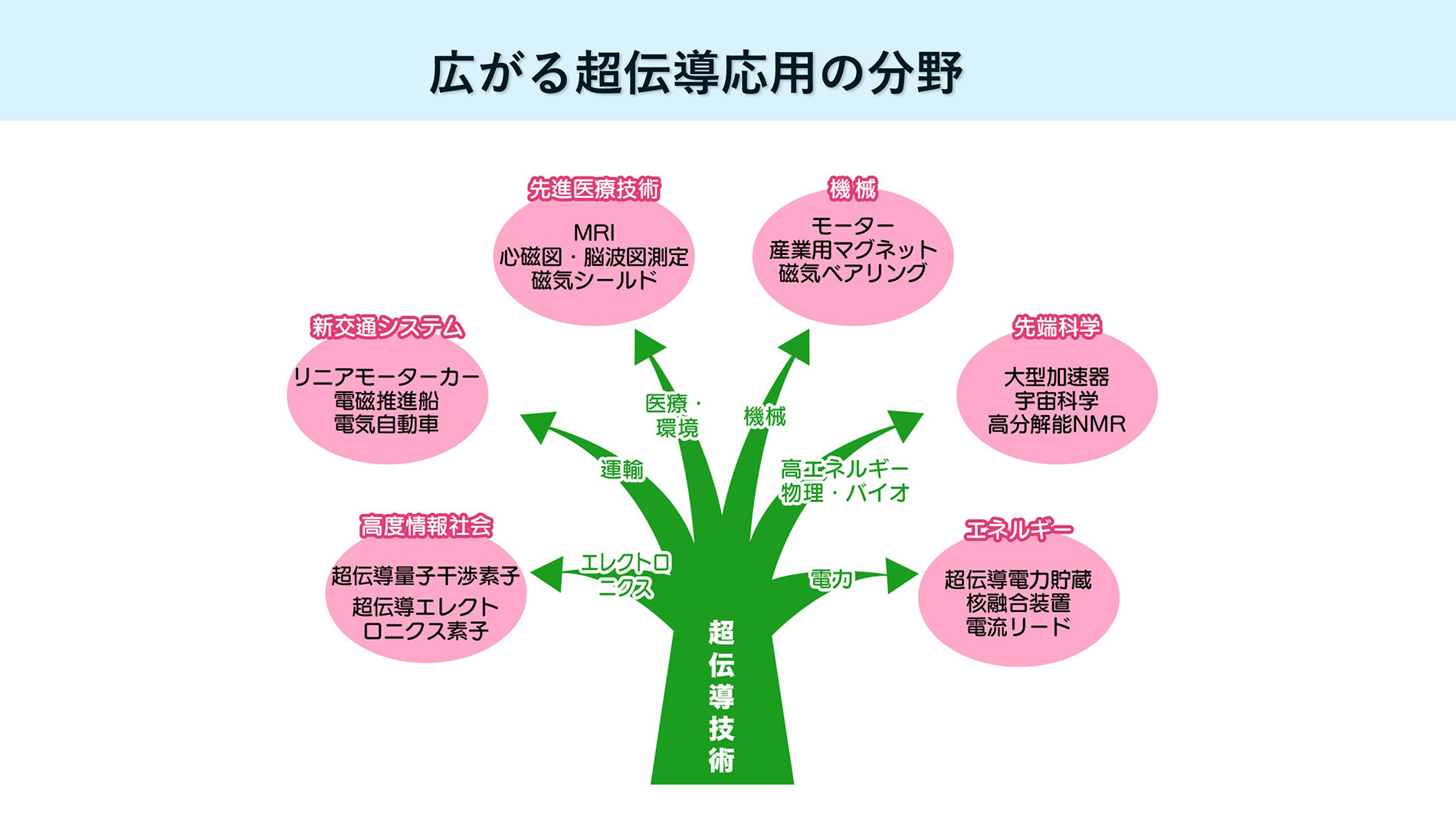 Figure 11
I express the elements necessary for research as a multiplication of "luck x perseverance x ideas" [Figure 12]. It is important to persevere and continue to challenge yourself in order to attract luck. Also, I continue my research today, encouraged by the saying, "The darkest hour is just before dawn" [Figure 13] [Figure 14]. I hope you all will also do your best.
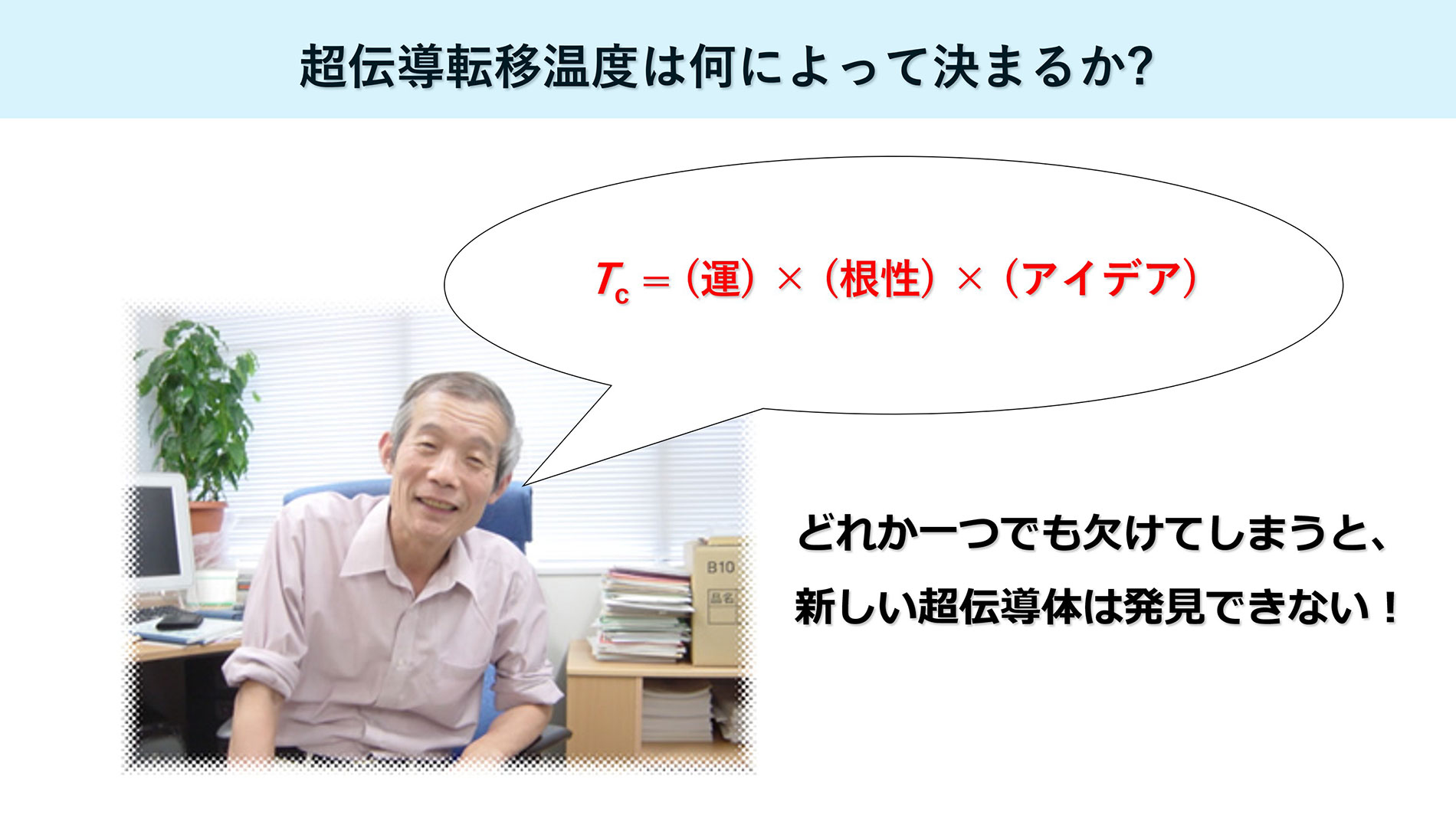 Figure 12
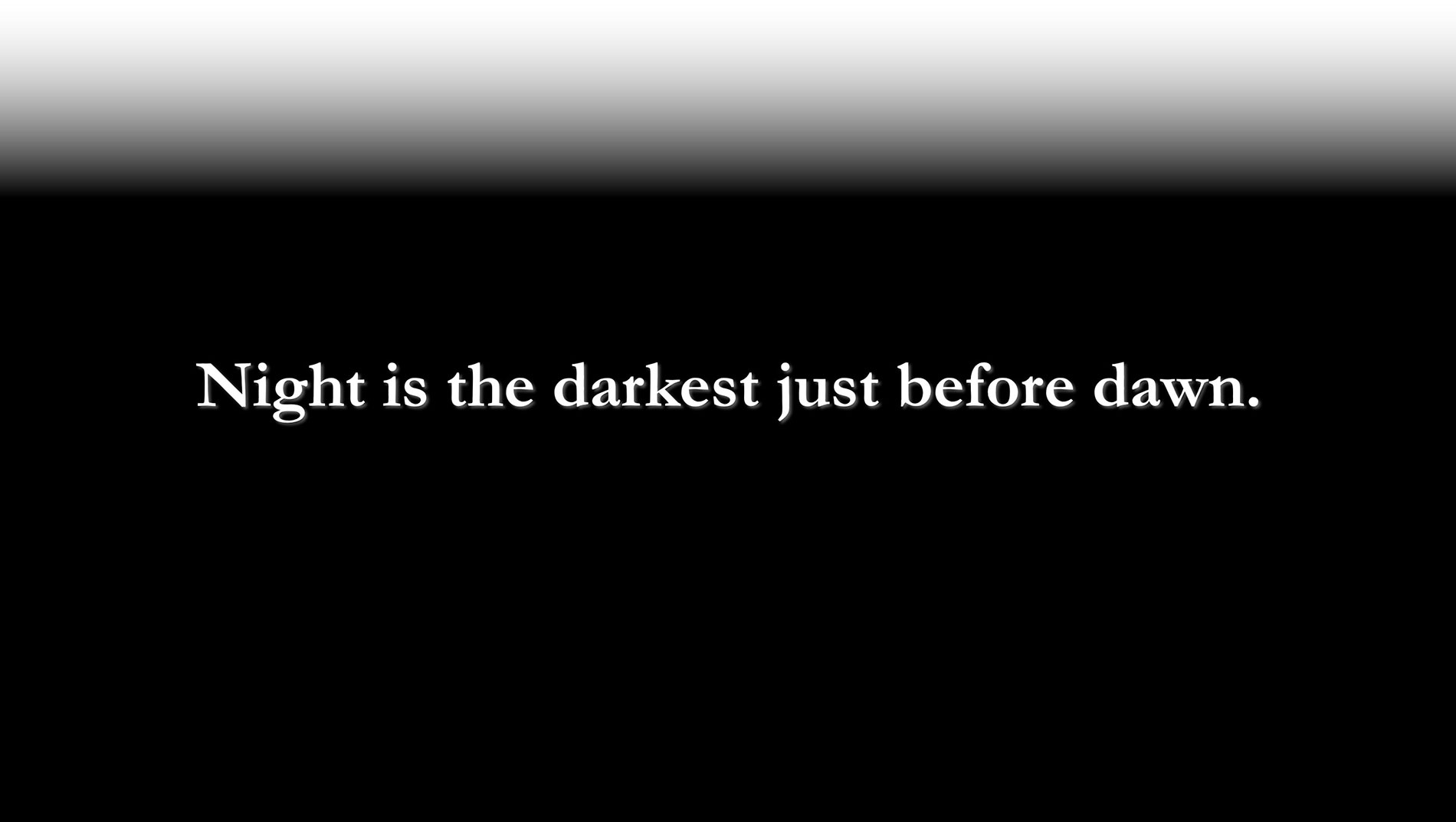 Figure 13
 Figure 14
Introducing "Science and Engineering FUTURE" (a new fundraising project)
"Riko FUTURE" is a fundraising project that aims to provide an environment where students can study without worrying about tuition fees. The total amount of loan scholarships provided to all students in the Faculty of College of Science and Engineering amounts to 500 million yen per year. In light of this situation, we have launched a new fundraising project, "Riko FUTURE." Donations to Riko FUTURE will be used primarily for the following four purposes, with the aim of revitalizing educational and research activities, improving the educational environment, and providing detailed support to students.
① Educational support to prevent students from giving up their studies due to financial reasons
② Support for overseas training and other programs to promote internationalization
③ Support to increase the percentage of female students
④ Research support for young researchers
The Science and Engineering FUTURE program aims to cultivate individuals who can contribute to human society through their expertise in science and engineering, and to promote further growth and new challenges. Your warm support will shape the future of science and engineering.
Click here for donation details.
[For further information contact.
School Corporation Aoyama Gakuin Endowment Department
Phone: 0120-900-420 (weekdays from 9:00 to 17:00)
E-mail: ag-info@aoyamagakuin.jp
Introducing the latest research topics
In the "Latest Research Topics" session, researchers from the seven departments of College of Science and Engineering presented cutting-edge research in their respective fields. The presentations were held in four separate venues, in a special lecture format where attendees could choose themes that interested them. There was also a lively question-and-answer session.
【presentation】
Targeting cancer hypoxia
Chemical biology
Professor, College of Science and Engineering Department of Chemistry and Biological Science
Kazuhito Tanabe
<Profile> Professor Department of Chemistry and Biological Science Faculty of Science and Engineering, College of Science and Engineering Aoyama Gakuin University. Completed the Master's Program in Synthetic and Biochemistry, Graduate School of Engineering, Kyoto University in 1997. Doctor of Engineering. After serving as Assistant Professor and Associate Professor in the Department of Materials and Energy Chemistry, Graduate School of Engineering, Kyoto University, he assumed his current position. He was engaged in research on the development of "molecular probes" at the Kyoto University-Canon Collaborative Research Project (CK Project) "Advanced Technology Hub for High-Order Bioimaging".
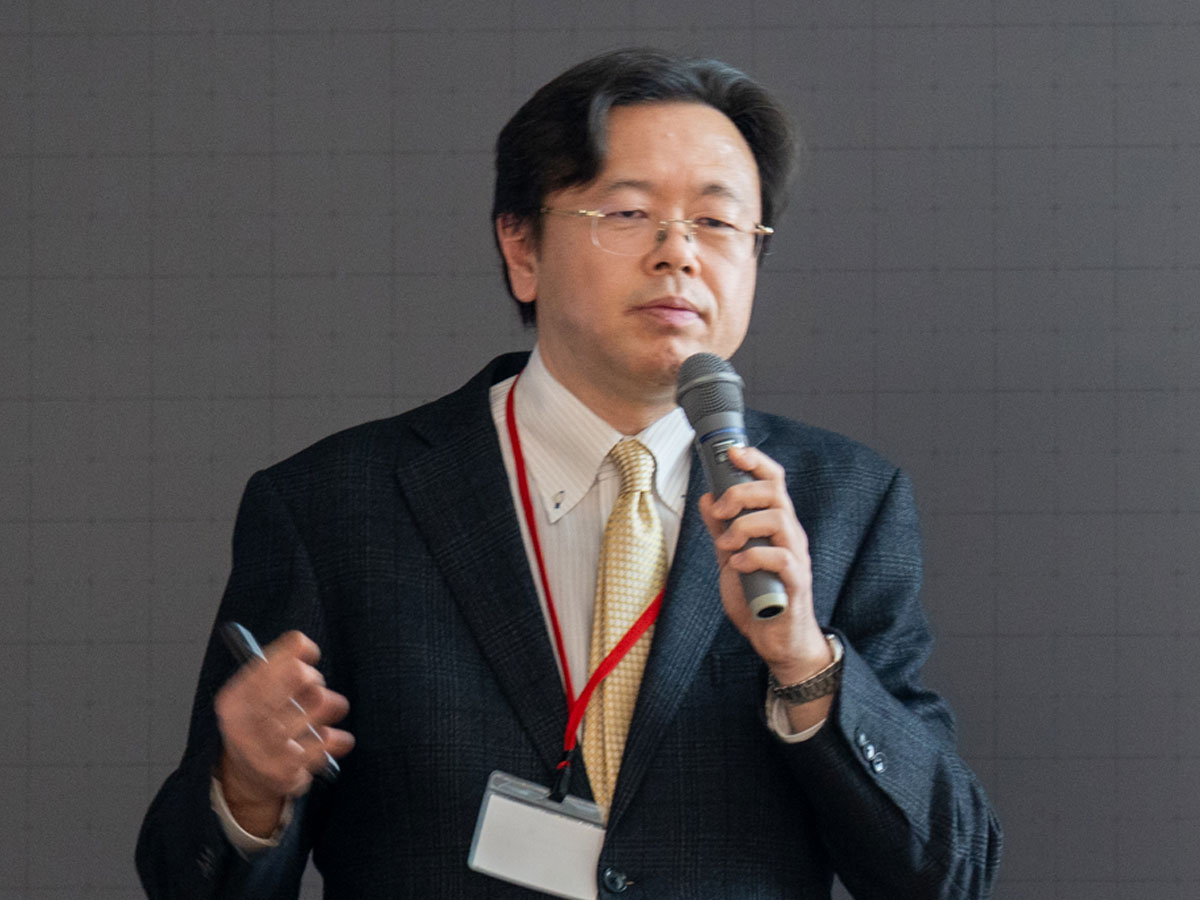
<Overview>
Our laboratory conducts research in chemical biology, particularly in the interdisciplinary field of organic chemistry and biochemistry. We are especially focused on developing diagnostic and anticancer drugs targeting cancer, utilizing our expertise in DNA synthesis. Today, I will present two examples from this research.
First, let me introduce our development of a "cancer diagnostic agent." We started this research with the idea that if we could make only the cancerous areas glow on CT images used in health checkups, we could significantly improve the accuracy of image-based diagnosis.
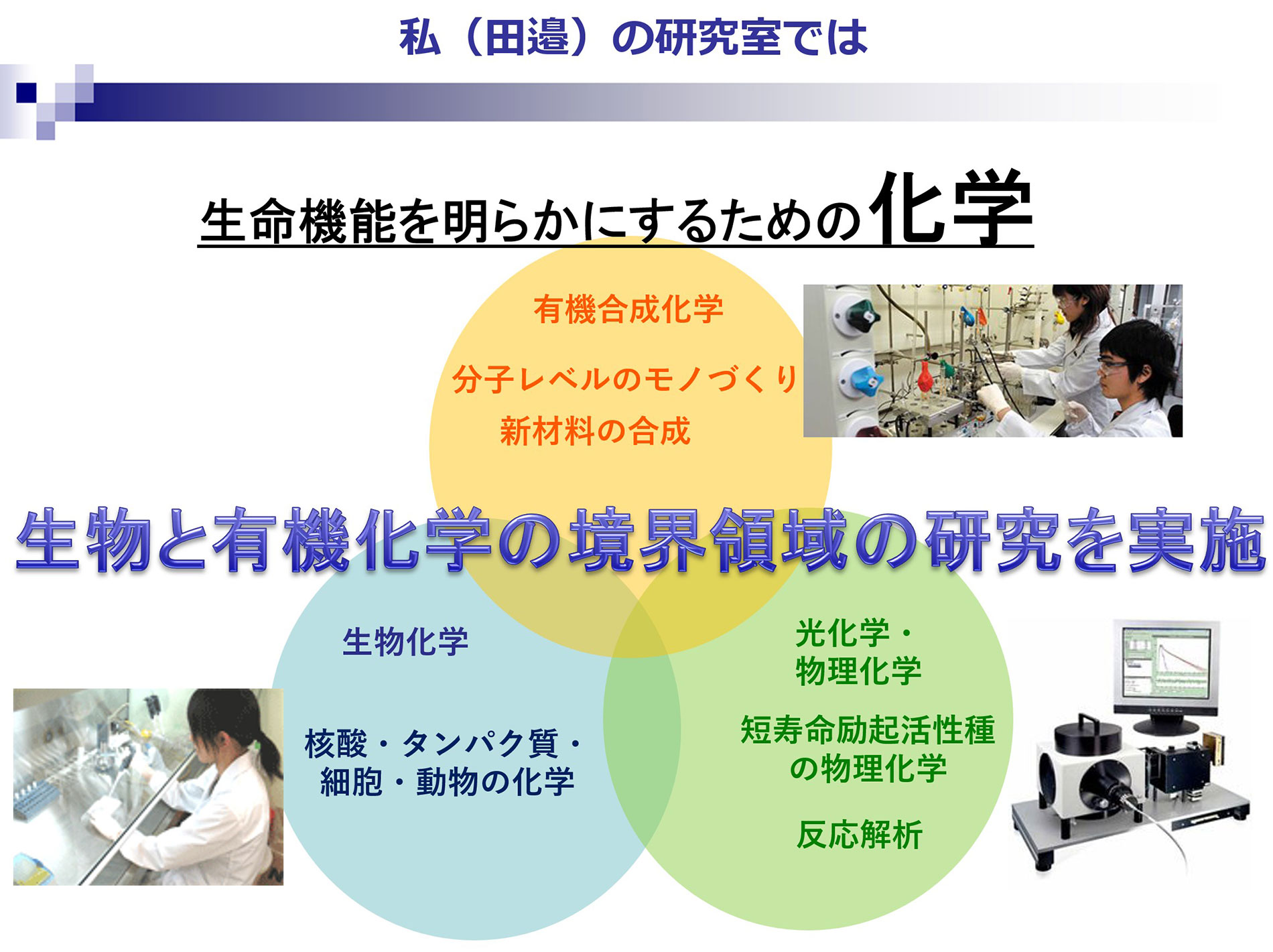
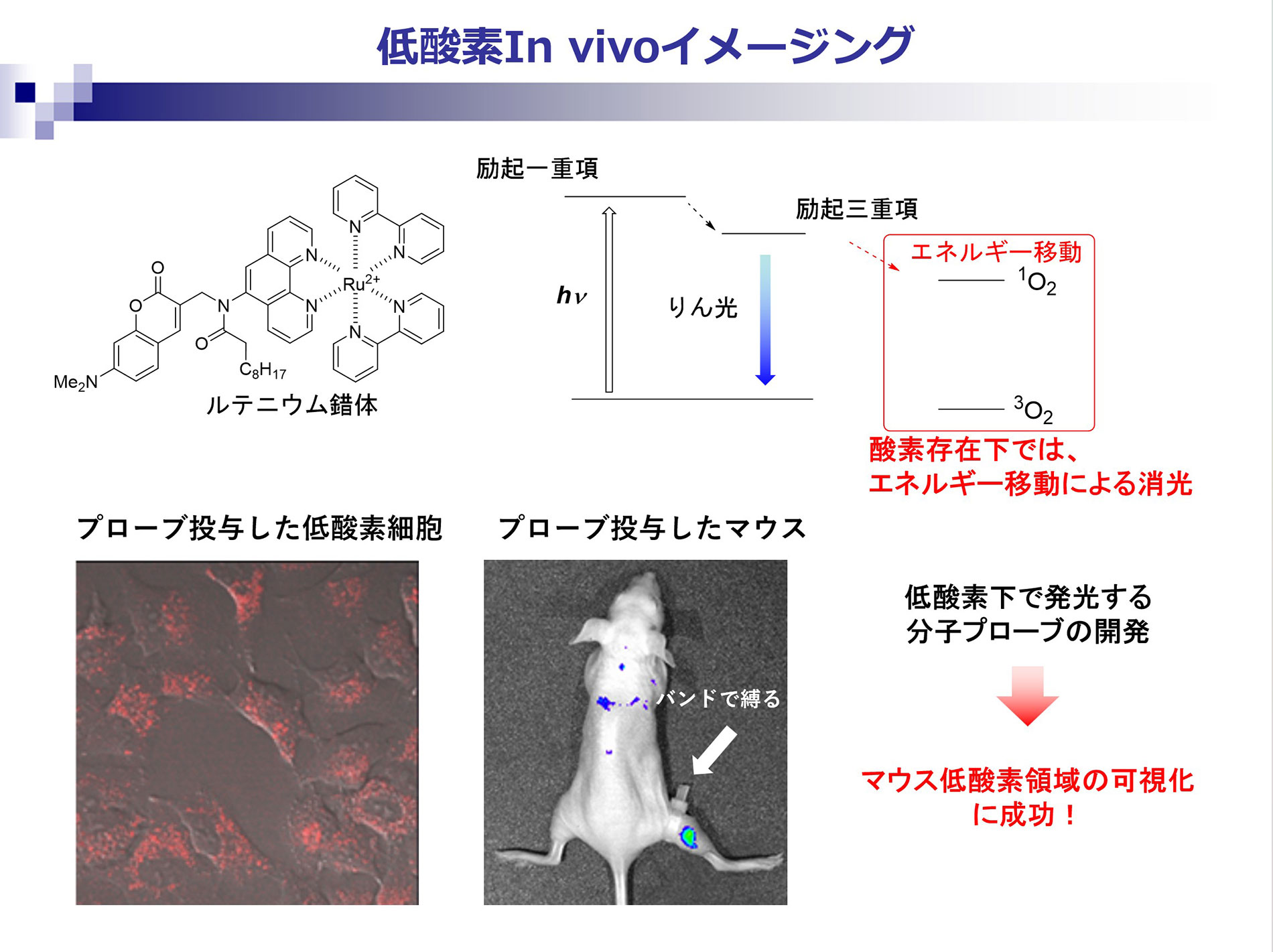
The compound using ruthenium was developed by focusing on the phenomenon that "cancer tissue exhibits a significantly 'hypoxic environment'." Ruthenium has the characteristic of showing phosphorescence in a hypoxic environment and being quenched in an aerobic environment, so if this compound is administered, only the cancerous area should emit light.
As an experiment, we first constricted the legs of healthy mice with string to induce blood congestion, and then administered the compound. As hypothesized, the congested areas, which were in a hypoxic environment, glowed. Next, we administered the compound to mice that had been transplanted with cancerous tumors. This time, the tumor areas, which were in a hypoxic environment, glowed and could be visualized, and with these results, we have successfully developed a cancer diagnostic agent.
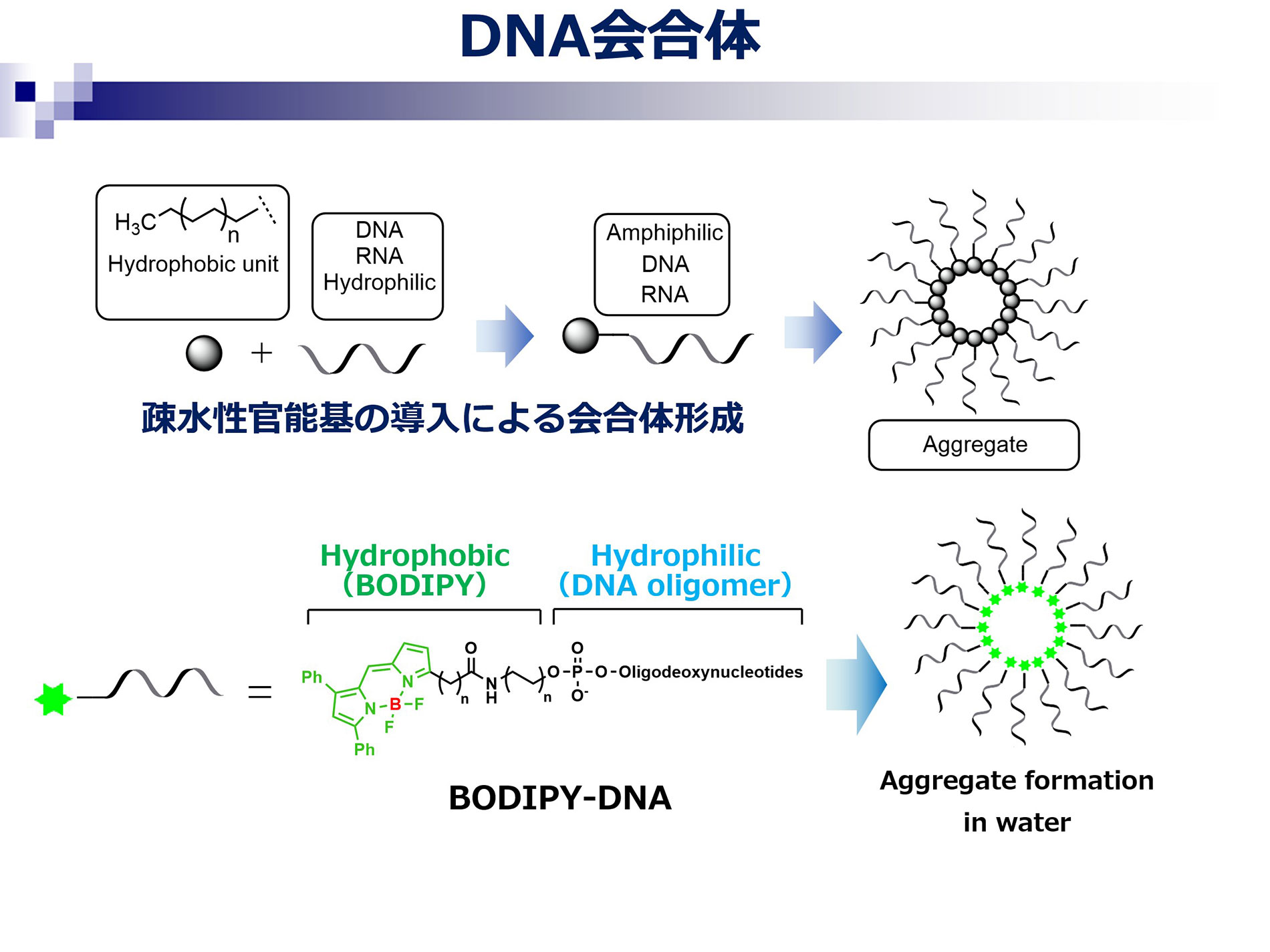
Next, I'd like to introduce the development of "DNA with anticancer drug delivery capabilities." If we can deliver anticancer drugs precisely to the cancerous area, we can expect cancer treatments that are less side-effecting and more effective. This novel DNA development is being carried out independently at our university and is progressing in two stages: "development of DNA with delivery capabilities" and "attaching anticancer drugs to that DNA."
The first stage is "development of DNA with delivery capabilities."
First, we decorated the thymine base of DNA with an alkyl group, which acts as a functional group. While normal DNA is repelled by the cell membrane when it tries to enter a cell, alkyl-decorated DNA can quickly enter the cell. Furthermore, by increasing the number of alkyl groups, we can freely control its destination within the cell.
Furthermore, since DNA is hydrophilic and alkyl groups are hydrophobic, compounds of the two are amphiphilic, forming aggregates, or "aggregates," such as micelles, in water. When they transform into aggregates, their membrane permeability increases, making it even easier for them to enter and exit cells.
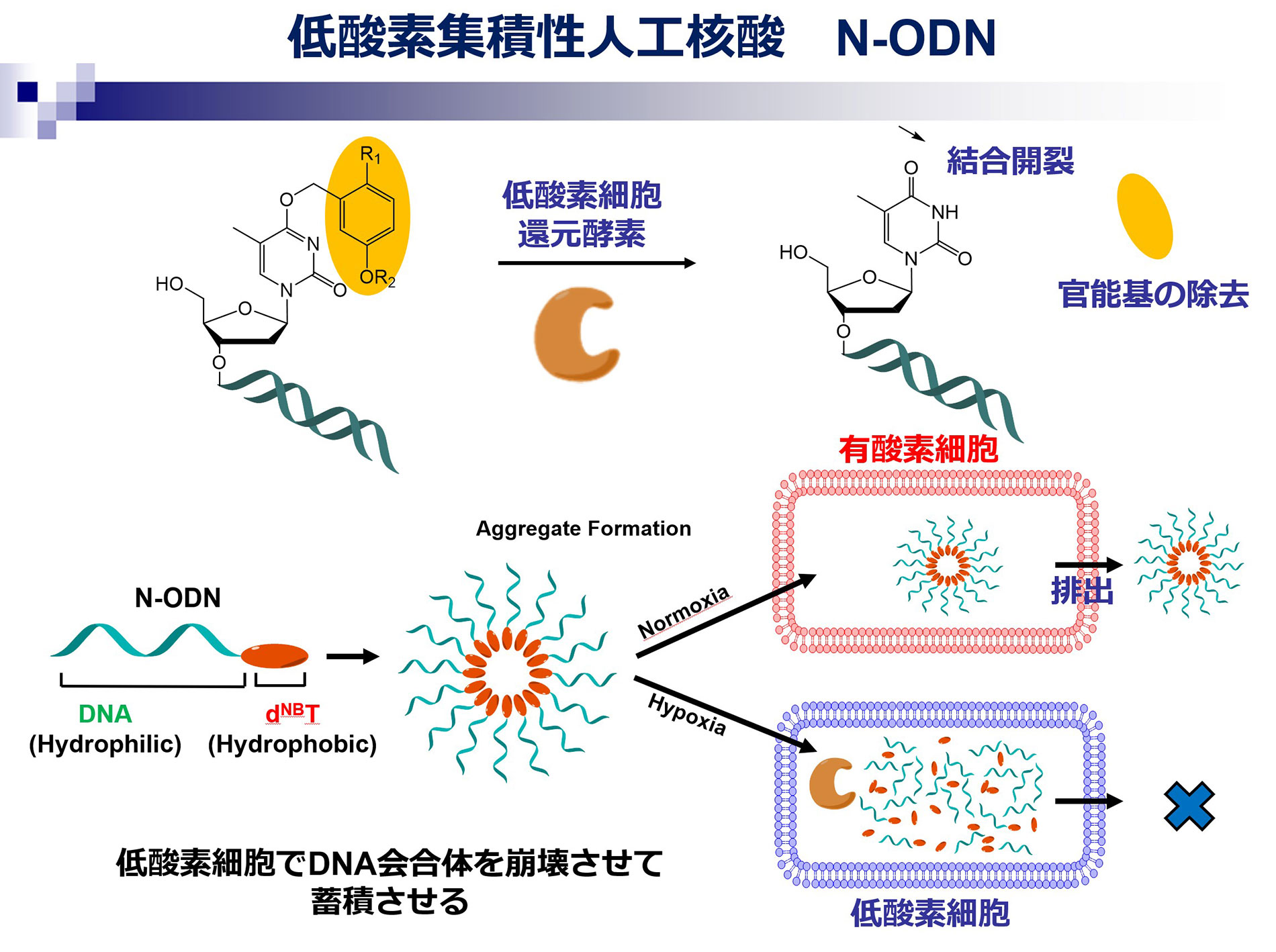
Furthermore, when this aggregate is placed in a hypoxic cell, a reductase reaction occurs, removing the alkyl group from the decorative portion and returning it to normal DNA. Once it returns to normal DNA, the aggregate disintegrates, reducing its membrane permeability, preventing it from leaving the cell, and causing it to accumulate there. By utilizing this property, this DNA can be selectively accumulated in cancerous tissue.
To visualize the movement of DNA, we added a fluorescent dye to this DNA and conducted experiments. As a result, it emitted strong light in cells under hypoxic conditions, and the light weakened as the oxygen concentration increased. In other words, we were able to accumulate DNA in hypoxic cells as intended. In this way, we completed "hypoxia-accumulating artificial nucleic acid (N-ODN)" with drug delivery capabilities.
Next is the second stage of the research: "Adding anticancer drugs to that DNA."
The anticancer drug doxorubicin (DOX) is added to the "hypoxia-accumulating artificial nucleic acid (N-ODN)" completed above. This results in the "DOX-DNA complex."
We conducted experiments administering this "DOX-DNA complex" to healthy human cells (aerobic cells) and lung cancer cells (hypoxic cells). As a result, while many aerobic cells survived, the hypoxic cells rapidly died. This clearly demonstrated that the "DOX-DNA complex" exhibits selective therapeutic effects targeting hypoxic cells.
We also conducted mouse experiments to investigate side effects and efficacy. Regarding side effects, when DOX was administered alone, the mice became emaciated and lost weight. In other words, a high level of side effects occurred. On the other hand, when the "DOX-DNA complex" was administered, the mice hardly lost any weight. In other words, there were virtually no side effects.
Next, regarding the efficacy of the drug, when mice were not administered DOX, the tumors grew. However, when DOX was administered alone and when the "DOX-DNA complex" was administered, tumor growth was suppressed to almost the same level in both cases. In other words, it can be said that high therapeutic efficacy was maintained even when the drug was combined.
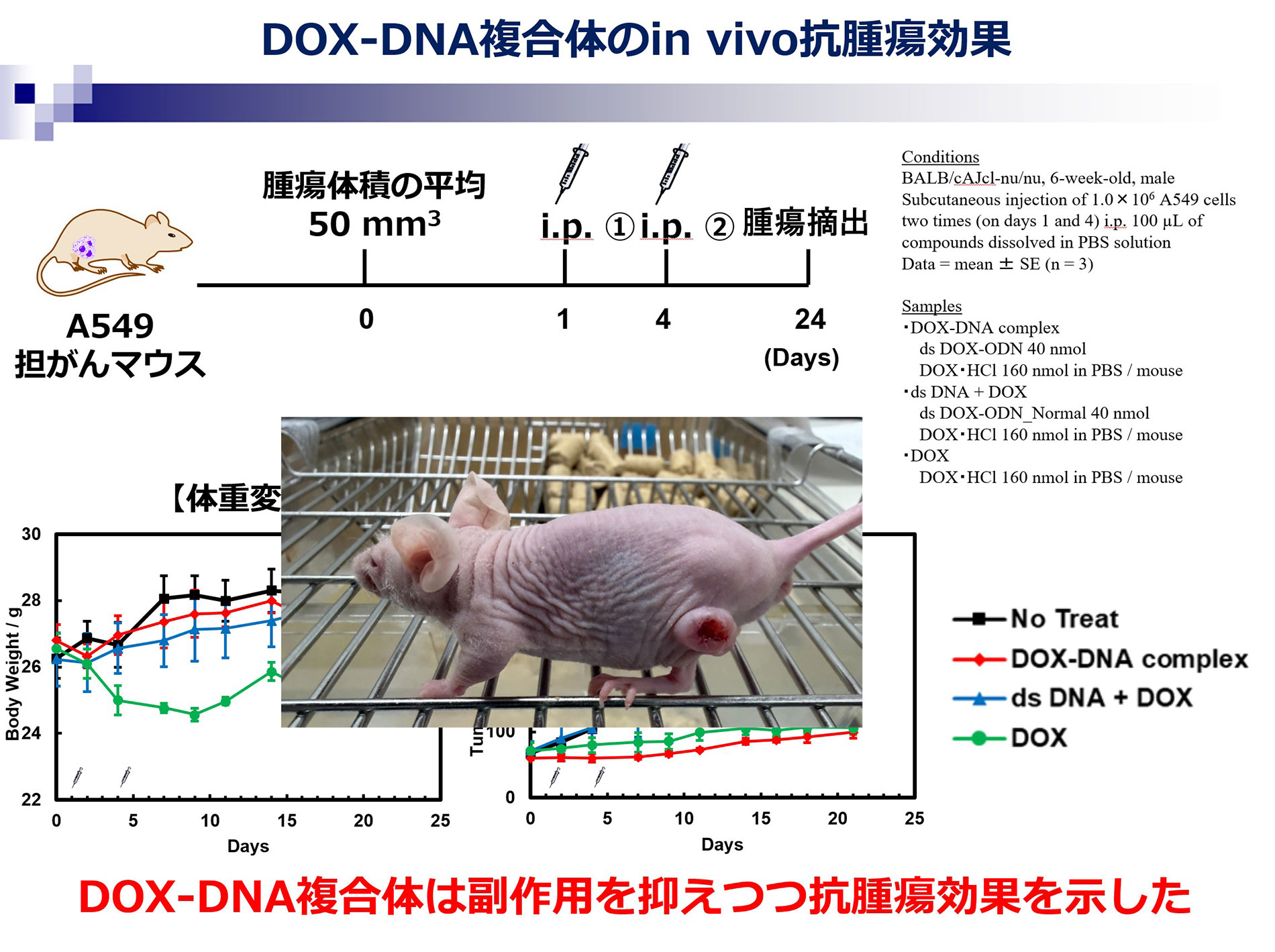
Based on these results, we have gained great confidence that the "DOX-DNA complex" is an ideal anticancer drug with few side effects and high efficacy.
This artificial nucleic acid, which specifically gathers and functions in diseased cells that arise in cancer, was developed independently at our university, and further applications are expected in the future. We would like to explore ways to bring it to practical use while seeking collaboration with pharmaceutical companies and other organizations.
【presentation】
When the brushstrokes begin to move—
Hand-drawn style and
The fusion of computer graphics
Professor, Department of Department of Integrated information technology College of Science and Engineering
Music and poetry
<Profile> Professor, Department of Integrated information technology College of Science and Engineering Aoyama Gakuin University.
Completed doctoral program in Computer Science at the Graduate School of Information Science and Technology, University of Tokyo in 2011. Holds a PhD in Information Science and Technology.
He previously served as a researcher Columbia University School of Professional Studies in the United States (JSPS Overseas Research Fellow), an assistant professor in the Department of Complex Systems Engineering, Graduate School of Frontier Sciences, University of Tokyo, and an associate professor Department of Integrated information technology College of Science and Engineering Aoyama Gakuin University, before assuming his current position. His research focuses on the modeling and numerical computation of deformable objects, primarily in the areas of physical simulations such as optics and fluids, and their application to shape design.
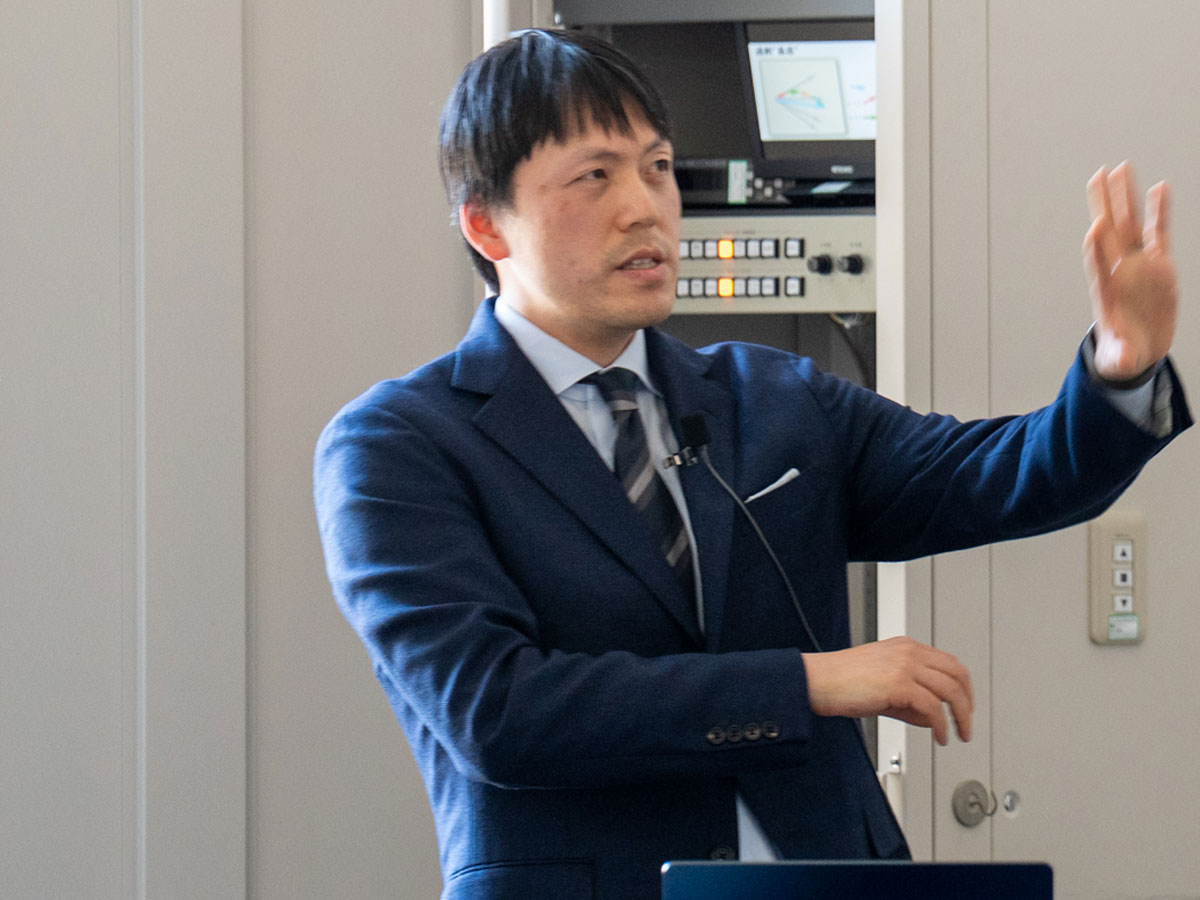
<Overview>
My specialty is computer graphics (CG) research. When people hear CG, they often think of the images in movies and games, but behind the scenes, research is being conducted that combines mathematics, physics, algorithms, and data structures to calculate how light appears and how objects move. My own research has mainly focused on light simulations to generate realistic images and physical simulations to reproduce the movement of complex substances such as smoke, water, and sand.
On the other hand, in CG, creating realistic images isn't the only important thing. Reproducing the texture and brushstrokes of drawings by artists and supporting the production of hand-drawn animation is also a very important research theme. So today, I'd like to move away from my main field of work, realistic physical simulation, and introduce some artistic animation generation techniques that I've been working on recently.
One of the inspirations for this series of research projects was the 2017 film "Loving Vincent." This film is a feature-length animated movie created by drawing each frame individually, resembling Van Gogh's oil paintings, and then stitching them together. To express Van Gogh's distinctive brushwork—that is, the flow and strokes of the paint—more than 100 artists hand-painted a vast number of frames. We began our research with the idea of whether such labor-intensive expressions could be generated more easily using computers.
With the latest AI, it might seem easy to create animations like this. However, in reality, it's not easy to explicitly handle each individual stroke, ensure that the orientation of the strokes aligns naturally, and move them consistently over time within the animation. Furthermore, the strokes need to change naturally in accordance with the movement of objects, the way light hits them, and the changes in shading. Also, methods using deep learning often require a large amount of training data, and there are challenges such as copyright considerations and the difficulty for artists to fine-tune the results. Therefore, instead of relying on deep learning, we aimed to learn the style of brushstrokes from a small number of example images drawn by artists by combining a mathematical model of strokes with statistical learning, and then developing that into animation.
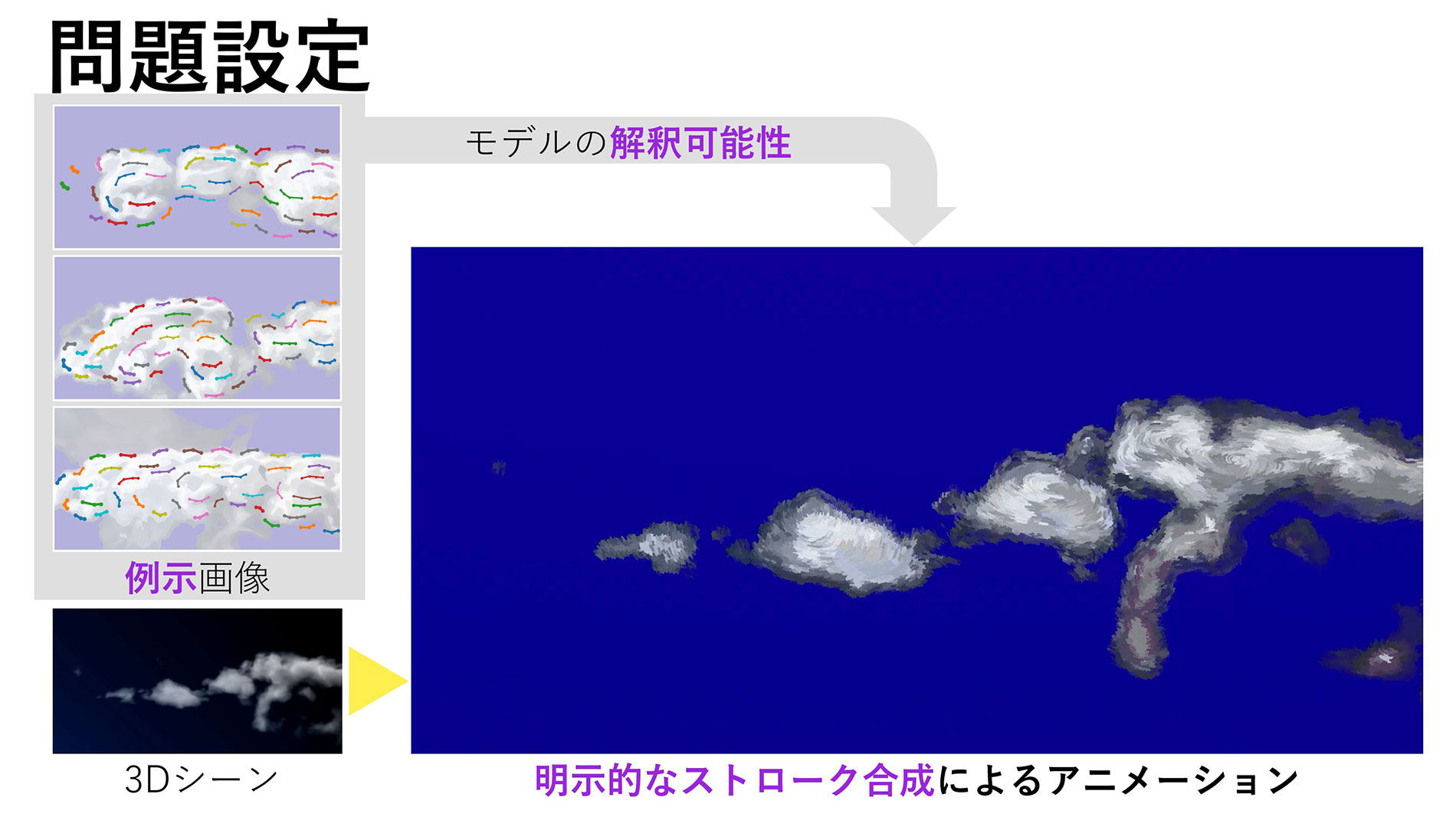
To create flowing strokes within an image, it's essential to carefully determine elements such as stroke direction, length, thickness, and color. This study treats these as the primary attributes of strokes. Analyzing images created by artists revealed some interesting findings, particularly regarding stroke direction. Initially, we expected that stroke direction would align with factors like how light hits the object, its contours, or the curvature of its surface. However, in reality, artists didn't simply choose one of these directions; instead, they blended multiple directions depending on the location. For example, in areas close to the contour and simultaneously influenced by the internal curvature of the object, strokes might be drawn in a direction that's somewhere between these two.
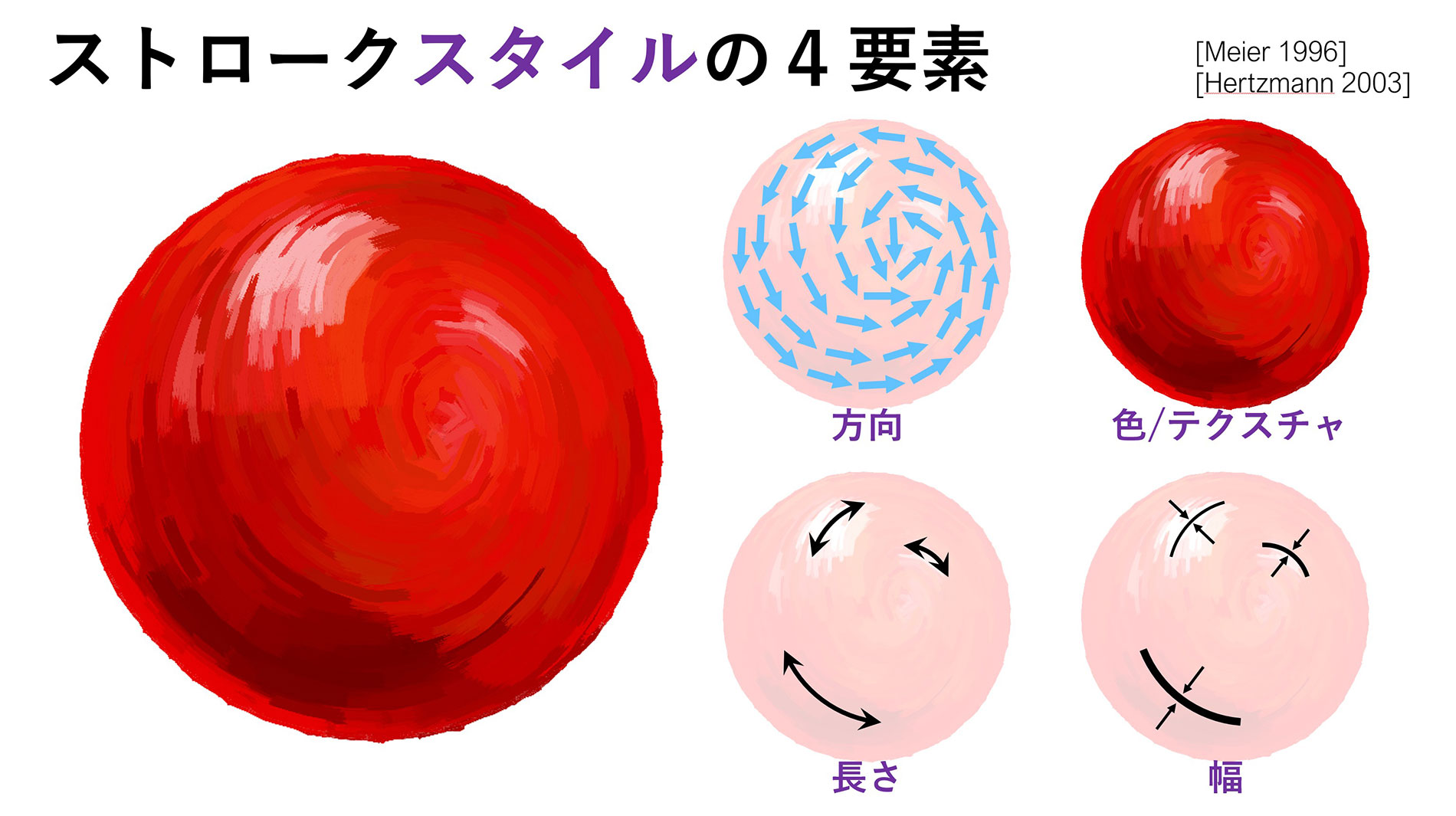
In other words, it appears that artists unconsciously judge "how much importance to place in each direction" by observing the intensity of cues such as light, contours, and curvature. We therefore hypothesized that if we could represent this unconscious judgment as a mathematical model and learn not only the direction of strokes but also their length, thickness, and color, we might be able to reproduce the artist's brushstrokes.
For simplicity, we will consider only the direction of the stroke here. In this study, we represent the flow of the stroke using the concept of a "vector field," which associates each point in space with a vector having both "direction" and "magnitude." First, we create several basic direction fields from the direction of light, the direction of the contour, the curvature of the surface, etc. Next, we calculate the proportion in which to mix these fields at each location to obtain the final direction field of the stroke.
What's crucial here is the weighting that determines "how much emphasis to give to each direction." We learn a mechanism to calculate this weighting from features such as brightness, curvature, and distance from the contour. In other words, the computer learns how artists choose directions in reference images. By using this mathematical model, we can generate consistent stroke representations in animations, tracking object deformation and changes in light, starting from just a few sample images.
Once a style is learned, it can be applied to other objects. For example, by providing information on highlight and shadow colors and stroke patterns to a monkey statue created with 3D modeling, it's possible to generate stroke animations that closely resemble the artist's style. Furthermore, to express lively brushstrokes, it's important to introduce a certain degree of randomness into the strokes. While it's difficult to achieve both random brushstrokes and smooth transitions between frames when creating animations by hand, this method allows for computational handling of these aspects. Moreover, it can be applied to scenes where the shape of objects changes, and to complex scenes consisting of many parts. Up to this point, our research has primarily focused on objects with clearly defined "surfaces," such as monkey statues.
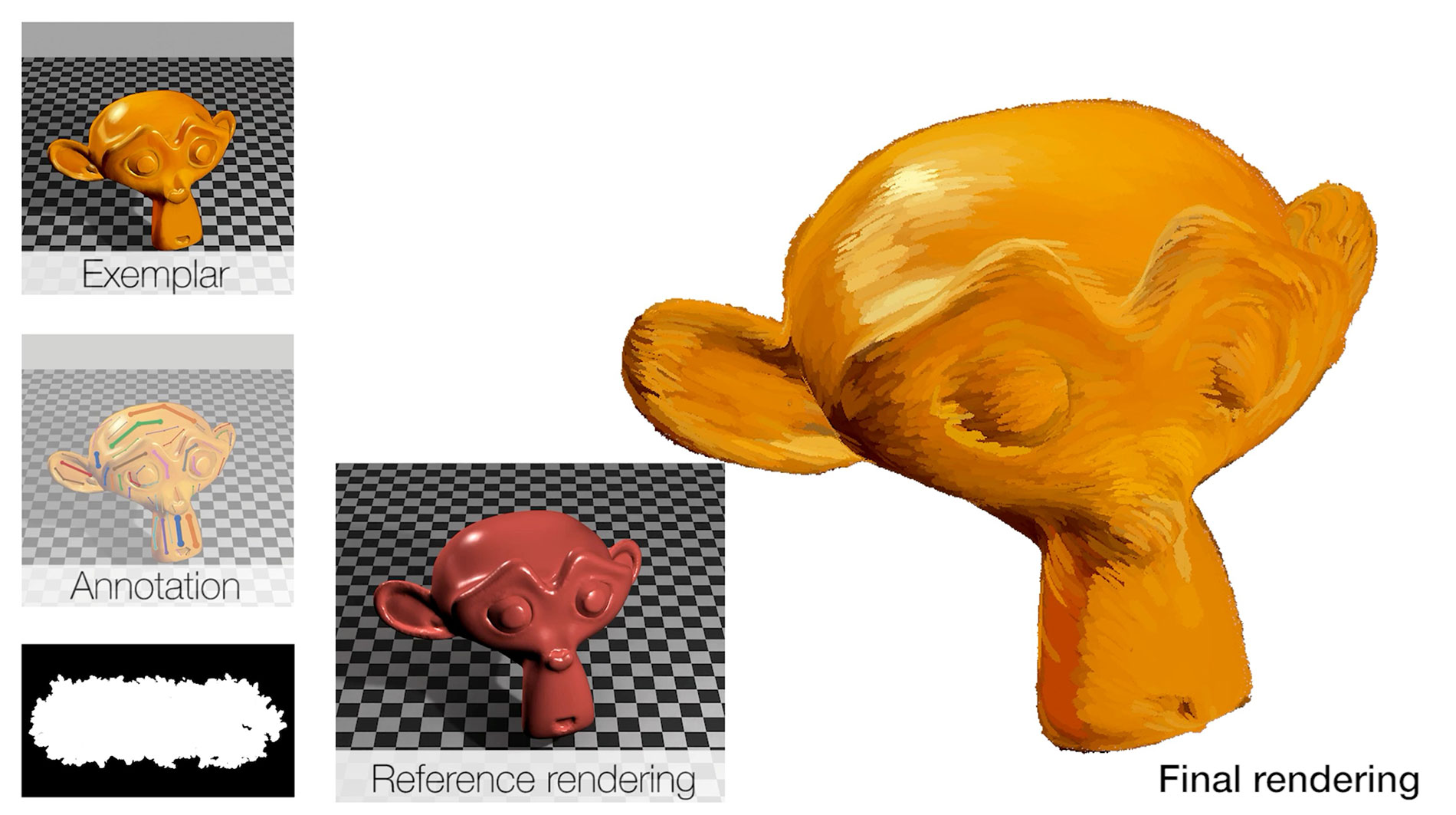
In the next stage, we challenged ourselves to deal with objects that do not have a distinct surface, such as smoke and flames. In computer graphics, such objects are called "participating media" or simply "medium." Smoke and flames do not have a surface like solids, but are represented as a three-dimensional distribution of density and color in space. Therefore, the problem becomes how to define characteristics such as "curvature" and "distance from the outline," which were used for surface objects.
The key point of this research is its focus on the correspondence between how surface objects and media "appear." In the case of surface objects, when viewed from a certain line of sight, basically only one point on the surface closest to the viewer is visible. Mathematically, this can be represented as a state where weight is concentrated only on that one point. On the other hand, with media such as smoke or flame, multiple locations on the same line of sight are partially visible. As a result, the background appears blurry and transparent, and the colors of the foreground and background appear to blend together.
This "which points along the line of sight are visible and to what extent" can be represented by the distribution of the distance light travels through the medium (free path distribution). If we consider replacing the "weight that isolates only one visible point" used for surfaces with a "weight that represents how much each point along the line of sight is visible" for media, we can naturally extend the feature quantities defined for surface objects to smoke and flames. As a result, even for media, we can define features such as lighting, distance from the contour, and apparent curvature, and utilize the stroke style modeling developed for surface objects.
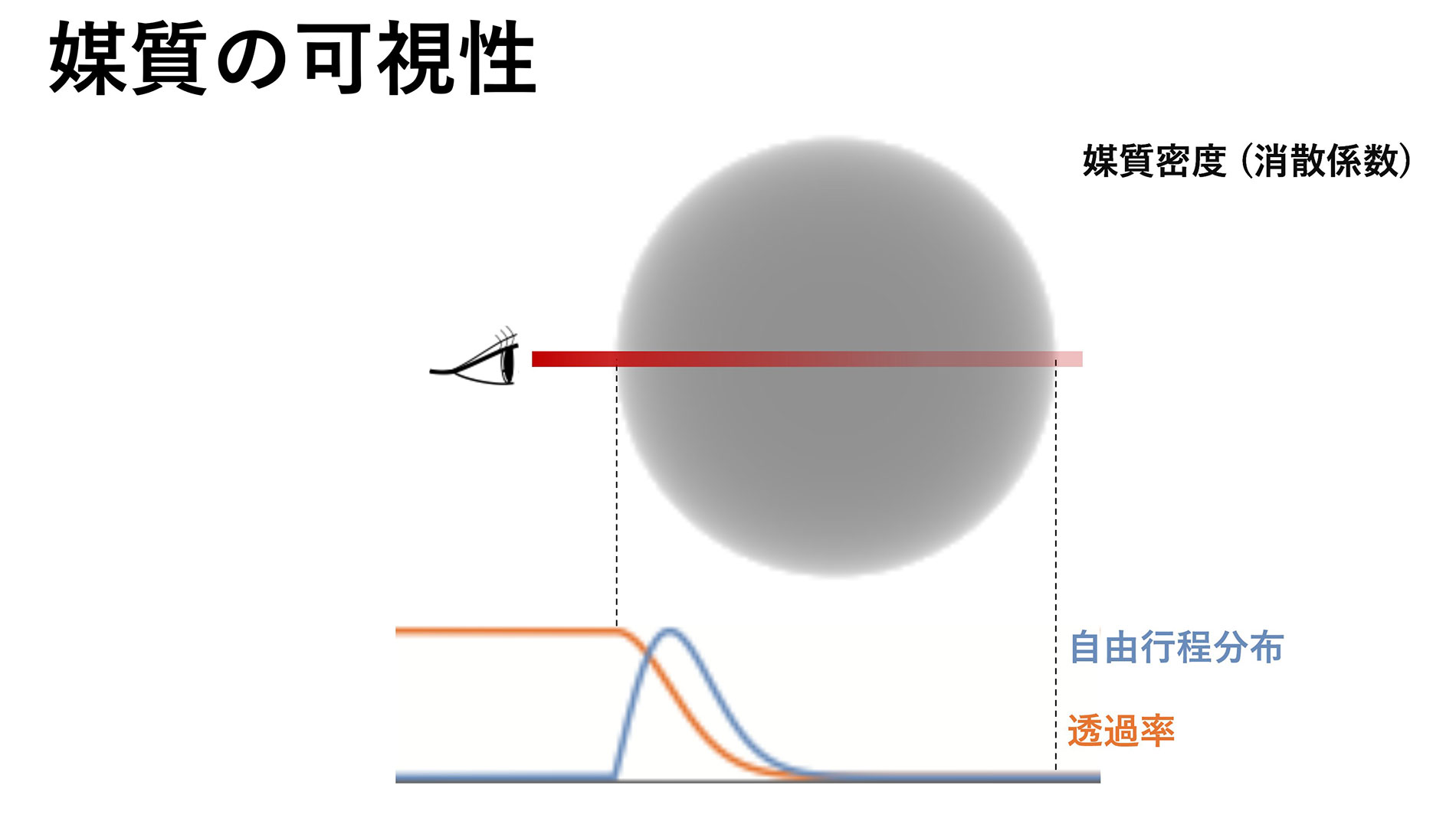
As a result, painterly animation using strokes has become possible even for subjects like smoke and flames. For example, it can be applied to scenes where two colors of smoke blend together, or to scenes where surface objects like trees and a medium like smoke exist in the same scene.
The "exemplary stroke style-based animation synthesis" introduced here is a technique that learns an artist's brushstrokes from a small number of examples and translates them into moving images, without relying on large-scale training data or deep learning. We believe it is one way to reflect the artist's intentions relatively easily and expand the possibilities of CG expression.
Up to this point, my research has mainly focused on how to paint the interiors of objects and media using strokes. In the future, I would like to work on methods for more beautifully and stably representing outlines themselves, as well as methods for handling thick, abstract, and powerful strokes, similar to those found in ink paintings.
Related link: AGU RESEARCH "Reproducing everything from the movement of objects to the style of artists with greater precision using CG technology"
[Poster Session]
Unraveling the "Recipe for the Universe" with X-rays:
Department College of Science and Engineering Department of Physical Sciences
Yamazaki Laboratory, Japan Aerospace Exploration Agency (JAXA), Institute of Space and Astronautical Science, Department of Astrophysics, Yamaguchi Laboratory
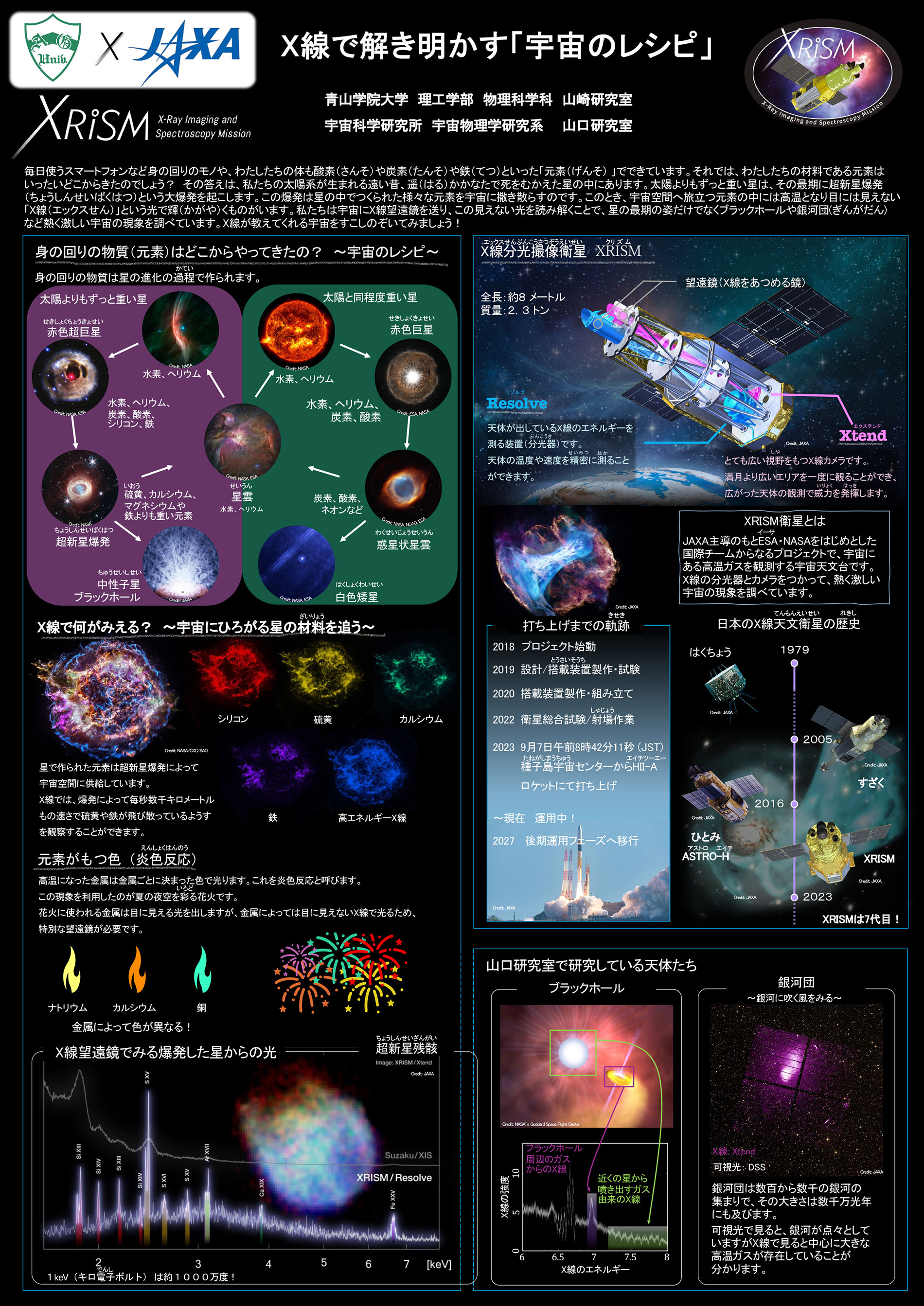
Elements such as oxygen, carbon, and iron, which make up our bodies and the objects around us, are thought to have been born inside stars and spread into space through supernova explosions. This poster introduces research that uses X-rays emitted by these elements and hot gases as clues to unravel where these elements came from. By using Japan's X-ray astronomy satellite XRISM, we are trying to decipher invisible cosmic phenomena and get closer to understanding the nature of exploding stars, black holes, and galaxy clusters.
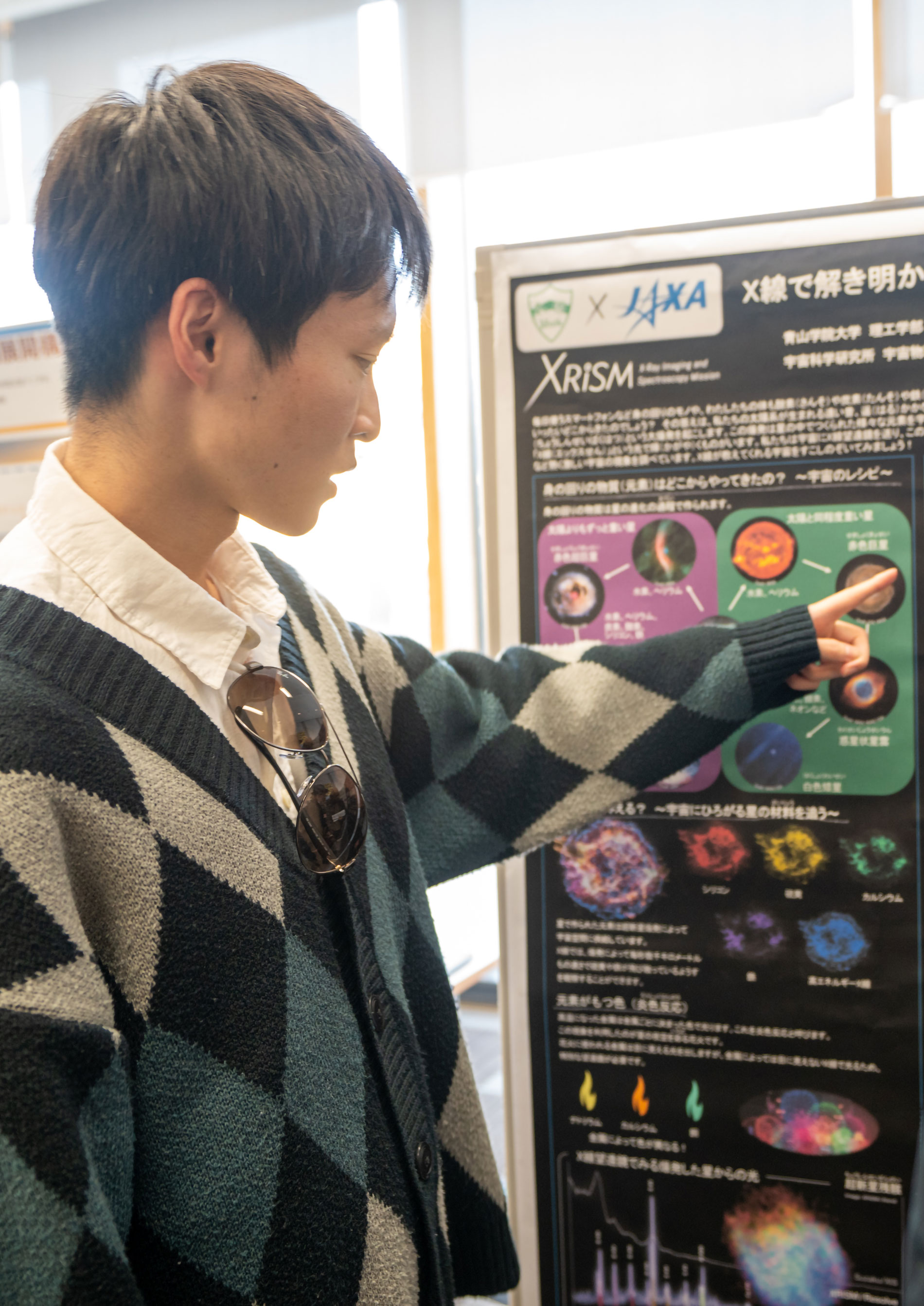 Keigo Okabe (1st year Master's student, Basic Science Course, Department Graduate School of Science and Engineering Engineering)
[Poster Session]
Design of the storage and deployment structure for a deployable aeroshell for Mars landing,
Department of Department of Electrical Engineering and Electronics College of Science and Engineering
Toyoda Laboratory, Astrophysics Research Group, Institute of Space and Astronautical Science, Japan Aerospace Exploration Agency (JAXA)
In Mars landing exploration, deployable aeroshells are expected to be a revolutionary landing technology. These aerodynamic deceleration devices can be folded compactly at launch and deployed before atmospheric re-entry, creating a large-area, lightweight aeroshell. In this study, inspired by origami, we devised a diagram for the aeroshell's storage and deployment structure. To maintain a structure that can be stored in a capsule, secure area for solar panels on the aeroshell, and minimize creases in the woven fabric, the design uses only straight fold lines. This facilitates the transfer of design information and is expected to reduce the risk of deployment failure. By leaving irregularities on the deployed aeroshell, we also aimed to mitigate impact during landing and suppress dust accumulation during operation.
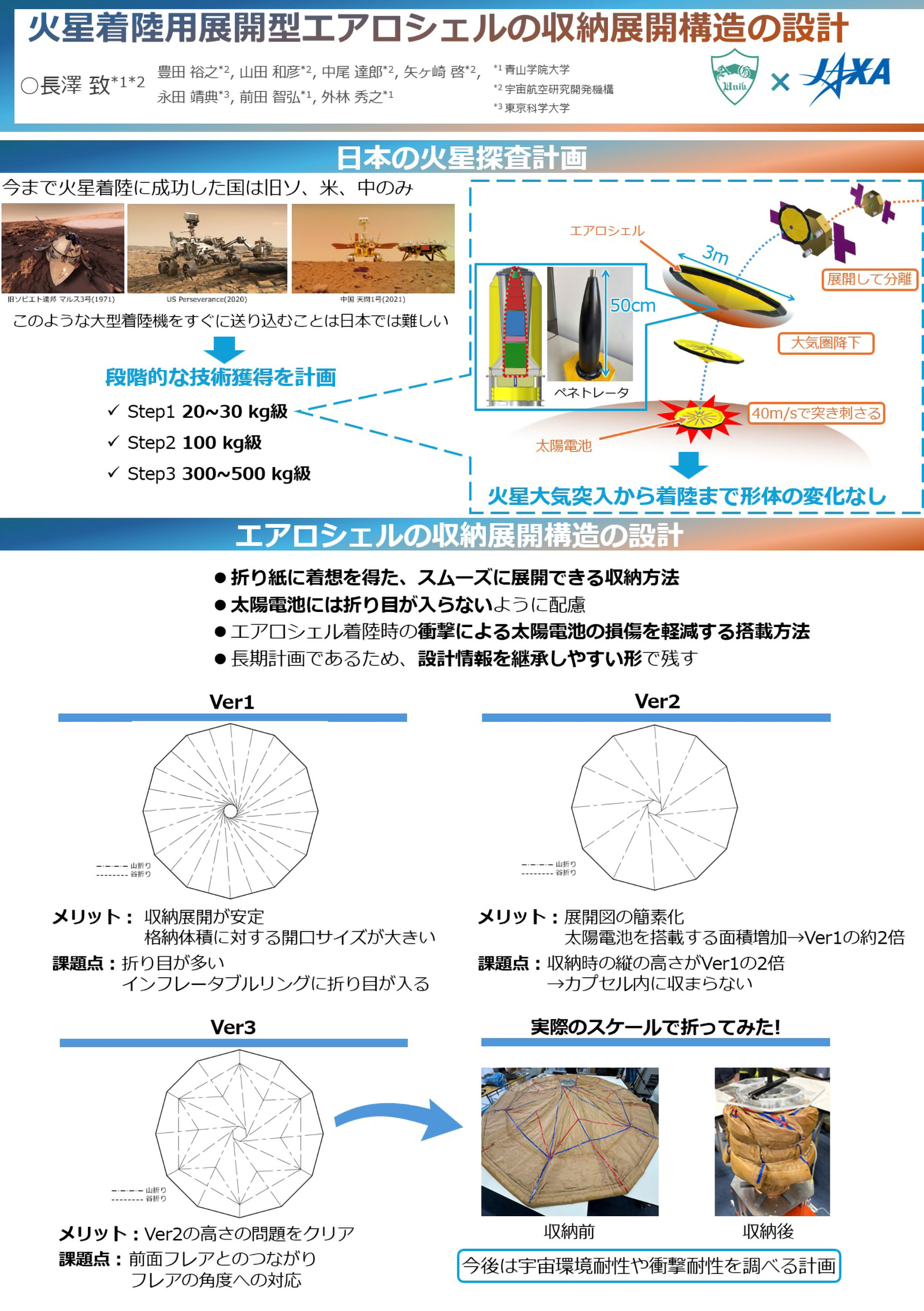
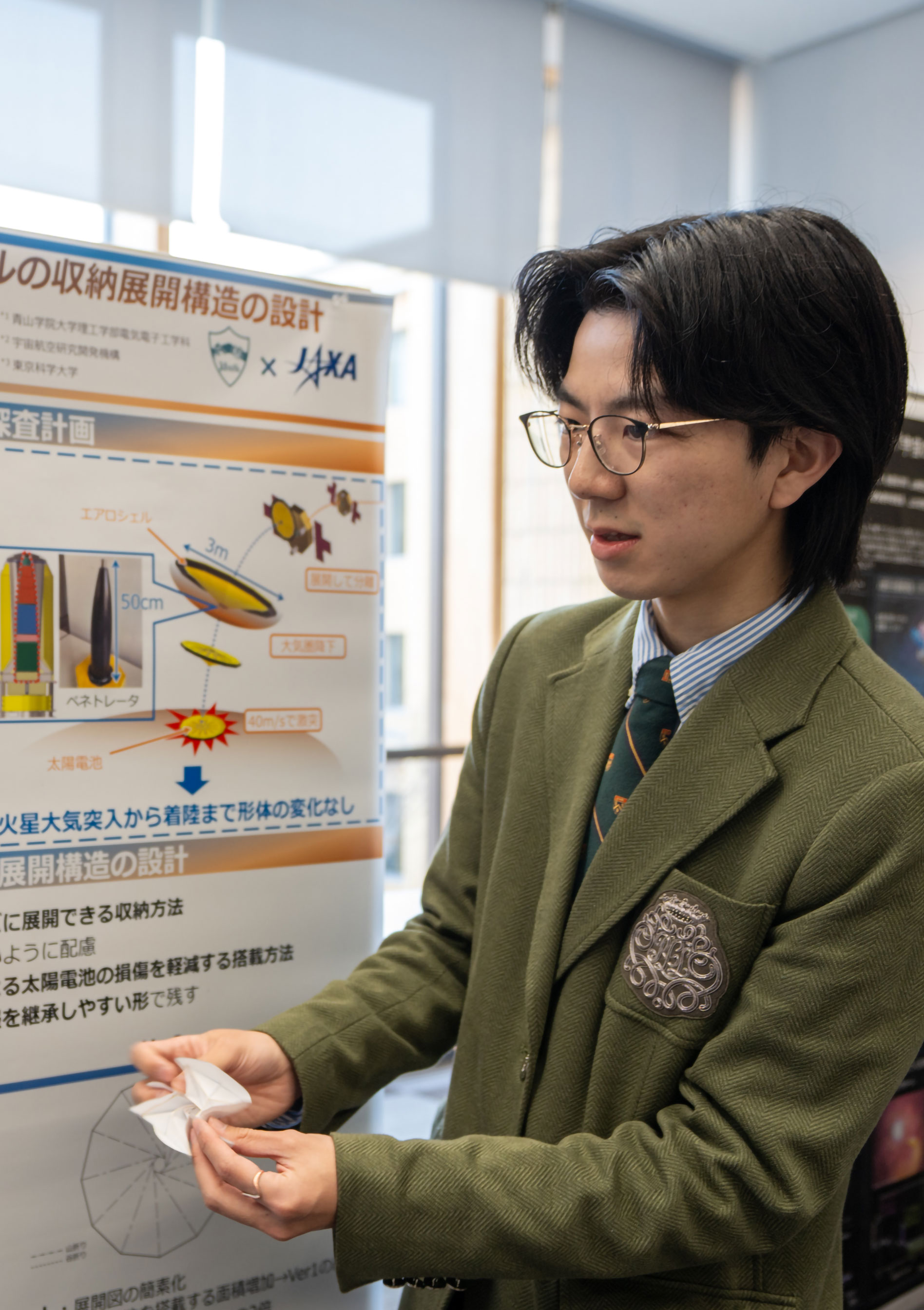 Itaru Nagasawa (4th year student, Department Department of Electrical Engineering and Electronics College of Science and Engineering and Engineering)
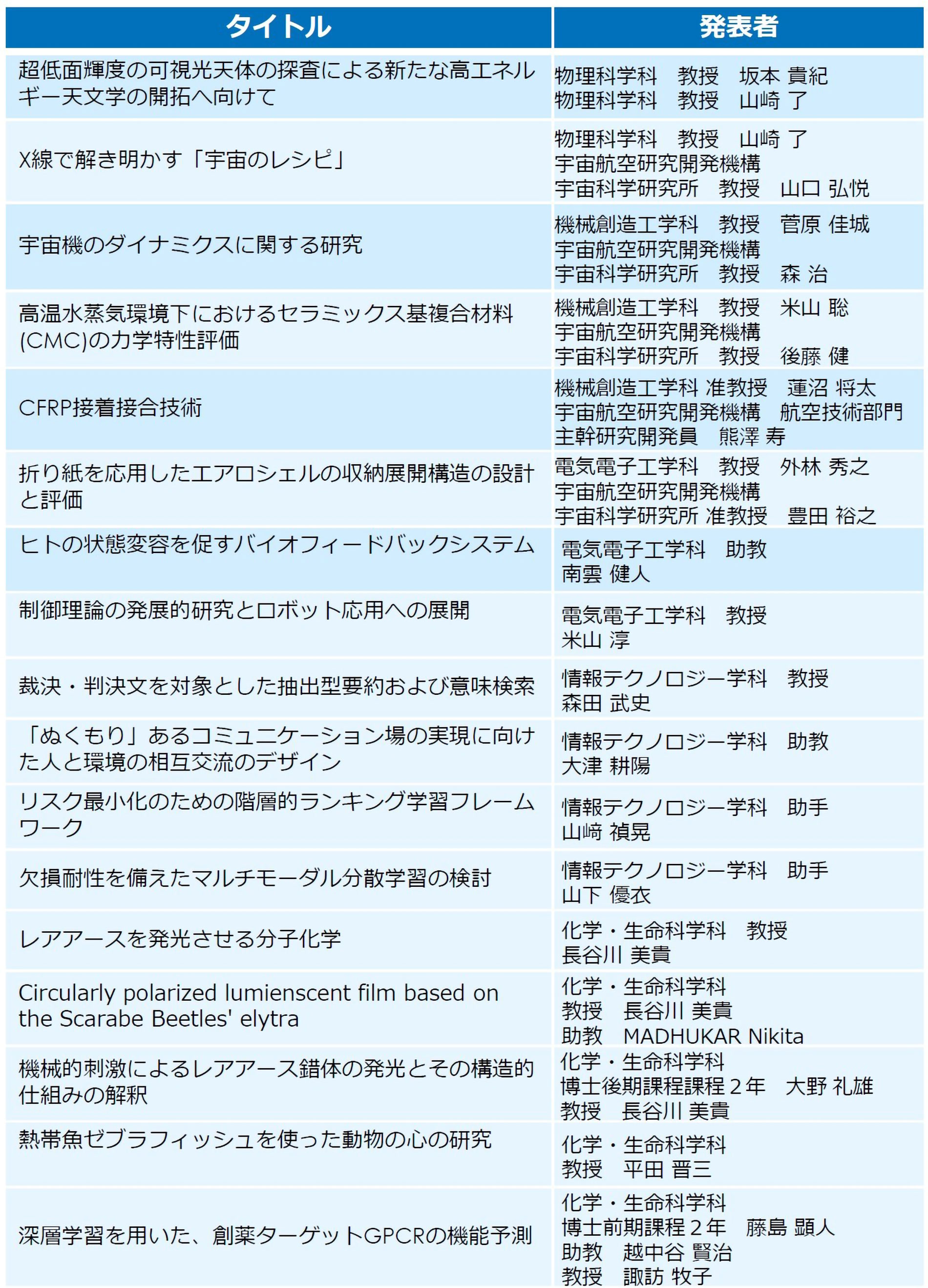
List of Poster Sessions
[Poster Session (FEP Scholarship Recipients)] The AGU Future Eagle Project (Doctoral Student Support Project) was selected for the Japan Science and Technology Agency (JST)'s "Challenging Research Program for Next-Generation Researchers." Combining existing support systems with new training support measures, this project aims to cultivate outstanding doctoral students who have the potential to pioneer new academic fields in the future, focusing on the themes of "interdisciplinary collaboration" and "internationalism." Doctoral students selected for the 2025 project presented their research outlines in poster format.
Improving the dynamic range using Brewster angle for corrosion detection of reinforcing bars in reinforced concrete structures using the 10GHz band Doppler effect -
Suga Laboratory, Department College of Science and Engineering Department of Electrical Engineering and Electronics Faculty of Science and Engineering
Yasunari Watanabe (2nd year doctoral student, Department of Electrical and Electronic Engineering, Graduate School Graduate School of Science and Engineering Engineering) In recent years, early detection of corrosion of reinforcing steel due to salt damage and carbonation has become important in social infrastructure such as aging reinforced concrete structures. However, conventional methods have problems in terms of expensive equipment, adverse effects on human health, and the need for qualified personnel. Therefore, I propose a non-destructive evaluation method for reinforcing steel inside concrete that suppresses surface reflection of the concrete by using the Doppler effect that occurs only between the antenna and the reinforcing steel by moving a 10GHz band antenna in parallel with the concrete wall, and is capable of evaluating only the reflected waves from the reinforcing steel.
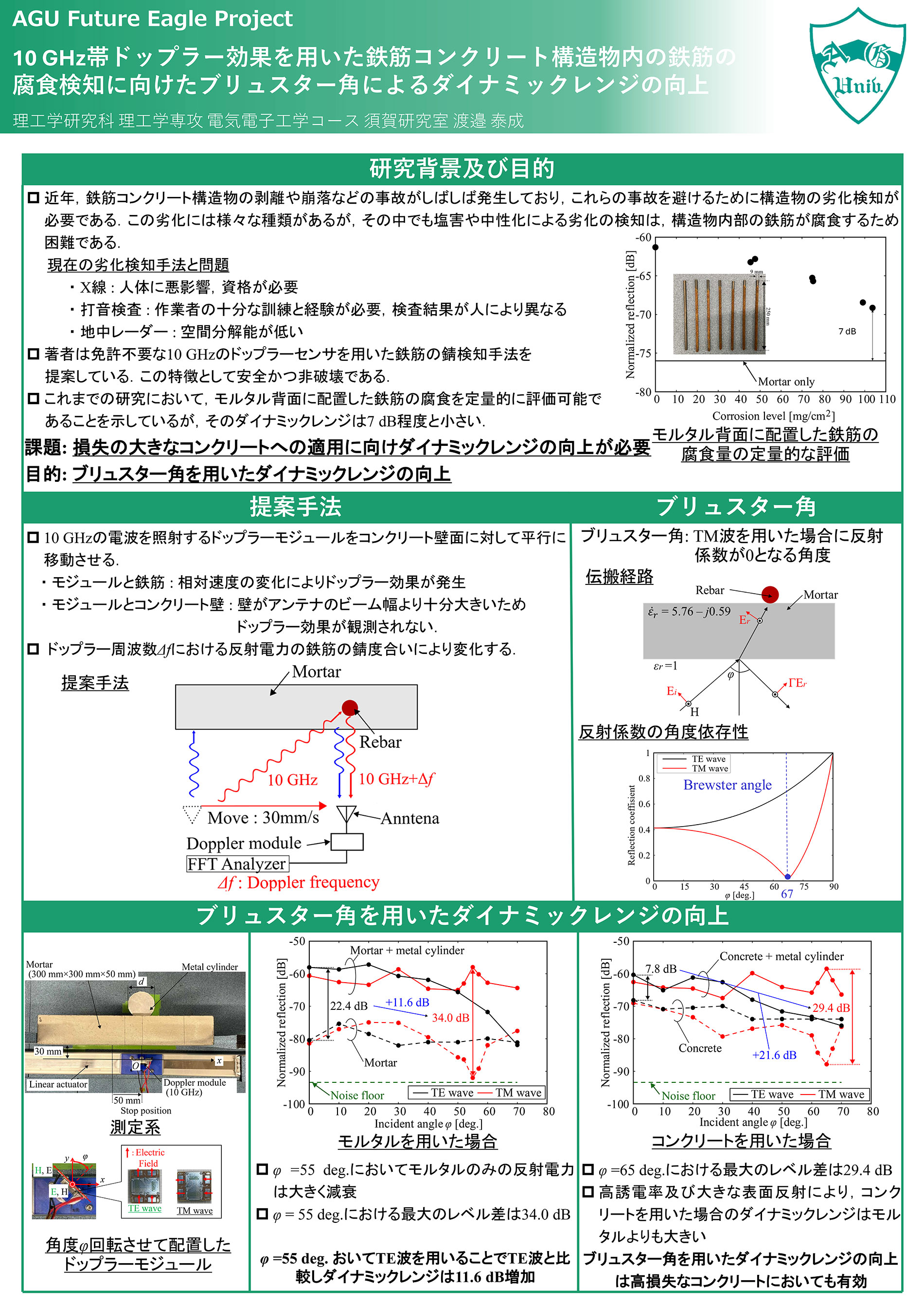
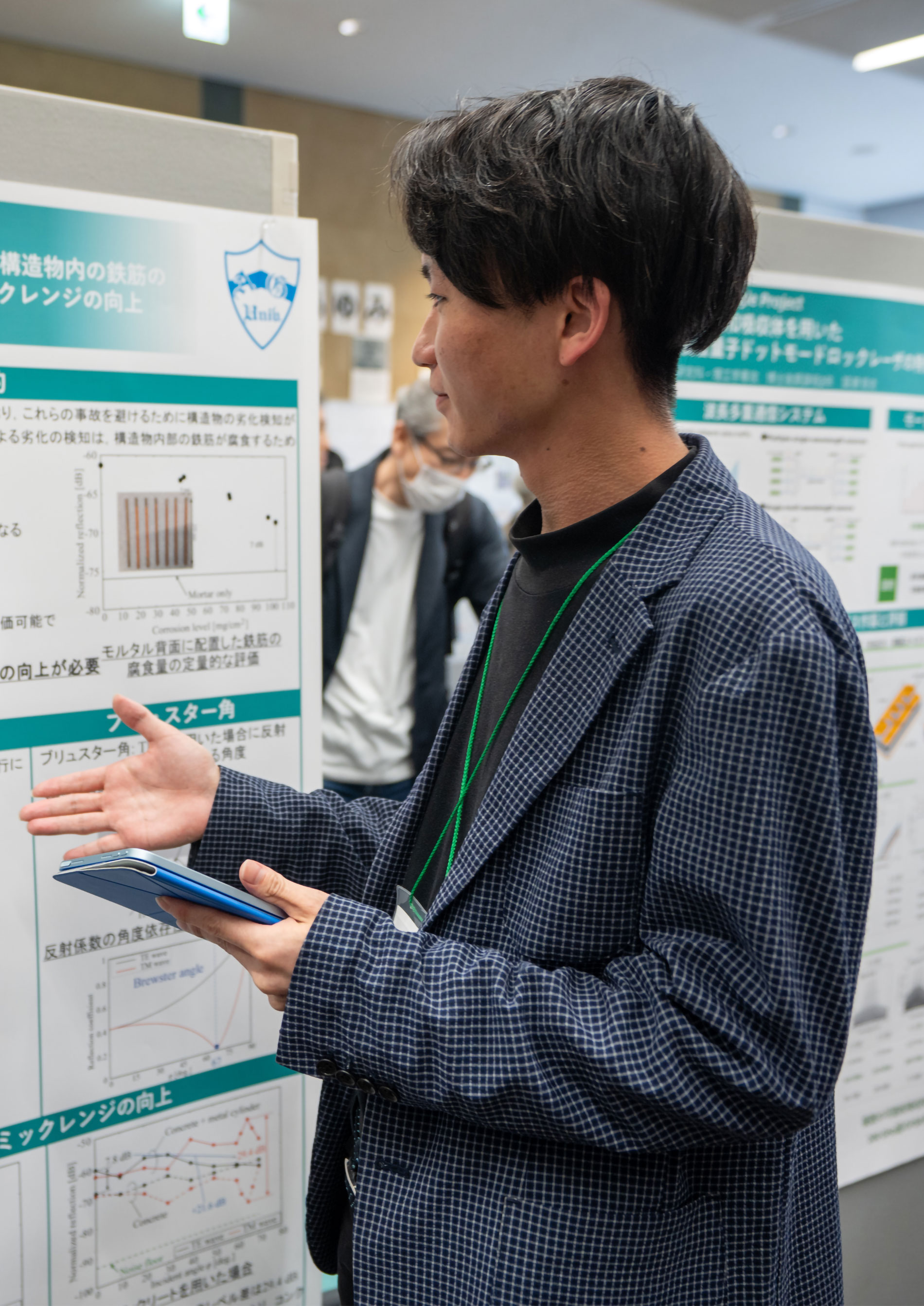 Yasunari Watanabe
List of Poster Session Participants (FEP Scholarship Recipients)
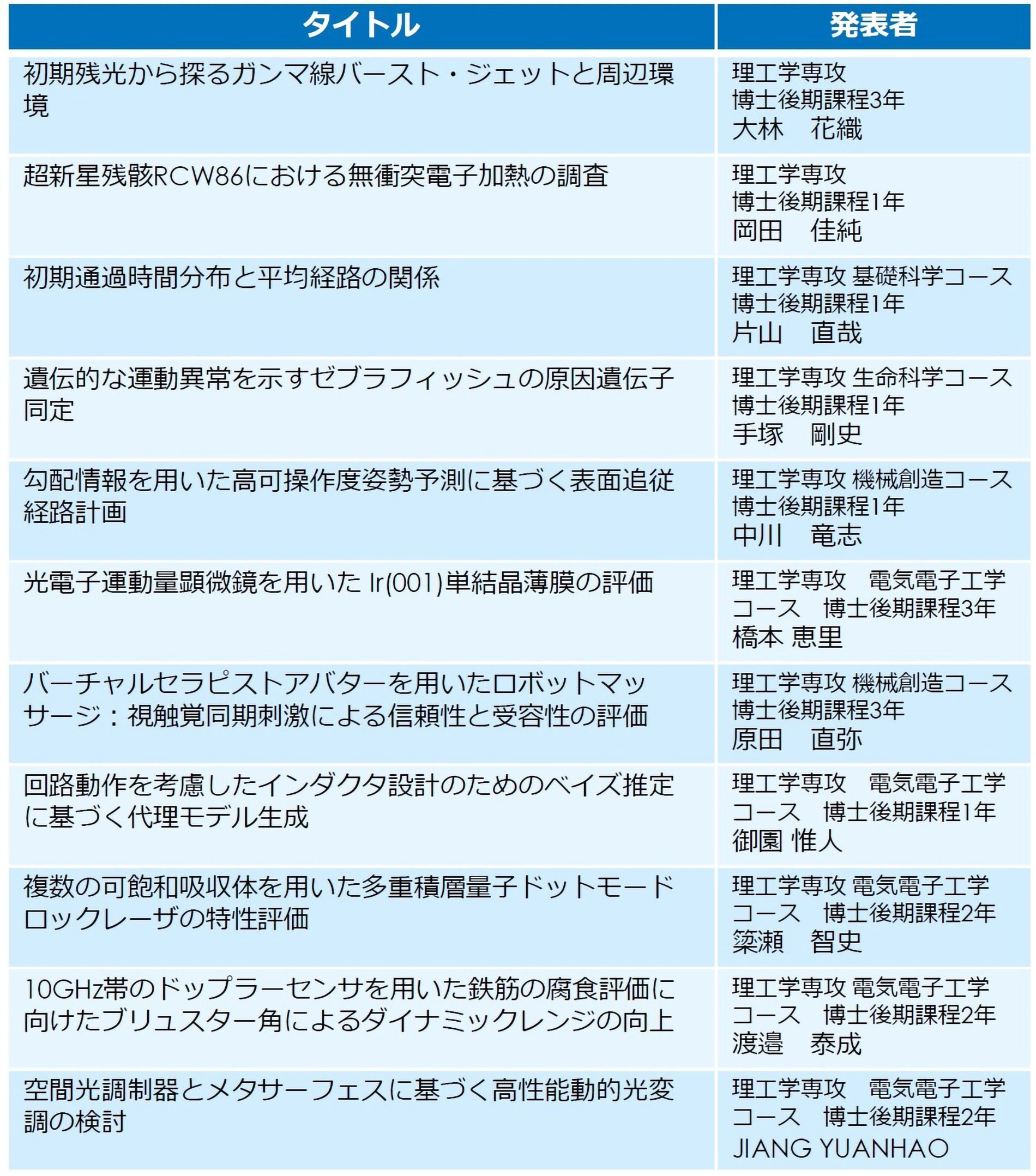
* The years of Position, and activities listed are, in principle, as of the time of the interview.